Affiliate links on Android Authority may earn us a commission. Learn more.
I've used the three Pixel 10 slab phones, and I'll say this: Don't judge a book by its cover
It’s hard to believe we are on the tenth generation of Pixel phones. Not only is it hard to believe because the OG Pixel launched nine years ago (seriously; I’m so old), but also because it’s so rare for Google to actually stick with any kind of product for that long. Regardless, here we are with the Google Pixel 10 series — and it might just be the company’s most important launch ever.
I had the opportunity to go hands-on with all the devices launched at the 2025 Made by Google event, but here I want to focus on the core products: the Google Pixel 10, Pixel 10 Pro, and Pixel 10 Pro XL — the three “slab” phones in the lineup. Despite how they appear, there is actually a ton of stuff to talk about with these devices, so let’s get right into it.
Long-term updates
Loaded with Google AI features
Excellent cameras
Powerful AI tools
Top-notch software
Improved camera flexibility
Smooth-as-ever software
Pixel 10 series designs: An acceptable rehash

In August 2024, I was led into a room at a Google-run building in Manhattan to get my first-ever look at the Pixel 9 series. This year, I was led into that exact same room by the exact same people and found myself looking at…the exact same phones. Seriously, the Pixel 10 series looks so much like the Pixel 9 series that it almost felt a bit deflating touching them for the first time. This was especially notable for me, personally, considering the Pixel 9 Pro has been my daily driver since it launched. Everything felt so immediately familiar, almost to a negative extreme.
Not much at all has changed with the Pixel 10 designs — and that's totally OK.
However disappointing it might be to hold a Pixel 10 and feel like nothing has changed, we need to give Google some credit here. Ever since the Pixel 6 series, Google has been steadily tweaking how Pixels look and feel. Literally every year since 2022, we’ve seen a new Pixel phone that’s looked way different from everything that came before it. Just look at the progression in the images below:
In 2024, I believe that Google struck gold. The Pixel 9, Pixel 9 Pro, and Pixel 9 Pro XL are some of the best-designed phones I’ve ever seen or held. After four years of incredibly hard work, I feel like Google deserves a rest year. In other words: if it ain’t broke, don’t fix it.
Now that I’ve said all that, it’s not like these phones are exactly the same. There are quite a few differences once you go looking for them. One of the most significant ones — here in the United States, anyway — is the removal of the physical SIM card slot. Previously, you’d find this on the bottom right of the phone, opposite a speaker grille. Now, it’s gone, replaced by a second speaker grille. In some areas of the world, the SIM tray still exists, but you’ll find it on the top of the phone. Here in the US, though, it’s simply not there.
One of the most significant changes this year is the removal of the SIM tray, although this only affects certain countries, including the US.
I know this change will ruffle some feathers. However, the full-on removal of SIM trays in favor of eSIM is a bygone conclusion at this point. Like it did with the headphone jack, Apple had the “courage” to remove the SIM tray from iPhones and saw that sales didn’t suffer in the slightest, so it’s only a matter of time before Team Android follows suit. In other words, Google might be the first major Android phone maker to remove the SIM tray on its premium flagships, but it certainly won’t be the last.
There are other, less drastic changes for the Pixel 10 slab phones as well. The camera bar is a little bit larger than before, and the overall thickness of the phones has increased by a tenth of a millimeter. All the phones are heavier, too, with the Pixel 10 Pro XL seeing the highest increase by a solid 11g.
Are you pre-ordering a Pixel 10 phone?
However, these are things you’d only notice with thorough examination. The phones all have the same display sizes as last year (6.3 inches for the Pixel 10/10 Pro and 6.8 inches for the 10 Pro XL) and the standard design elements carry over, too, such as with the Pixel 9 having matte aluminum rails and the Pro models having polished rails. To the casual observer, there will be no distinct differences between this year’s models and last year’s. I barely noticed a difference, and it’s my job to notice those differences, so take that as you will.
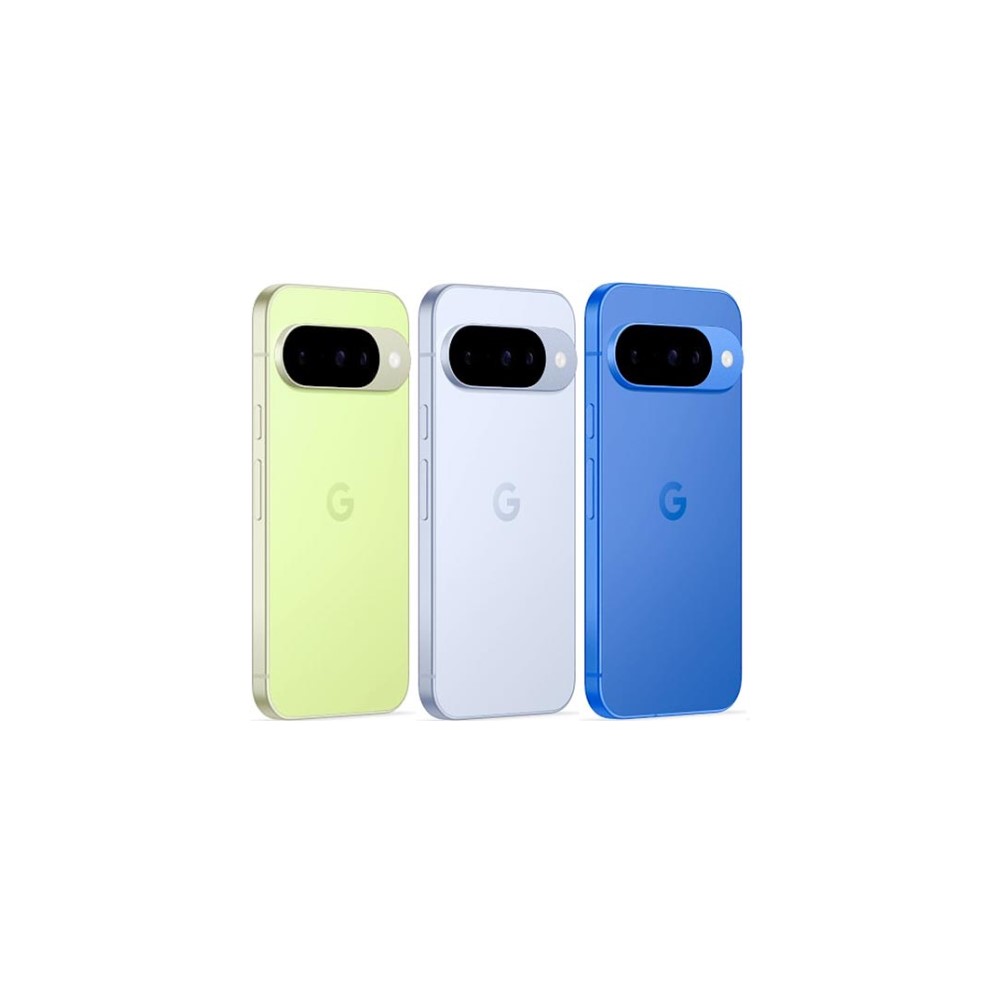
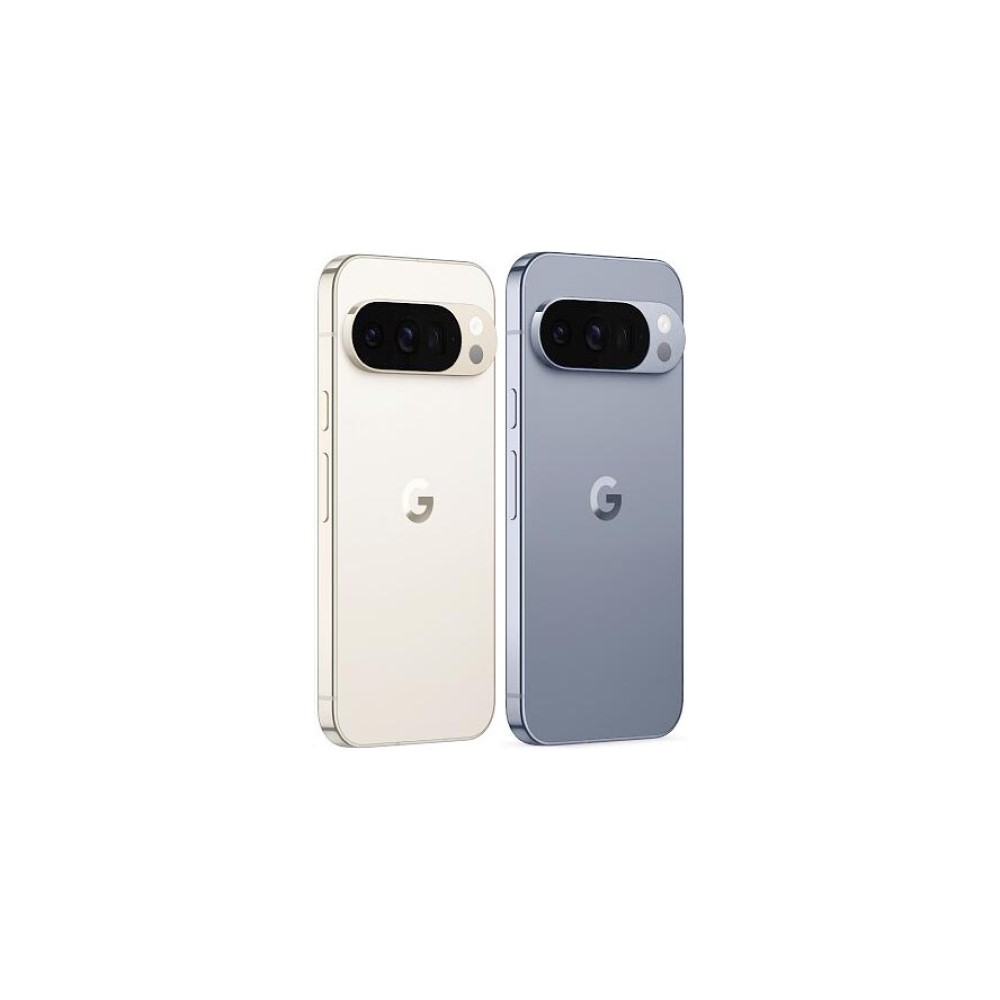
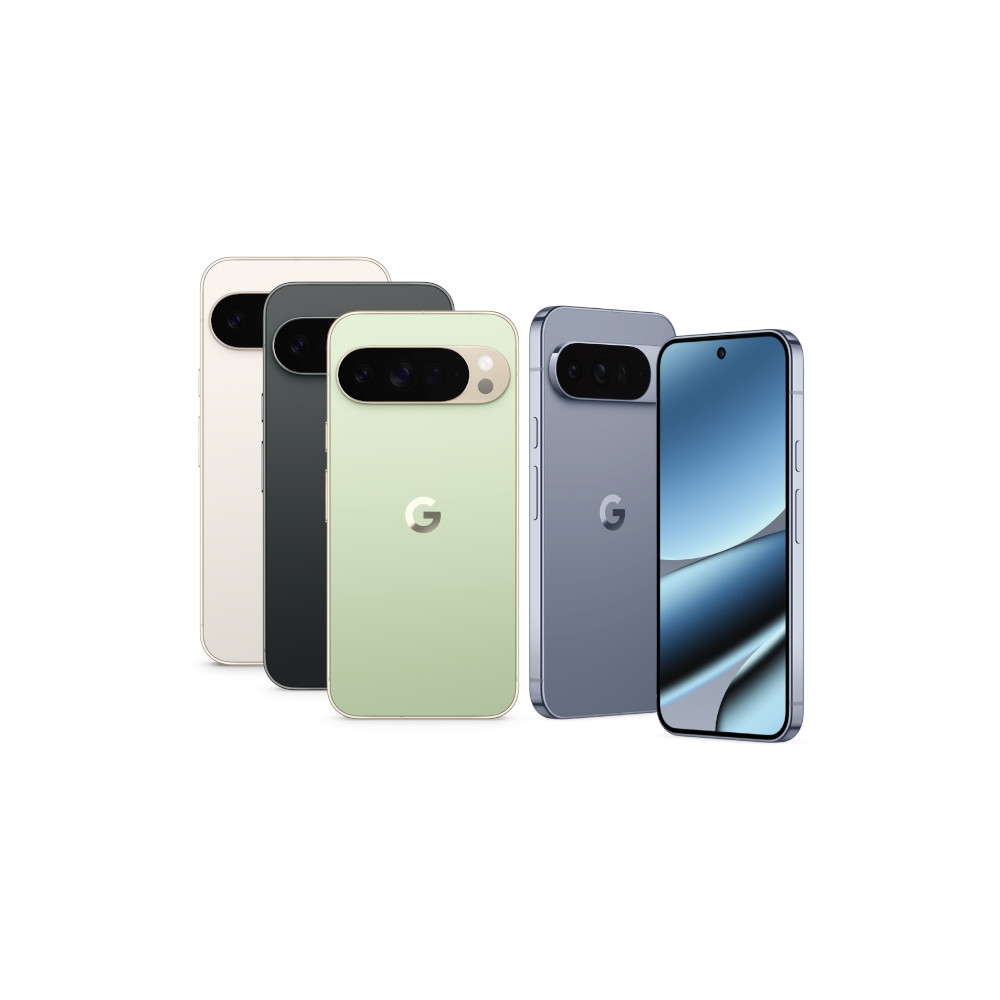
There are some new colors, though, which are nice to see. For the standard Pixel 10, the only color that carries over from the Pixel 9 series is Obsidian, the usual black colorway. New for this year are Indigo (a deep blue throwback to the original Pixel), Frost (a classy silver), and Lemongrass (a pale yellow). Meanwhile, the Pro models come in four colors: the usual Obsidian and Porcelain (off-white), the new Moonstone (bluish gray), and the quite stunning Jade (pale green).
But what’s going on with the cameras and processor?

I had about two hours with the entire Made by Google lineup, which also includes the Pixel 10 Pro Fold, Pixel Watch 4, and Pixel Buds 2a. In other words: I had very little time. Even if I would have had enough time, Google is being pretty strict about what we can investigate at the moment. The gist here is that I’m not going to be able to give you camera samples, thorough examinations of new camera features, or any benchmark charts. What I can do, though, is give you a rundown of what’s new and a basic summary of what I saw.
For the Pro models, almost nothing has changed for the cameras.
Let’s start with the cameras. For the Pixel 10 Pro and Pixel 10 Pro XL, this is easy to summarize: nothing major has changed. The camera setups are still exactly the same across both devices and they still feature pretty much the same hardware as last year’s model. This means a 50MP primary lens, a 48MP ultrawide, a 48MP periscope telephoto with 5x optical zoom, and a 42MP selfie camera within a display cutout on the front. There are some very minor — but welcome — differences here, including double the range for the optical image stabilization (OIS) system, which should result in smoother video footage with the primary lens. But really, outside of the new fancy AI features and a 100x zoom trick (which I’ll get to in a bit), you should expect a very similar camera experience on these models as you saw on the Pixel 9 Pro and Pixel 9 Pro XL. Granted, that experience is one of the best smartphone camera systems you can get, so no complaints here.

For the standard Pixel 10, though, there have been some very significant changes. The biggest one is easy to notice by looking at the image above: there are now three rear camera lenses. The new third lens is a 10.8MP telephoto with 5x optical zoom. Considering the phone also has an ultrawide camera on the back — a 13MP shooter — that makes this the first standard Pixel to have both a telephoto and ultrawide, which is pretty cool.
The standard Pixel 10 get a new telephoto lens, which is great, but the rest of the system has been nerfed to compensate.
The unfortunate bit is that Google is reducing the overall quality of the rear camera setup to fit in this new telephoto lens. The telephoto, for example, is nowhere near as good as the one on the Pixel 10 Pro and Pro XL. The ultrawide is a significant downgrade from the 48MP one on the Pixel 9, and the primary lens is also downgraded from the 50MP one on the Pixel 9 to the 48MP wide lens we saw on the Pixel 9a. In other words, Google decided to nerf the entire rear camera setup to make room for a third lens. Depending on your needs, this might be good news or bad news.
Finally, the selfie camera on the Pixel 10 remains the same as the one on the Pixel 9: a 10.5MP lens with a 95-degree field of view.

Now, let’s move on to Tensor G5, the new processor powering all the phones in the Pixel 10 series. This is the most notable processor upgrade for Pixels since the original introduction of Tensor in the Pixel 6 and Pixel 6 Pro. For the first time, Tensor G5 is designed from the ground up by Google itself and produced by TSMC, the same company that makes Apple, NVIDIA, and Qualcomm silicon. This means Google has finally stepped out of Samsung’s Exynos shadow and is playing with the big boys.
I'd love to tell you all about Tensor G5, but outside of some simple info and vague chest-beating, Google isn't giving us much.
I would love to tell you all about how Tensor G5 performs or even give you a concrete list of specs. However, Google is being coy with details for Tensor G5. For example, I don’t know anything about the CPU or GPU IP. Google isn’t supplying industry standard benchmarks nor letting us run our own yet. What it has told us has been vague Apple-esque grandstanding, like “the CPU is 34% faster than Tensor G4 on average,” or “the TPU is up to 60% faster than Tensor G4.” In what scenarios do these things apply? How are these modules constructed? Where is the data? For now, Google is just not giving out any of that information.
Don’t want to miss the best from Android Authority?
- Set us as a preferred source in Google Search to support us and make sure you never miss our latest exclusive reports, expert analysis, and much more. Find out more here.
As I experienced it, though, Tensor G5 didn’t feel any different than Tensor G4. Swiping around the Android 16 interface — which comes with Material 3 Expressive out of the box — felt smooth and snappy. Apps launched quickly, animations looked nice, and nothing seemed to be out of place. However, with Tensor G5 being such a huge shift for Google — it’s a 3nm build, so it could have the same energy efficiency as the Snapdragon 8 Elite! — it’s wild that it’s not giving us any concrete info yet. All I can say for now is stay tuned to Android Authority, because as soon as we can give you the info you want, you’ll get it.
F***ing magnets, how do they work?

Back in June, Android Authority broke the news about Pixelsnap, a new line of magnetic accessories from Google. For the record, that leak was part of our Authority Insights branding, which is where all our exclusive discoveries about Android, smartphones, and general tech live. I highly recommend bookmarking that page, as we post new discoveries there every day. We also have a podcast hosted by Mishaal Rahman (and guest-starring me) as well as a newsletter, which you can subscribe to in the box below. Get connected so you stay on top of all the latest news!
Anyway, when we found information about Pixelsnap, we were excited but also hesitant to get too pumped on it. The evidence we had about the accessories clearly pointed to being able to snap things magnetically to Pixel phones, but it wasn’t clear if that would require a special phone case or if the magnets would actually be built into the phones, similar to MagSafe on iPhones.
All four Pixel 10 phones have magnets on the pack, finally bringing Android to parity with iPhones in this regard.
Well, I can 100% confirm now that not only were we correct about Pixelsnap, but all four Pixel 10s — including the Pixel 10 Pro Fold — have the necessary magnets built right into the backs of the phones themselves. Finally, Android phones are catching up to iPhones when it comes to magnetic accessories!
At the Made by Google event I attended, I was able to try out two accessories: a magnetic wireless charger and a magnetic ring stand. The ring stand, seen above, was really nice. It props your phone up either in landscape or portrait mode. It didn’t add much weight to the phone and the curvature of the whole kit made it feel very comfortable to hold even in its folded state.
Meanwhile, the magnetic charger is a two-parter. First, you can buy the charger puck by itself. As with a MagSafe-capable charger, you simply hover the back of the phone closely over top of it and then SNAP — the charger connects and starts giving the phone juice. This happens at Qi2 speeds, so roughly 15W (we’ll need to test that for ourselves, but that’s what Google says for now). The second part of this charger is a stand. You can buy the stand and the charger or just the charger, but in either kit, the charger is the same. The charger folds into the weighted silicone stand, making it a two-for-one system: a stand when you need it, and a puck when you don’t. Also, the stand supports both landscape and portrait connections, and Google will have screensavers and other nifty features for this soon that will trigger automatically when you connect the phone to the stand.
The magnets support Qi2 charging, which means faster wireless charging. All Pixel 10 phones also charge faster with a wire and have bigger batteries.
In either case, the magnets were strong. Not so strong that it was difficult to disconnect things, but strong enough that I wasn’t worried about the accessories falling off without some intentional tugging.
As a quick aside, since we’re talking about charging, wired charging on all three devices has increased. The Pixel 10 and Pixel 10 Pro jump from 27W to 30W and the Pixel 10 Pro XL jumps from 37W to 45W. Also, the batteries in all the phones are slightly bigger, with the Pixel 10 Pro XL now boasting a 5,200mAh cell. That makes it the Pixel with the largest battery ever — and the fastest-charging Pixel, too.
AI all the things

This is a Google launch, so of course AI features are going to take center stage. There are so many new features — way more than I could have ever experienced in my brief time with the phones. As such, I am only going to tell you about the features I actually got to try (or at least witness someone else trying).
Voice Translate is an incredible feature that translates your calls — but also mimics the speaker's voice!
The coolest and craziest new feature is called Voice Translate. This feature lives in the Phone app. What it does is translate conversations you’re having in real-time, enabling you to have a natural discussion with someone even if you don’t speak their language. The kicker, though, is that the translations it creates are delivered to the person on the other end in the sounds of their voice. Believe me, this was wild to experience. In my demo, I spoke with a Google employee who was speaking to me in German. When he spoke German, I could hear his same voice speaking on the phone to me in English. When I responded in English, I could hear my own voice speaking German back to him. I don’t speak German at all (unless you count reciting the lyrics to some Rammstein songs).
So, the first thing you’re probably thinking here is that this is ripe for some deep faking. However, it wasn’t that accurate. It was more uncanny valley than deep fake. It sounded like me, but it clearly wasn’t me. Let me put it this way: if someone used this tech to call my partner and try to scam her, she would have not believed it was me she was hearing.
Magic Cue is a promising new AI feature that proactively suggests phone actions for you. It's limited right now, but could be a big deal eventually.
Another AI feature I tried was Magic Cue. For right now, this feature is mostly focused on text messages you receive in the Messages app. What Magic Cue does is “read” your messages (it all happens on-device, so it’s secure) and then it preemptively gives you helpful material based on the conversation. For example, if you get a message from someone asking for a particular photo, Magic Cue will see that, find the photo(s) the person is requesting, and give you a button that takes you straight to Google Photos to grab them. This also works for things like suggesting phone calls, should someone in a chat ask you to call a restaurant to make a reservation, for example.
There were also two AI-powered camera features I tried. The first is called Auto Best Take, which is the logical evolution of the popular Best Take feature. As a reminder, Best Take pores through the multiple group photos you’ve taken, analyzes them, and then stitches them together to make one ideal image where everyone’s eyes are open, looking at the camera, smiling, etc. Auto Best Take doesn’t require you to take multiple shots. Instead, AI immediately determines that you’re taking a group photo, switches on Best Take, and then captures up to 150 photos when you press the shutter button. It then examines all the photos and either a) finds the photo that was the best take naturally, or b) does the usual stitching to make one best photo.
Finally, the Google Pixel 10 Pro and 10 Pro XL support 100x zoom. Notably, the Pixel 10 and Pixel 10 Pro Fold do not — they both max out at 20x zoom. With the 10 Pro and 10 Pro XL, though, 100x zoom is possible thanks to AI — but it’s a controversial usage of AI.
The Pixel 10 Pro and 10 Pro XL support 100x zoom, but they use a controversial implementation of AI to do it.
First, you take a photo like you usually would. You can zoom past the usual 30x limit and go all the way to 100x or any stop between. Once you’ve got the shot you want, you take a snap. That’s when the AI kicks in. What it does is analyze the 100x photo and then use AI to “augment” it. In other words, it generates an image using an on-device diffusion model that is based on the image you captured. In the best of cases, this will result in a 100x image that looks OK, rather than like the hot garbage we usually see from smartphone cameras that zoom to any point past 20x or so.
The inherent problem, though, is that this AI-augmented image is not real. It’s not a photo you took — it’s an AI-generated image based on a photo you took. Thankfully, Google saves the original photo, so you can choose to use the real one if you wish. Once again, this all happens on-device, too, so you don’t need an internet connection for it to work.

In anticipation of the backlash this feature would receive, Google is also rolling out C2PA integration within Google Photos. This attaches hidden metadata to any photo you take with your Pixel 10 phone. If you just take a picture, the metadata will say it was shot with a camera. If you edit that picture using non-AI tools, it will say that. And, if you use AI to edit or augment the photo, it will say that, too. This should give people a quick and easy way to determine the trustworthiness of a photo — assuming, of course, it was created with a Pixel 10.
Google Pixel 10, Pixel 10 Pro, and Pixel 10 Pro XL impressions: Innovation disguised as iteration

If you’ve made it this far, congratulations: you’ve just read 3,000 words about only three of the four Pixel 10 phones. Hopefully, this illuminates that even if the Pixel 10 series looks like barely an iteration over the Pixel 9 series, it’s actually got a lot of really, really cool stuff going on.
Of course, it’s not all hunky dory. The nerfing of the Pixel 10’s rear camera system might be a tough pill to swallow for folks out there who liked having the same camera system as a Pro model, just minus a telephoto. The fact that we know barely anything of substance about Tensor G5 is concerning, to say the least. The removal of the SIM tray in the United States will also cause some nasty comments to appear below, I’m sure. Google has made some controversial decisions surrounding this launch and only time will tell how that shakes out.
Google has made some controversial decisions here that could deter sales from Pixel skeptics. But Pixel fans are probably already frothing at the mouth for these phones.
For Pixel devotees, though, I can’t imagine them responding with anything but utter glee at this release. The continuation of the stellar design ethos of the Pixel 9 series is here alongside Pixelsnap magnets. There are AI features that feel tangibly useful to daily life, increases in both battery size and charging speeds, and much more. There’s also the potential right now for Tensor G5 to be a game-changer. Oh, and all this without prices going up.
Long-term updates
Loaded with Google AI features
Excellent cameras
Powerful AI tools
Top-notch software
Improved camera flexibility
Smooth-as-ever software
The vanilla Pixel 10 ($799 at Amazon) still starts at $799, and the Pixel 10 Pro ($999 at Amazon) stays at $999. In both cases, they come with 128GB of internal storage for their introductory prices. Meanwhile, Google has eliminated the 128GB model of the Pixel 10 Pro XL ($1199 at Amazon), leaving the 256GB model as the base, which has the same $1,199 price as the Pixel 9 Pro XL with the same 256GB. So other than a shake-up for what’s offered with the XL model, pricing stays consistent in 2025 — even with tariffs and market uncertainty abounding all around.
Google still has plenty of competition to worry about, though. The iPhone 17 series is just around the corner, and rumors suggest a cool new look for them. The Galaxy S25 series is still going strong, and Samsung is almost certainly going to launch a Galaxy S25 FE model in the coming weeks — offering a cheaper alternative to the Pixel 10 series.
Regardless, I think the Pixel 10 series is incredibly exciting. It truly represents Google coming into its own as a hardware creator. It has a unique design ethos, its own silicon, a reputation for having one of the best camera experiences in the industry, the fastest Android upgrades, and is the market leader when it comes to AI. Really, the only way I see Google going is upward — and there’s no telling how far it could go.
Thank you for being part of our community. Read our Comment Policy before posting.