Affiliate links on Android Authority may earn us a commission. Learn more.
I'd skip the Galaxy S26 launch if it weren't for one very exciting feature
Galaxy Unpacked 2026 is less than a couple of weeks away, with a promised line-up of three new Samsung Galaxy S26 phones. While the regular Galaxy S26 and the S26 Plus are nothing to get excited about and a clear sign of Samsung doing the least possible effort to keep the series alive and consumers buying its phones, there’s still one very interesting innovation coming to the Galaxy S26 Ultra: a new Privacy Display feature.
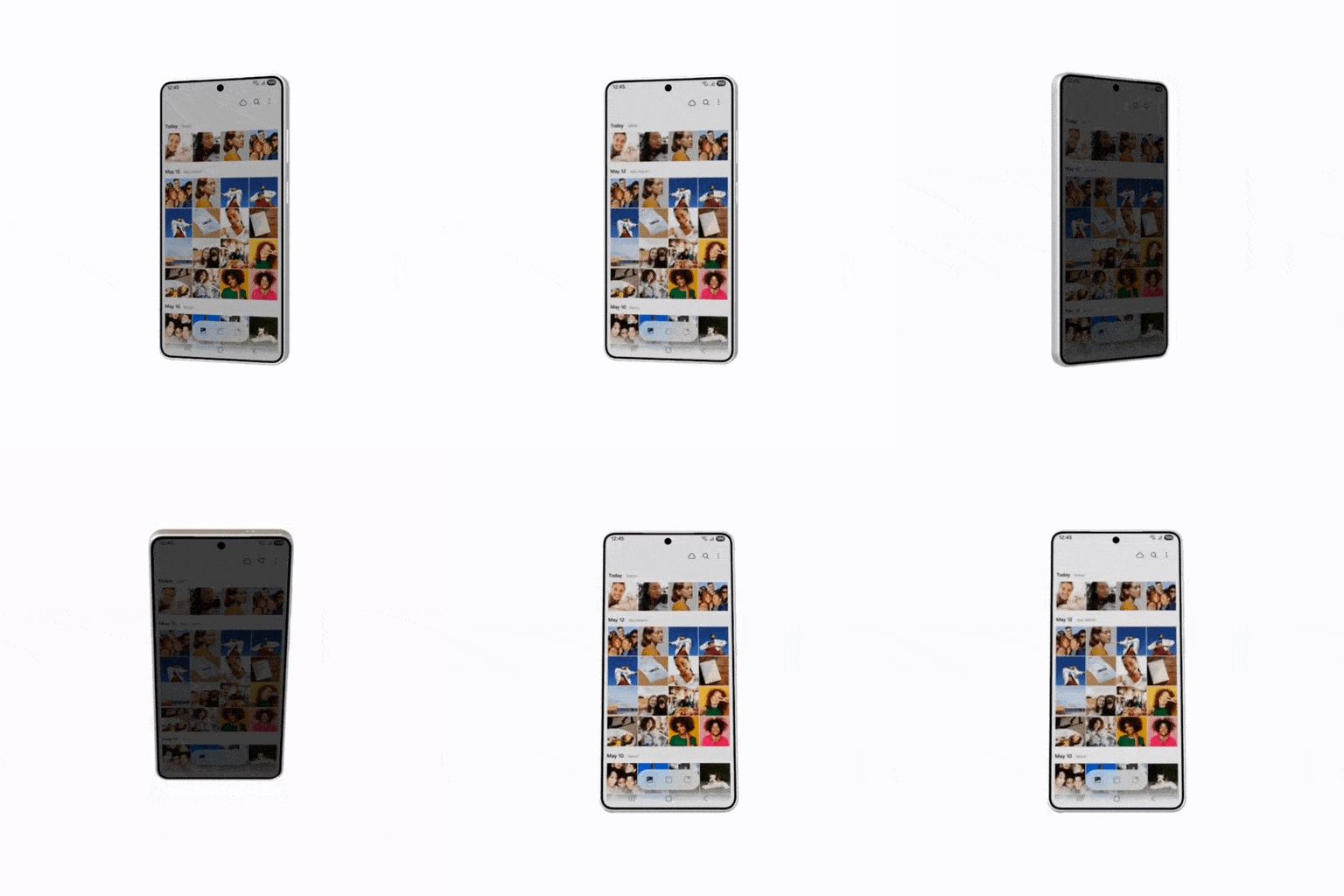
This groundbreaking display technology promises to replace those bad privacy screen protectors your friends use by adding an integrated, hardware-level feature that just makes the screen really dim when viewed at an angle without affecting the person looking straight at it. And as someone who only takes Parisian subways and buses, it’s the one feature I’m really excited to see in action. I just don’t want people looking over my shoulder in the metro to see what I’m doing, especially when I need to quickly check something sensitive or personal, like my banking app or my Oura stats.
Galaxy S26 Ultra Privacy Display: Hot or Not?
Why Privacy Display is so exciting
From blinding brightness and adaptive refresh rates to foldable panels and under-display fingerprint sensors, display technology goes through a major leap every few years. This new privacy feature that Samsung is touting is the newest and most interesting innovation because it should make our phones more immune to snooping from nearby onlookers.
The Galaxy S26 Ultra’s brighter, thinner, and less power-hungry M14 OLED panel uses two Samsung Display techs: “Flex Magic Pixel” to adjust the pixels to control light, and a foldable-born “Color filter on Encapsulation” layout to replace the polarizer in traditional displays with a color filter. When activated, the screen physically narrows the light output so that it’s only clearly visible to the person holding it, but appears completely black to anyone looking from a side angle.
More impressive, though, is the fact that this privacy trickery isn’t an all-or-nothing affair. I was afraid that I wouldn’t use this at all if it made it impossible to watch videos in bed or browse on a crowded metro at an awkward eye angle. The good news is that if I don’t want to make my entire display private, I don’t have to. Thanks to selective pixel-by-pixel masking, I can choose to only apply privacy to incoming notifications to stop snoopers from seeing what my friends or husband are sharing with me.
It’s also a known fact that many phone thieves like watching people for a while to see them input their PIN before snatching the phone. Privacy Display can make the screen impossible to decipher for them by turning on automatically when you input any PINs or passwords.
And Samsung’s devs seem to have really thought this through. The tech is capable, but it’s One UI that’ll do the heavy lifting of making it more useful and adaptable to different users. There’s a Privacy Display Quick Settings toggle to quickly turn it on and off, as well as a bunch of granular options.
The automatic mode applies to sensitive apps or when you’re in crowded places like elevators or, in my case, taking public transport. Custom conditions, however, open up the door to picking exactly where Privacy Display kicks in: PINs and password screens, while viewing Gallery photos, when there’s a new notification pop-up, or when you’re watching a video in picture-in-picture. You should also be able to choose which apps turn the feature on and automatically dim your entire screen on top of it to improve privacy.
It’s also highly likely that Privacy Display will be triggerable in One UI’s Modes and Routines, so you could create your own exact conditions that turn it on if you don’t want to rely on the existing choices. Plus, Samsung is ready to open this up to developers to automatically enable it in different sections of their apps.

It sounds a million times better than a privacy screen protector

We’ve all seen those cheap and very dark privacy screen protectors on a friend’s phone. At one point back in the mid-2010s, I even tried one on my LG G3, and immediately removed it. It made my screen so much darker and introduced grainy artefacts. From what I’ve seen on friends’ phones, today’s privacy screen protectors haven’t improved much since then. Plus, now, many of them affect the ultrasonic under-display fingerprint reader.
Until I know for sure that Privacy Display won't impede the screen's visibility and brightness in common situations, I'm not completely sold.
Samsung’s tech just does away with all of those aesthetic and functional negatives. No unnecessary darkening, no grainy display, no fingerprint bugs, and plenty of options to choose when and where it applies. All of this sounds great on paper, but until I know for sure that it won’t impede the screen’s visibility and brightness in common situations, I’m not completely sold. That’s why I’m excited about Unpacked. It’s when we’ll see real hands-on experiences with the Privacy Display, and we’ll know for sure how well it works and how convenient it is to use every day.
I’m also curious to see the more intricate details of the feature when it’s presented at Unpacked. The examples Samsung uses to sell buyers (at both Unpacked and the following ads and posters) and the importance it gives to all of its capabilities will be crucial in how well the feature is perceived and whether it becomes the hip new must-have that other Android brands will copy.
For now, this seems like a unique Galaxy S26 Ultra — and maybe S26 Plus — feature. If it’s as good as it sounds, I’d like to see it come to more Samsung phones and more brands, too. Maybe in a couple of years, we’ll all be browsing our phones with complete privacy in a crowded subway car. At least, that’s the dream.
Don’t want to miss the best from Android Authority?
- Set us as a favorite source in Google Discover to never miss our latest exclusive reports, expert analysis, and much more.
- You can also set us as a preferred source in Google Search by clicking the button below.


Thank you for being part of our community. Read our Comment Policy before posting.