Affiliate links on Android Authority may earn us a commission. Learn more.
Samsung Galaxy S26 Ultra vs Galaxy S23 Ultra: Here's why I would upgrade
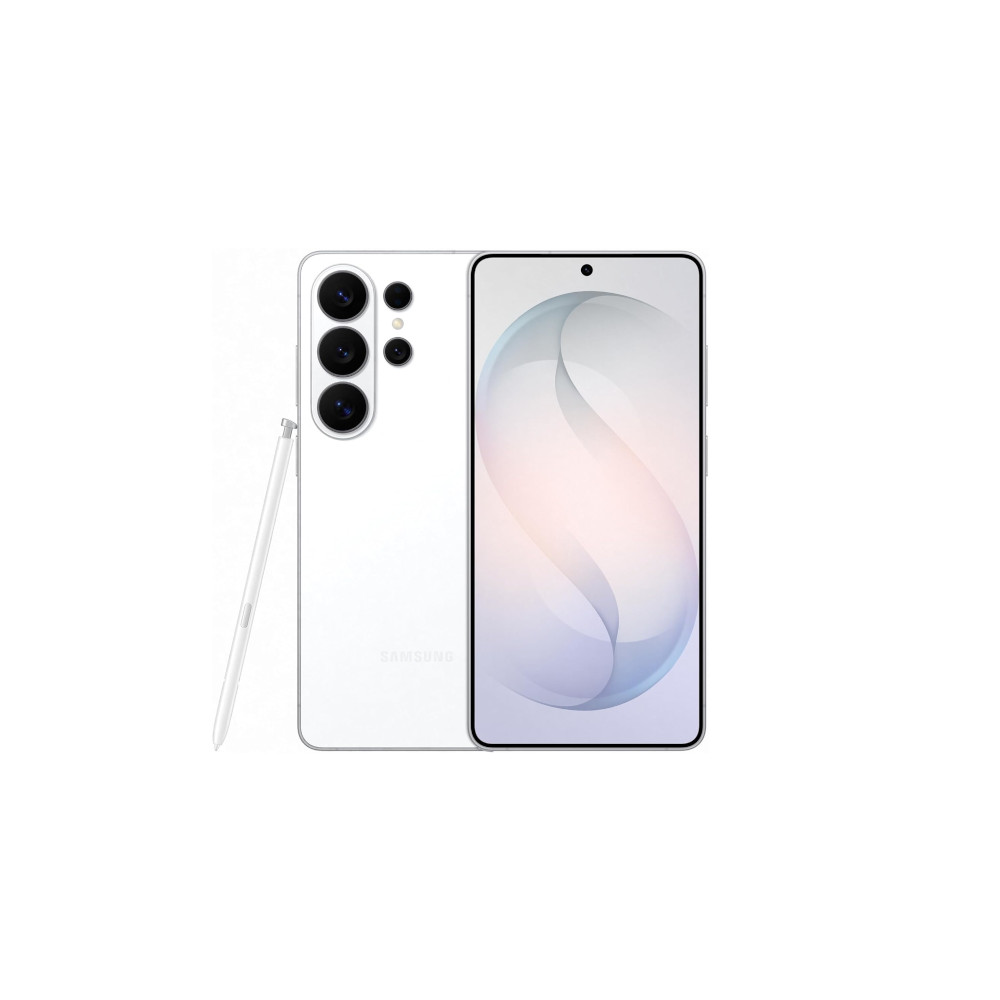
Samsung’s Galaxy S series has undergone only minimal changes with each generation in recent years. But if you stack all those minor upgrades over several years, a three-year-old Galaxy S would look like an entirely different phone. The Galaxy S23 Ultra, for instance, feels like it’s only distantly related to the freshly introduced Galaxy S26 Ultra, a worthy contender for the top spot among the best Android phones for 2026.
The Galaxy S23 Ultra was, in many ways, a worthy upgrade to older phones in the series. It brought a 200MP camera with an improved camera algorithm, addressed the Galaxy S22 Ultra’s heating issues, and featured a far less mistouch-prone curved display. However, it’s now reaching its final stages of life, having already received three out of the four promised Android generation upgrades. The hardware might have also started to show signs of age, especially with Samsung’s growing emphasis on on-device AI applications.
So, if you’re looking to move on, the Galaxy S26 Ultra makes perfect sense. In this article, I’ll take you through all the reasons why you should consider upgrading to it from your trusty Galaxy S23 Ultra. Note that while we have yet to review the Galaxy S26 Ultra, the observations below are based on our limited hands-on time with the device and on our experience with past Ultra phones.
Galaxy S26 Ultra vs. Galaxy S23 Ultra: Would you upgrade?
Display gets a privacy upgrade
One of the most exciting and highly marketed features of the Galaxy S26 Ultra is the new Privacy Display. It is designed to prevent shoulder surfers from seeing sensitive information on your screen. But unlike a privacy-centric screen protector that is applied over the screen, the privacy features are baked into the Galaxy S26 Ultra’s display.
You can turn on Privacy Display with a software switch and use it to selectively restrict parts of the display. For instance, you can use Privacy Display to ensure certain apps, or their notifications, remain hidden from onlookers. Early leaks have also revealed the science behind this fascinating feature.
The Galaxy S26 Ultra's display repels prying eyes and shows more vibrant colors than ever before.
Besides the privacy enhancement, the Galaxy S26 Ultra’s display also gets a color upgrade. With this generation, Samsung is finally moving to 10-bit displays, enabling a wider color gamut. With this upgrade, colors should appear punchier when compared to the Galaxy S23 Ultra on the side.

While I expect that wider color support will make a difference when watching videos or playing games with vibrant visuals, I also hope the upgrade will finally resolve a long-standing issue of “banding” on Samsung’s AMOLED displays. Banding is when rectangular artifacts appear on the screen while displaying a color gradient.
Besides these improvements, the Galaxy S26 Ultra’s display is completely flat, in case you desire a change from the Galaxy S23 Ultra’s curved edge. Additionally, the newer display achieves a much higher peak brightness of 3,000 nits, compared to just 1,750 nits on the Galaxy S23 Ultra.
One UI 8.5 brings big upgrades
With the Galaxy S26, Samsung is shifting to the new One UI 8.5 interface. While it is still based on Android 16, just like One UI 8, One UI 8.5 brings a substantial upgrade.
Some of the improvements we’ve already spotted in One UI 8.5 beta include a more refined Quick Settings menu, upgrades for creators, better SIM management, more control over the phone’s power consumption, and iOS-inspired improvements to notifications.
But there’s a lot more Samsung has announced with the Galaxy S26 series. For yet another year, AI takes center stage in Samsung’s announcement, with several new additions and improvements to existing Galaxy AI features.

The new interface brings a slew of features to edit media on the go. These include Photo Assist, which lets you edit photos using text prompts, just like Google Photos’ Help Me Edit, and AI-enhanced document scanning that removes hands and unsightly corners. Meanwhile, Creative Studio lets you create sticker cutouts from your photos and make them easily accessible via the Samsung Keyboard.
One UI 8.5 gets a big AI upgrade, and the Galaxy S26 gets it before other Samsung devices.
Additionally, Samsung’s Now Bar and Now Brief are finally gaining useful tricks, such as remembering key events for you even if they’re not in your calendar. These are being accompanied by another feature, called Now Nudge, which works similarly to Pixel’s Magic Cue and suggests responses to queries by automatically fetching information from other apps.
Besides these new features, One UI 8.5 brings a new search interface that is accessible through a shortcut right above the pinned apps on your home screen, somewhat like the iPhone’s finder, which lets you perform a deep system-level search along with an enhanced Circle to Search that can now search for multiple objects at once. A similar search feature also lets you find specific screenshots inside the Gallery app.

Samsung’s own AI chops are getting better. In addition to an AI-powered upgrade for Bixby, Samsung is adding Perplexity AI as a second assistant on the Galaxy S26 series. It will power core AI functions across Samsung’s apps, including Notes, Gallery, Reminders, etc. Samsung is also claiming that Perplexity will work as a system-level AI agent and perform multi-step tasks, including those involving third-party apps.
While the Galaxy S23 Ultra will also eventually receive One UI 8.5, it will be months behind the Galaxy S26 Ultra. Additionally, it remains to be seen which of these new features come to older devices and which ones stay limited to the new ones.
The camera’s got some nice bits too
Of late, Samsung has been criticised much for minimal upgrades to its flagship cameras. If you take the primary 200MP into consideration solely, you would probably take the same stance. But, compared to the Galaxy S23 Ultra, there are some reasonable upgrades across other cameras.
When Samsung launched the Galaxy S24 Ultra, it switched from a 10MP 10x telephoto to a 50MP one but with a shorter 5x optical zoom. This decision, as we also tested back then, allowed the phones to capture richer details on images, especially shots between 3x and 10x zoom, with some trade-offs at higher levels.
Over the years, Samsung has made efforts to plug these gaps through software optimization, AI, and better hardware that allows more light to reach the sensor.
While the Galaxy S26 Ultra uses the same 5x telephoto setup as the Galaxy S24 Ultra, it is now paired with a wider f/2.9 aperture lens compared to the Galaxy S25 Ultra’s f/3.4 aperture.
Bigger camera apertures should abate concerns about minimal camera upgrades.
Meanwhile, the primary camera’s lens has also been upgraded to a much wider f/1.4 aperture, and Samsung claims it results in 47% more light. In addition to allowing sharper shots during the day, the wider aperture also helps significantly with more light for night photography.
Additionally, Samsung claims improvements to video performance, including better stabilization and AI-enhanced framing for 4K videos (by cropping into the 8K sensor), and we’ll test these out over the next few weeks.
Leaps ahead in performance

One clear advantage the Galaxy S26 Ultra has over the Galaxy S23 Ultra is performance. Unlike the base and Plus variants, which come with Exynos 2600 in certain markets, the latest Ultra packs a Snapdragon 8 Elite Gen 5 globally, marking a three-generation leap in chipset performance. In addition to a more efficient 3nm architecture, the Snapdragon 8 Elite Gen 5 also features Qualcomm’s custom Oryon large and middle cores and significantly higher clock speeds across all of them.
As we’ve noted while testing other devices running the Snapdragon 8 Elite Gen 5, the amount of raw power it offers is probably overkill. Notably, all that power has also raised concerns about heating, which Samsung claims to address by reconfiguring the heat sink for better thermal dissipation. Once again, we’ll test the effectiveness of these features over the coming days.
Samsung finally upgrades charging
For several generations now, Samsung’s Ultra phones have been stuck at 45W wired charging, and the Galaxy S23 Ultra was no exception. However, with the Galaxy S26 Ultra, Samsung is finally stepping up by enabling 60W wired charging.
The new protocol, called Samsung Fast Charging 3.0, is expected to rely on USB PD 3.1 and PPS, and it charges the Galaxy S26 Ultra from 0 to 75% in just 30 minutes. While we have yet to test the real-world impact of the faster charging speed, we expect the upgrade to be especially helpful when your phone is low on battery and needs a quick boost.
Don’t want to miss the best from Android Authority?
- Set us as a favorite source in Google Discover to never miss our latest exclusive reports, expert analysis, and much more.
- You can also set us as a preferred source in Google Search by clicking the button below.


In addition to faster wired charging, the Galaxy S26 Ultra also brings faster wireless charging at 25W, a step up from the 15W on the Galaxy S23 Ultra.
Unfortunately, if you, like me, were hoping for magnets inside the body, the Galaxy S26 Ultra will disappoint you. It lacks built-in magnets for latching onto chargers or supporting magnetic accessories, and Samsung instead offers an array of magnetic cases as a substitute.
Galaxy S26 Ultra also feels sleeker

While preferences for aesthetics may be subjective, Samsung has been working over the past generations to chisel away extra bulk from its Ultra flagships. As a result, the Galaxy S26 Ultra now weighs only 215 grams, about 20 grams less than the Galaxy S23 Ultra. And the difference is immediately perceivable.
In Samsung’s words, the Galaxy S26 Ultra is also the “slimmest Ultra” it has launched to date. It measures only 7.9mm, which may seem like a small change from the Galaxy S25 Ultra’s 8.2mm-thick chassis, but it is a whole millimeter slimmer than the Galaxy S23 Ultra.
This is the slimmest, lightest Galaxy Ultra yet.
With the Galaxy S26 Ultra, Samsung is also doing away with the design aspect I dislike the most: its sharp corners. The Galaxy S26 Ultra now features curved corners, reducing the biting effects of previous Ultra phones over prolonged use. With these changes, I expect the Galaxy S26 Ultra to feel far easier to grip and use over longer periods.
The protective glass on the Galaxy S26 Ultra’s front is upgraded, too, with Gorilla Glass Armor 2. On the back, you’ll find Gorilla Glass Victus 2, which, interestingly, was used to protect the display on the Galaxy S23 Ultra. That should tell you about the upgrades on that front.
What about the price?

Samsung jacked the prices for the Galaxy S series with the S24 two years ago. At the time of its launch, the Galaxy S24 Ultra cost $1,299 for the base 256GB storage variant, a $100 increase over the Galaxy S23 Ultra.
Thankfully, prices in the US have remained stable since then. Despite headwinds and a component supply crunch, the Galaxy S26 Ultra still starts at $1,299 in the US. Samsung has offered free storage upgrades to those who pre-order flagships in the past years, and we expect the same this year as well.
With the Galaxy S26 Ultra, you get a big upgrade in display, privacy features, a more ergonomic design, faster charging, and significantly better performance than the Galaxy S23 Ultra. In addition to the hardware improvements, the Galaxy S26 Ultra is also the first to get new software features with One UI 8.5.
All these upgrades stacked together make the Galaxy S26 Ultra an easy choice if you’re looking to upgrade from your Galaxy S23 Ultra. If you do, you can also trade in the Galaxy S23 Ultra at Samsung for the best value.
Thank you for being part of our community. Read our Comment Policy before posting.