Affiliate links on Android Authority may earn us a commission. Learn more.
5 things Google’s rumored Home Display should steal from the Apple HomeView
Oct 16, 2026 — 5:30 AM ET



I tested Google’s first smart home controller designed for the Gemini era, the Google Home Speaker, more than three months ago. I hoped the Home Speaker would usher in a new wave of Google smart home products, but the opposite has happened in the time since. The Nest Audio and Nest Mini were discontinued, and the second-generation Nest Hub and the Nest Hub Max are both out of stock on the Google Store.
A new smart display from Google feels more like a matter of “when” than “if,” based on comments from Google Home’s chief product officer and recent rumors about a so-called Google Home Display.
Google has its work cut out for it. The rumored Home Display doesn’t just have to fix the Nest Hub’s problems — it also needs to rival the Apple HomeView. To do that, Google should copy five things the HomeView got right.
What upgrade do you want to see most on a Google Home Display?
A high-quality display

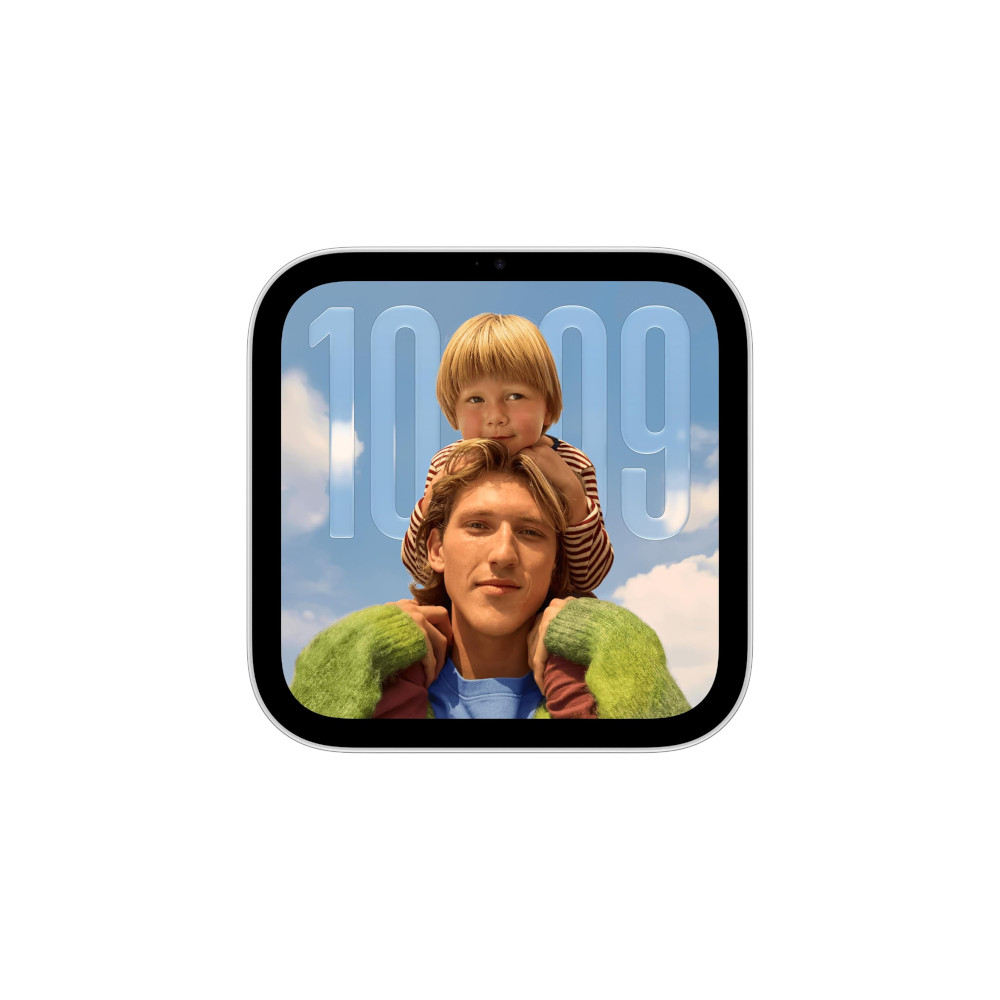
If you’re a Google Home user that hasn’t followed the Apple HomeView announcement closely, here’s the rundown: HomeView is a square smart display with a 7-inch screen, and wall mount or speaker base configurations. From a size standpoint, the Apple HomeView display is most similar to Google’s second-generation Nest Hub. When you start to consider the feature set, the HomeView screen has a lot in common with the larger Nest Hub Max.
I own a Nest Hub and a Nest Hub Max, and the two Google smart displays manage my cameras, lights, thermostat, and doorbell. A smart display doesn’t need to have the fanciest screen, but it’s notable that the Nest Hub and Nest Hub Max account for some of the worst screens in my home.
It'd be nice to have a smart display that looks as premium and elegant as the Pixel Tablet.
This isn’t an exaggeration. The former has a pixel density of 170 pixels per inch (PPI), while the latter has a pixel density of 150 PPI. Apple’s HomeView has a pixel density of 220 PPI, so it’ll look considerably sharper than a Nest Hub of the same size. Dependent on the price, I’m expecting a higher-resolution screen on the Google Home Display.
I use my Nest Hub screens with Google Cast for videos often, and my eyes would appreciate a better display than the current Google hubs offer. While I’m all for the Nest ecosystem’s prices, it’d be nice to have a smart display that looks as premium and elegant as the Pixel Tablet — and for that matter, the Apple HomeView.
A wall mount option

Dating back to when it was called the Google Home Hub, the Nest Hub lineup has always featured smart displays with built-in speaker stands. Even as competitors like Amazon and Skylight find success with wall-mounted smart home panels, Google’s offerings remain limited to the countertop.
Apple is making the HomeView display available with either a built-in speaker stand or as a display-only version to be used with a wall mount. I expect it to bring even more attention to the wall-mounted smart display category, despite Apple’s questionable pricing. The wall-mounted HomeView screen lacks the three speaker drivers inside the countertop HomeView model, but both cost the same $299. Oh, did I mention the wall mounts are sold separately?
Google, please embrace the Ethernet smart home.
I’m not actually surprised by that, because this is the company that charged $699 for wheels. Alas, there’s a lot Google can learn from Apple’s wall-mounted HomeView. If it built a wall-mountable Home Display available at a lower price, it’d have an instant advantage. Without a competitor in this segment, it’s losing potential customers to Amazon, Skylight, and now Apple.
Plus, Apple will sell a third-party mount with Power over Ethernet (PoE) support for the HomeView next year. That’s a big deal, because PoE will deliver power and wired internet to the HomeView with a single cable. It makes for easier installations, stabler internet connections, and faster local smart home control. Google, please embrace the Ethernet smart home.
A capable processor

Google’s Nest Hub and Nest Hub Max both use extremely basic, low-powered systems-on-a-chip (SoCs). Every action requires an internet connection and cloud processing. Without an active Wi-Fi network, you won’t see more than the time on a Nest Hub display. I’m not expecting the Google Home Display to run on a Tensor chip, to be clear, but it does need more processing power than a Nest Hub.
Apple laid out the perfect blueprint for a smart display backed by a capable processor with the HomeView. It’s powered by the Apple A18 chip, which previously appeared in the iPhone 16 series.
Thanks to the iPhone processor, HomeView can process Siri AI requests on-device without needing the cloud. Personal requests pull data from a nearby iPhone or iPad connected to the same Wi-Fi network, not an iCloud server. Keeping processes local is ideal for privacy, and it’s not the only way the A18 chip safeguards your data — it also has a secure enclave for camera and microphone processing.
With the Home Display, Google needs to reduce its smart displays’ reliance on the cloud. Gemini will be at the heart of the Home Display experience, of course. However, Google could surely create a lightweight Gemini Nano model optimized for the Home Display for basic requests. That is, if it equips the Home Display with a capable chip.
Cross-device features

Unsurprisingly, the HomeView display works great with other Apple products. Place an iPhone in front of the HomeView’s screen, and songs, podcasts, calls, and videos immediately transfer over to the smart display. Pull up a recipe on an iPhone, and read it in a simplified view on a HomeView. By the looks of it, the handoff features are seamless.
Google is building out a cross-device services suite of its own, and it should take note of the HomeView’s handoff capabilities. In fact, Google has already brought similar features, “Hold close to cast” and “Continue on,” to the Pixel Tablet. They didn’t make their way to the Nest Hub or Nest Hub Max, and the HomeView’s handoff implementations are further evidence they should come to the Home Display.
Googlebooks are the latest example of how Google’s cross-device services can unify the brand’s products, and the Android ecosystem at large. The rumored Google Home Display needs to become a part of that.
A touch-friendly UI

Some expected the Apple HomeView to be a mix of an iPad and a HomePod, but it turned out to be shaped like a big Apple Watch with a custom operating system. The OS that powers HomeView is strangely limited, without robust third-party app support or an App Store. Apple got one thing right: the touch-first user interface.
Google’s Nest Hub and Nest Hub Max both feature touchscreens, but it’s clear they weren’t designed for touch control. It takes a swipe and a tap to reach a bare-bones home screen with a Nest Hub’s apps. The dashboards for home and media control are frustrating to navigate with fingers, and it’s quicker to use my voice or phone instead.
By comparison, the HomeView software appears to be heavily based on iOS, and that’s a good thing. It should be easy to walk up to a smart home dashboard and quickly tap it to get things done. After seeing Android power the Pixel Tablet’s hub mode, there’s a case for using an Android derivative for the Home Display. At the very least, the UI needs to be better optimized for touch.
I like these five aspects of Apple’s HomeView display, but I’m not planning to buy one. I fully switched over to Google Home last year, and a flashy smart hub isn’t enough for Apple to win me back. However, I need to see Google revitalize its Home and Nest lineup. I’m itching to replace my Nest Hub and Nest Hub Max. In order for me to do that, Google’s rumored Home Display needs to take a few pages out of Apple’s book.

Auto-framing in video calls is a nice touch
Great display, despite the fairly low resolution
Thank you for being part of our community. Read our Comment Policy before posting.