Affiliate links on Android Authority may earn us a commission. Learn more.
I want to love the Pixel 11 Pro Fold, but one silly change is stopping me
Aug 24, 2026 — 6:00 AM ET



Before the Pixel 11 Pro Fold became official, I shared a wishlist of changes I wanted Google to make for its next foldable. To my surprise, the Pixel 11 Pro Fold offers many of the upgrades I needed to take Google foldables seriously again. It’s thinner and lighter, has slimmer bezels and better screens, and supports faster 25W Qi2 wireless charging. However, Google also made an unexpected change to the Pixel 11 Pro Fold that I can’t overlook.
To make the Pixel 11 Pro Fold about 1mm thinner than the Pixel 10 Pro Fold, compromises had to be made. The one you probably noticed is the smaller 4,806mAh battery capacity, but that isn’t the one I care about.
The thickness of the Pixel 11 Pro Fold is asymmetrical. In other words, one half of the foldable is thinner than the other. It’s a design choice you can see and feel. I noticed it immediately after unfolding the Pixel 11 Pro Fold in my hands-on session, and I can’t stop noticing it.
Do you care about the Google Pixel 11 Pro Fold's asymmetrical thickness?
One side of the Pixel 11 Pro Fold is not like the other

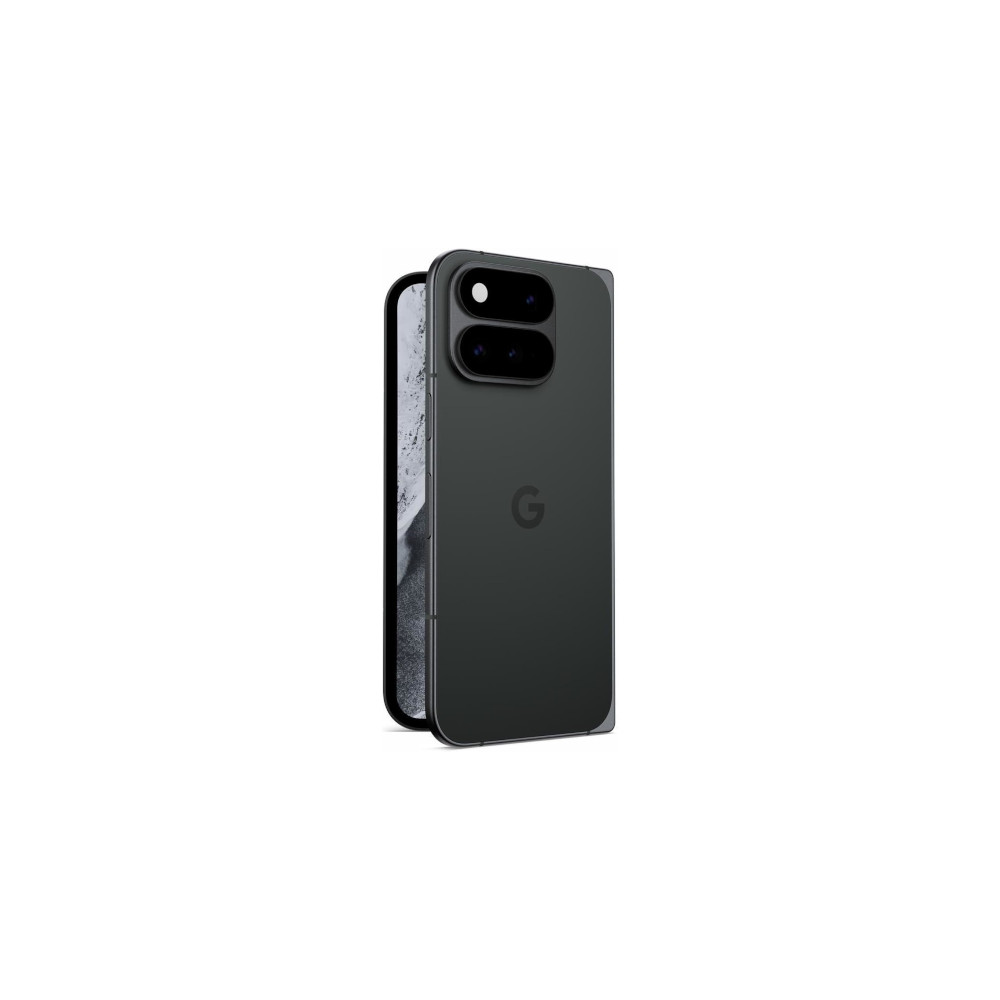
Google’s official specs list the Pixel 11 Pro Fold’s thickness as 10.1mm when folded and 5mm when unfolded, but that doesn’t tell the whole story. One side is slightly thicker than the other. We’re talking about fractions of a millimeter here, although the difference is clear. The Pixel Fold, Pixel 9 Pro Fold, and Pixel 10 Pro Fold all had completely flat backs when unfolded, excluding the camera bump. The Pixel 11 Pro Fold is the first to feature two halves with differing thicknesses, and it’s not a change I’m thrilled about.
You can see the difference for yourself in the close-up shot of the Pixel 11 Pro Fold hinge below. The left side of the foldable is thicker than the right side. Interestingly, the side of the Pixel 11 Pro Fold with the cover display is thicker. You might initially think that the inclusion of Qi2 magnets is the reason for the uneven thickness, but the half of the Pixel 11 Pro Fold with Pixelsnap is actually thinner. It’s not related to the cameras either, since the rear lenses and HiLight are on the thinner side of the Pixel 11 Pro Fold.

The Pixel 11 Pro Fold likely isn’t the first foldable phone with an asymmetrical thickness, but any differences in thickness between the two sides of a folding phone are imperceptible. I couldn’t discern any thickness differences between the halves of the Samsung Galaxy Z Fold 8, Motorola Razr Fold, or Pixel 10 Pro Fold, even after looking at them for hours. With the Pixel 11 Pro Fold, the variance is easy to spot.
As soon as I picked it up and unfolded it, I felt the uneven thickness on my fingertips. While visually examining the hinge, it was clear one side is thicker than the other. Once you see it, you can’t unsee it. Now that my eyes have picked up on the quirk, I notice the asymmetry in thickness even when the Pixel 11 Pro Fold is folded.
An uneven foldable matters more than you think

Oddities like the Pixel 11 Pro Fold’s uneven thickness tend to become less noticeable over time. You probably remember the first scratch you got on your phone screen, and how much it stood out to you. Then, the days and weeks passed, and the scratch became invisible. Your brain stopped noticing it. I hoped my mind would forget about the Pixel 11 Pro Fold’s asymmetry over time, but after nearly a week of use, it’s still something I notice.
I see the quirk every time I look at the Pixel 11 Pro Fold’s hinge, but that’s beside the point. The visual part, while very noticeable, can be ignored. It’s the way the Pixel 11 Pro Fold’s uneven thickness affects the device’s in-hand feel that bothers me. When I hold the Pixel 11 Pro Fold unfolded, my fingertips tend to rest along the part of the foldable where the two sides meet. On a regular folding phone, I can sort of feel the crevice, but the two sides are otherwise flat.
While holding the Pixel 11 Pro Fold, I feel the differences in thickness between the two halves of the phone. It’s particularly noticeable during one-handed operation with the Pixel 11 Pro Fold unfolded. My fingertips and palm are holding parts of both sides of the Pixel 11 Pro Fold, and they don’t blend together to create a flat surface as I’d expect. It’s up to you to decide how much this bothers you, if it all. I can certainly get over it, but it’s not something I’ll ever completely forget about.
It's the way the Pixel 11 Pro Fold's uneven thickness affects the device's in-hand feel that bothers me.
I’m sure there will be some Android Authority readers annoyed by this Pixel 11 Pro Fold design change, and others who think I’ve gone completely crazy. I wondered whether I was crazy myself, so I handed my Pixel 11 Pro Fold review unit to my partner, who’s not much of a tech person. She initially thought I was overreacting — until I handed her a Pixel 9 Pro Fold for comparison, with two sides that were symmetrical in thickness. She preferred the even Pixel 9 Pro Fold, despite it being thicker and heavier than the uneven Pixel 11 Pro Fold.
We’re not the only ones picking up on the change. One user on Reddit incorrectly assumed the Pixel 11 Pro Fold couldn’t open completely flat after trying display units and noticing the uneven thickness. Some of the replies describe the characteristic as being something they “can’t get over” and “just bad.” So, your mileage may vary… but buyer beware.
There had to be a better way to slim the Pixel 11 Pro Fold

As I use the Pixel 11 Pro Fold, I can’t help but like it. Qi2 and IP68 durability are features you’ll only find on Google’s foldable, and they’re enough to keep the Pixel 11 Pro Fold relevant in a competitive market. The slim bezels, bright screens, and faster charging are all welcome upgrades. The catch is that the Pixel 11 Pro Fold’s thinner chassis is uneven. It’s not just a visual bother, because you can feel the uneven back surface every time you hold it unfolded.
I can’t help but think there had to be another way, since Samsung, Motorola, and global brands have all managed to shrink their foldables without introducing this asymmetry. The Galaxy Z Fold 8, Galaxy Z Fold 8 Ultra, and Razr Fold are all slimmer than the Pixel 11 Pro Fold, and those phones didn’t need an uneven chassis to achieve their thinness. I would’ve preferred a design with a larger camera bump that houses more components, like the one on the iPhone 17 Pro and Pro Max. Since you rarely hold your phone by the camera housing, it’s less noticeable.
Instead, the Pixel 11 Pro Fold’s uneven back panel presents an inconvenience in the place you’ll notice it most. It’s already a characteristic I hope Google changes for the Pixel 12 Pro Fold.
Thank you for being part of our community. Read our Comment Policy before posting.