Affiliate links on Android Authority may earn us a commission. Learn more.
What's the point of foldable Pixel phones anymore?
Jul 13, 2026 — 6:00 AM ET



I distinctly remember being ecstatic when the original Pixel Fold launched. After years of living with a category dominated by Samsung, a company whose products I don’t particularly enjoy, it felt like Google was finally taking the foldable category seriously. As a tech enthusiast, I speak for all of us when I say we hoped Google’s clean software vision and great camera processing would bring fresh life to a market dominated by Samsung.
Fast forward to today, and the entire landscape has completely changed. Foldables are no longer a rare luxury or a tech experiment; they are a mature, highly competitive product segment where everyone is fighting for dominance, and there’s no shortage of options. Even more if you’re not in North America.
The problem is that while everyone else is running full steam ahead, not only to perfect the form factor but also to improve it, Google seems content to just exist and has barely moved beyond its initial vision. In 2026, a clean Pixel interface on a folding screen is no longer a selling point; it’s table stakes, and hardware does matter.
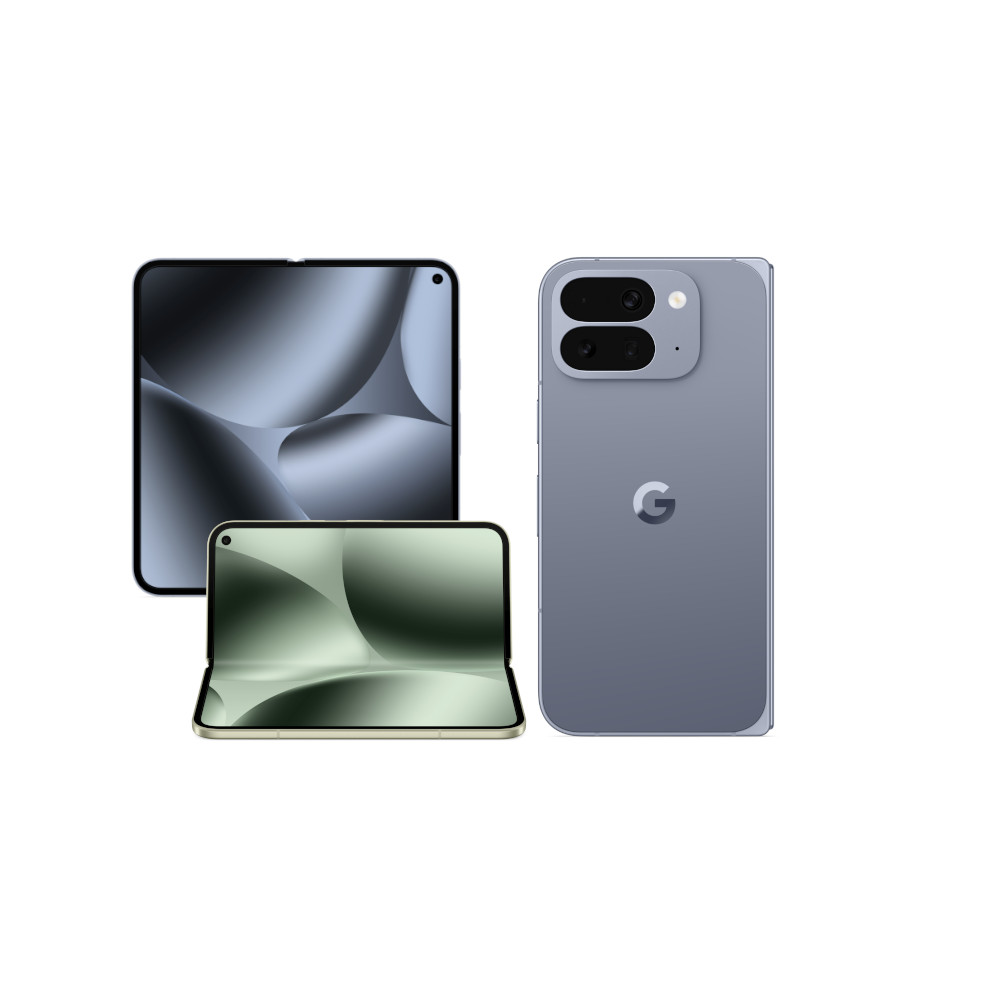
With the latest leaks about the upcoming Pixel 11 Pro Fold making it abundantly clear that what’s coming is just more of the same, it really bears asking: What is the actual point of a foldable Pixel phone anymore, and why should we even care?
Are Google's foldables still competitive?
The competition is moving too fast

The Razr Fold not only looks great but also packs excellent displays, two days of battery life, which is something that Pixel phones can only dream of, very good cameras, and seven years of Android updates. It is everything I expect from a Pixel phone, except not by Pixel.
When your rivals are solving foldables’ biggest problems, standing still isn’t an option.
At the same time, Samsung is preparing to launch the Galaxy Z Fold 8 Ultra alongside the new (and wider) Z Fold 8. Obviously, Samsung is not sitting on its success. In fact, it reportedly fixes the long-running screen crease issues that plague the category, introduces massive upgrades to a 200-megapixel main camera, and significantly bumps battery capacities.

While the former is said to be a more conventional upgrade, the Z Fold 8 is supposed to take on the upcoming iPhone Fold, a phone that hasn’t even been announced yet. That is the pace at which the smartphone industry moves. And in a market moving at this speed, you cannot afford to have an off year, let alone an off strategy.
It goes without saying that every single generation needs to bring a big leap forward in durability, display quality, or utility. Motorola and Samsung have shown they are willing to completely redesign hinges, introduce new screen aspect ratios to reach new audiences, and overhaul camera systems to win over buyers. Google, on the other hand, seems to be trapped in a cycle of minor, incremental tweaks.
A clean interface matters, but in this economy, every buyer is looking to maximize what they get for their money. And, let’s be real, the Pixel Fold has never been a great value. When your rivals are actively solving the biggest pain points of foldable technology, standing still is not an option.
The looming shadow of the iPhone Ultra

While what Apple considers polished is down to personal preference, and the iPhone Ultra might not have the biggest battery or the best camera, we can be sure that it’ll feel luxe and will have software that truly justifies its positioning. Many of the recent changes to multitasking in iPadOS allude to what Apple has in mind for the foldable iPhone. If Apple can get even a lighter version of iPad OS on its smartphone, I see tough times ahead for Android foldables in general, and Pixel foldables in particular.
Apple doesn’t need the best specs. It just needs the best experience.
When the iPhone Ultra (or whatever Apple decides to call it) hits store shelves, it will undoubtedly offer a deeply integrated software experience that works seamlessly across Apple’s product portfolio. That is a massive problem for the Pixel line.
Historically, the best reason to buy a Pixel foldable was the software. Google’s unique features, clever split-screen multitasking, and smart tools helped people overlook that the hardware was often heavier, thicker, and clunkier than its rivals’. Once Apple brings its massive developer ecosystem and polished software execution to a folding screen, Google loses its primary advantage. It becomes impossible to justify a quirky, unrefined Pixel experience when Apple delivers a seamless ecosystem, Samsung offers a powerhouse multitasking tool, and Motorola offers a reasonably priced middle ground.
The Pixel 11 Pro Fold problem

If you were hoping that Google would respond to the competition with a spectacular hardware showcase with the Pixel 11 Pro Fold, the latest leaks will let you down. Reports point to a device that is only a fraction of a millimeter thinner, nowhere near the ultra-slim hardware we’ve been getting with other foldable phones. This means you’ll barely notice the change in your hand during daily use.
Even worse, the battery capacity is said to have gotten smaller. Foldable phones already struggle with battery endurance because they have to power large internal screens, so I just don’t see the justification for reduced capacity to achieve greater thinness. This is even more problematic when paired with the power-hungry Tensor chipset.
That said, perhaps the biggest letdown is the camera department. The Pixel 11 Pro Fold is rumored to skip any major imaging upgrades, with rumors pointing to a slightly improved 50MP sensor at best. Come on, Google. Oh, wait, what about a creaseless display? Forget about it — it’s apparently still there.
Smaller battery. Minimal camera upgrades. Barely thinner. That’s not enough in 2026.
Paying nearly $2,000 for a phone means you should get the absolute best hardware a company can offer. If Google cannot even give its most expensive phone the same camera sensors found on the standard Pixel 11 Pro XL, or move the needle forward in the display department, the raison d’etre of a foldable smartphone, the hardware math simply does not add up. Buyers are paying a massive premium, and they deserve a device that does not cut corners on essential features like zoom quality or low-light performance.
Merely existing is not a strategy

The fact of the matter is that merely existing as an alternative option is no longer a viable strategy for Google. Between Samsung pushing hardware limits, Motorola having a resurgence, and Apple preparing a polished ecosystem play, Google is getting squeezed out from both sides. And that is with Chinese OEMs like OPPO and Huawei not even fielding their devices in North America.
If Google won’t build a market-leading foldable, maybe it shouldn’t build one at all.
If Google is truly comfortable releasing minor updates that fail to push the envelope, it should also be comfortable with customers looking the other way or seriously considering whether this project is worth the effort. Consumers are smart enough to realize when a company is just going through the motions, and a $2,000 smartphone that barely moves the needle forward is really just that — Google going through the motions.
If Google does not want to invest the resources required to build a true market leader, it might be time to step aside and let the foldable race to the companies that actually want to win, while delivering value to buyers splurging on a premium smartphone experience.
Thank you for being part of our community. Read our Comment Policy before posting.