Affiliate links on Android Authority may earn us a commission. Learn more.


The Roborock Saros 20 Flow is an expensive robot vacuum that's almost worth every penny

Nov 27, 2026 — 6:00 AM ET
Roborock Saros 20 Flow
MSRP: $1,699.99
What we like
What we don't like
Roborock Saros 20 Flow


The Roborock Saros 20 Flow ($1699.99 at Amazon) is one of the company’s most expensive robot vacuum cleaners, bringing major upgrades to mopping and hands-free maintenance, along with 36,000Pa suction. It’s also one of the most feature-packed robot vacuums I’ve tested in a while, with plenty that makes everyday cleaning a lot easier. But does it do enough to justify its hefty price tag and earn a spot among the best robot vacuums you can buy? Let’s find out.
There’s a lot going on with the Roborock Saros 20 Flow

Roborock seems to have taken some inspiration from Qualcomm when it comes to naming its products (that’s how confusing the lineup is right now). There’s the Qrevo series of robot vacuums, the F25 series of cordless wet-dry vacuums, and then there’s the company’s flagship Saros 20 lineup, which currently includes three models: the Saros 20, the Saros 20 Flow, and the Saros 20 Sonic.
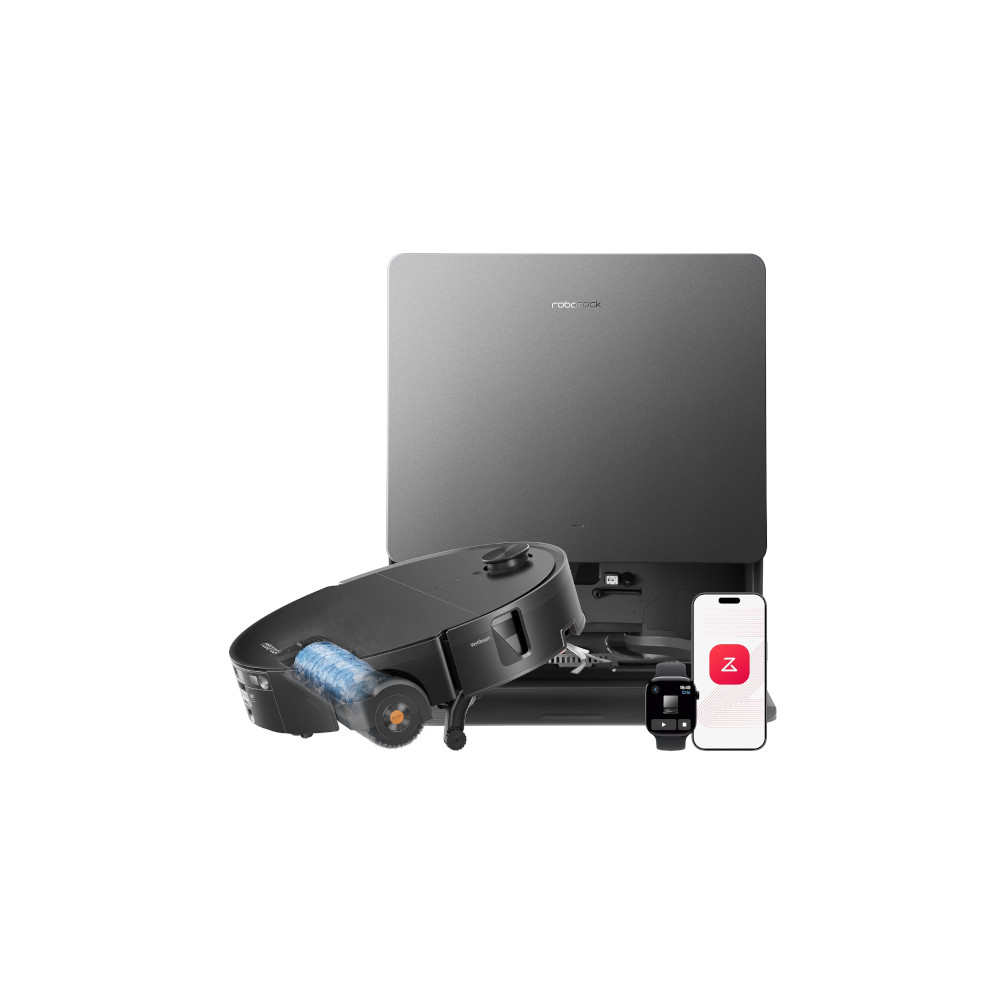
While all three are premium robot vacuums, the biggest difference is how they handle mopping. The regular Saros 20 uses traditional rotating mop pads, while the Saros 20 Sonic, which costs the same $1,699.99 as the Flow, uses a vibrating mop pad. The Saros 20 Flow, on the other hand, comes with a roller mop that’s designed to clean itself continuously as it moves across your floors.
In terms of design, the Saros 20 Flow looks much like any other premium robot vacuum. It has a circular body with two side brushes at the front, a roller mop at the back, and a retractable LiDAR sensor on top. Interestingly, despite having a retractable LiDAR sensor, the Saros 20 Flow is slightly taller than the regular Saros 20, measuring 3.54 inches compared to 3.14 inches. This means it might struggle to get underneath certain pieces of furniture that the regular model can reach, although I didn’t run into many issues with this during my testing.

The docking station is also quite large, but that’s because it handles most of the maintenance for you. There are two separate water tanks for clean and dirty water, a compartment for cleaning solution, and a dust bag that collects everything the vacuum picks up.
Thankfully, Roborock has made the initial setup straightforward. Most of the components come pre-installed, so all you really need to do is attach the base tray, plug in the power cord, and you’re good to go. Pairing the vacuum with your phone is just as easy. You simply scan the QR code on the unit, and the Roborock app takes care of the rest.
The roller mop is the real star of the show

Coming back to the robot vacuum itself, one of the biggest highlights of the Saros 20 Flow is its roller mop. Unlike traditional robot vacuums that use rotating mop pads, the Saros 20 Flow uses a continuously rotating roller that gets cleaned with fresh water as it mops. This means the vacuum isn’t simply dragging the same dirty mop across your floors, which is particularly useful if you have a lot of hard flooring in your home.
The suction power is equally impressive, with the same 36,000Pa suction we saw on the Saros 20. It also features Roborock’s AdaptiLift Traverse 3.0 system, which allows the vacuum to raise its chassis and cross two-step thresholds up to a combined height of 8.8cm (3.46 inches), with the first step up to 4.5cm (1.77 inches). This helps if you have raised door thresholds or uneven flooring between rooms.

As for the actual cleaning experience, one thing that immediately stood out to me was just how quiet the Saros 20 Flow is. Despite having such powerful suction, it’s noticeably quieter than several other robot vacuums I’ve tested. Of course, it gets louder when you crank up the suction, but for everyday cleaning, I didn’t find the noise particularly bothersome.
I also like how little I had to intervene once everything was set up. The Roborock app uses AI to automatically determine the suction power, water usage, and cleaning sequence based on the room and how dirty the floor is. You can manually adjust all these settings whenever you want, but I found the automatic mode worked well for most cleaning sessions.
In terms of features, there is AI dirt detection onboard as well. This means the robot vacuum can automatically recognize dirty spots on the floor and go over them again if needed, without you having to tell it to do so.
Cleaning performance is excellent, with a few caveats

If there’s one thing I didn’t particularly like about the Saros 20 Flow’s cleaning performance, it’s the edge cleaning. The Saros 20 Flow has an extendable roller mop that moves out from the side of the robot vacuum to clean along walls and edges. However, I found the results to be a bit hit or miss.
There were several instances where the vacuum left certain spots unmopped or uncleaned, even when cleaning along a perfectly straight wall. It’s not a dealbreaker by any means, but it’s something I noticed more than once during my testing. That said, this is my biggest complaint after using the Saros 20 Flow for the past few weeks. If mopping is your priority and you have a lot of hard flooring in your home, the Saros 20 Flow is hard to beat.
As for battery life, I found it to be pretty good, especially considering the size of my home. I tested the Saros 20 Flow in a roughly 2,500-square-foot home with three bedrooms, a large living area, and plenty of furniture. During a full cleaning session, with vacuuming followed by mopping, the battery dropped to around 35% by the time it finished. That’s impressive considering how much ground it had to cover, and if you’re using it for occasional cleaning or have a smaller home, battery life shouldn’t be much of a concern.
The Roborock Saros 20 Flow cleaned my roughly 2,500-square-foot home with around 35% battery to spare.
The water tanks, however, are a different story. During the same cleaning session, I had to refill the clean water tank and empty the dirty water tank midway through. This will depend on how large your home is and how dirty the floors are, but it’s worth keeping in mind if you’re planning to use the vacuum in a similarly large space.
In terms of cleaning speed, the Saros 20 Flow took around three hours to completely clean my home. It’s worth noting that I used a cleaning cycle where the vacuum first cleaned the floors and then went over them again with the mop, rather than the default setting, which does both simultaneously. The overall cleaning time should be considerably shorter if you choose to vacuum and mop together.

Another area where the Saros 20 Flow impressed me was obstacle avoidance. It can recognize different household objects and navigate around them without getting stuck. During my testing, it successfully identified shoes and loose cables on the floor and avoided them without any intervention. And yes, this also means that the Saros 20 Flow has a built-in camera that helps identify objects, and you can even enable an option in the Roborock app to capture photos of what it avoids.
There’s also a remote monitoring feature that lets you use the robot’s camera to check on your home. However, I didn’t end up using this feature because I don’t particularly want another surveillance camera inside my house.
Apart from occasionally dealing with the water tanks, the Saros 20 Flow pretty much takes care of itself.
Once the cleaning is done, the Saros 20 Flow automatically returns to its docking station and starts cleaning the roller mop. By default, the mop washing cycle is set to Balanced, but you can also choose a more intensive cleaning mode that uses water heated to as much as 100°C (212°F). This helps remove dirt and grime from the roller without you having to wash it manually.
After washing, the docking station also dries the mop using warm air over the next few hours. This helps prevent moisture buildup and unpleasant odors, while ensuring the mop is clean and ready for the next session. It’s one of the things I really appreciate about the Saros 20 Flow, because apart from occasionally refilling the clean water tank and emptying the dirty one, there’s very little maintenance you actually need to worry about.
Roborock Saros 20 Flow review verdict: Should you buy it?

There’s no doubt that the Roborock Saros 20 Flow is an excellent cleaning machine. If you’re looking for a one-stop cleaning solution for your home and don’t want to compromise on features, the Saros 20 Flow is easily one of the best options you can buy right now.
Sure, this is an extremely expensive robot vacuum, and you can easily find a capable model for less than half its price. But if you have the budget and want something that takes care of almost everything on its own, the Saros 20 Flow is definitely worth considering.
What I particularly love about the Saros 20 Flow is how well it handles mopping. For someone like me who has a lot of hard flooring at home, the continuously cleaned roller mop makes a pretty big difference. Add to that the powerful 36,000Pa suction, automatic mop washing and drying, and the feature-rich Roborock app, and there’s very little left to complain about. I do wish the edge cleaning were a little more consistent, and the water tanks lasted longer, but those are my only real complaints after spending the past few weeks with it.
For someone like me who has a lot of hard flooring at home, the Saros 20 Flow's continuously cleaned roller mop makes a pretty big difference.
That said, there’s plenty of competition at this price point. There’s the Narwal Flow 2 ($949.99 at Narwal) and the Ecovacs Deebot X12 OmniCyclone, both of which offer roller mops and automatic maintenance docks. There’s also the Dreame X60 Max Ultra Complete ($1699.99 at Amazon), which offers 35,000Pa suction, dual rotating mop pads, automatic mop cleaning with hot water, and a slimmer design that should make it easier to clean underneath furniture.
If you want something slightly more affordable but still want a premium cleaning experience, there’s also Roborock’s own Saros 20 ($1599.99 at Amazon). It offers many of the same high-end features, including powerful suction, advanced obstacle avoidance, and automatic maintenance, but uses traditional rotating mop pads instead of the Saros 20 Flow’s roller mop. In fact, my colleague Jonathan found the Saros 20 to be the best robot vacuum he’s tested for edge cleaning, so it might actually be a better option if that’s a priority for you.
However, if you’re specifically looking for a robot vacuum with a roller mop, you don’t necessarily need to spend nearly $1,700 to get one. Roborock’s own Qrevo Curv 2 Flow $999.99 at Amazon offers a similar approach to mopping. It is considerably taller than the Saros 20 Flow, though, so it might not be able to get underneath some of the lower pieces of furniture in your home.
- Excellent mopping performance
- Powerful 36,000Pa suction
- Almost completely hands-free cleaning
- Feature-rich companion app
- Retractable LiDAR navigation
- Fast and surprisingly quiet cleaning
- Edge cleaning could be better
- Extremely expensive
Conversation
Read what readers said or add your take.