Affiliate links on Android Authority may earn us a commission. Learn more.
Google’s latest attempt at fast wired charging on the Pixel 11 Pro XL is a disaster
Aug 28, 2026 — 5:30 AM ET
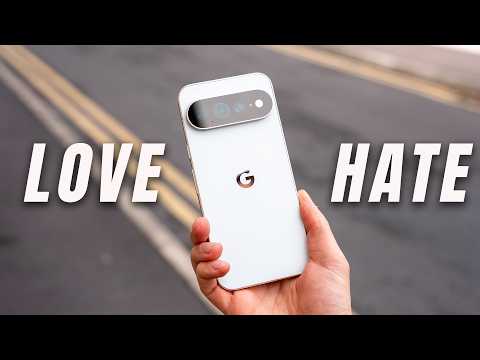


If there are two pieces of tech I have a love-hate relationship with, it’s USB-C charging and Google’s Pixel smartphones. At their best, both can be brilliantly hassle-free, but at their worst, they’re a parade of seemingly unnecessary compromises. Based on my previous experiences with Pixels, testing the 45W wired charging capabilities of the new Pixel 11 Pro XL was almost certainly going to cause a headache or two, but it quickly descended into a full-on migraine.
Which new Pixel 11 feature are you most excited to try?
Let’s start with the good USB-C news for the Pixel 11 Pro XL. After years of underperforming the headline charging figure, Google’s latest large flagship comes much closer to hitting its 45W marketing claim. While still not quite there, I was able to hit a peak of 40.7W for about the first 9 minutes on the Google Pixel Flex 67W charger ($59.99 at Amazon). That’s a reasonable power level and far better sustained than rivals that claim up to 100W capabilities, plus it exceeds the 35W peak I’ve observed on the previous two generations of XL smartphones. So a pat on the back there.
The bad news is that the only way to hit this 40W mark is to use a very specific type of USB-C charger — one that supports 21V at 2A via the USB Power Delivery PPS protocol. While PPS is now very common, many existing chargers are limited to 11V under this protocol, so you need a newer, higher-power PPS plug before the Pixel 11 Pro XL will play ball. We actually encountered this very issue while the team was testing the phone’s fast-charging capabilities: a 67W PPS plug could only deliver 25W to the new Pixel.
Optimal Pixel 11 Pro XL charging requires a 21V USB PD PPS adapter.
Even with the right accessories, that 6W improvement doesn’t make much difference to the phone’s charging times. The XL still takes about 21 minutes to reach 50% charge and 35 minutes to reach 75%, ever so slightly nippier than the 23 and 40 minutes it took the Pixel 10 Pro XL to reach the same percentages, but about the same as my Pixel 9 Pro XL. And that’s despite having more power and an ever-so-slightly smaller 5,115mAh battery, down from 5,200mAh last year.

The Pixel 11 Pro XL’s total charge time of 69 minutes is still on the slow side for a 45W handset, but it seems notably improved on the 81 minutes recorded by its predecessor. However, a quick look at the graph shows a rapid jump from 97% to 100% at the end of my 11 Pro XL test run, suggesting a cheeky approximation of a full battery rather than a strict cutoff at 100%. Google isn’t alone in claiming its phones are full while continuing to trickle-charge for a while longer, but the jump I observed here is a little more aggressive than in previous years and could be an attempt to make the phone feel like it’s charging a little faster than it really is. But it’s hardly worth quibbling over the last 2-3% of battery charge.
The main takeaway is that the phone’s 45W capabilities haven’t made the Pixel 11 Pro XL noticeably quicker to get back on its feet. Getting to half a charge is about the same as it was for the last couple of Pixel generations, but the phone now warms up faster. To speed things up, Google is supposed to have an even faster charging trick up its sleeve this year — Extreme Charging.
According to Google, Extreme Charging throws caution to the wind, allowing the handset to charge faster in exchange for higher temperatures and/or reduced performance while you’re topping up. Apparently, the XL model can reach 75% battery in just 30 minutes, which would make it slightly faster than the standard charging mode I’ve discussed so far. However, I have no way to confirm this is the case because Extreme Charging simply won’t activate on my Pixel 11 Pro XL.

The requirements for Extreme Charging are relatively modest. According to Google’s support page, the phone needs to have less than 50% battery, and you need an adapter capable of delivering 30W to the phone. Easy enough: I have several 21V PPS chargers that I’ve confirmed can deliver around 40W to my new Pixel, yet none of them can enable the setting. There are also supposed to be three ways to enable Extreme Charging: a toggle in the Battery and Charging settings menu, a prompt on the lock screen, or a Quick Setting shortcut while charging. None of these work for me; the first two options simply don’t exist despite installing every available update, while the quick toggle is constantly greyed out.
Google's new Extreme Charging feature is unavailable out of the box.
Various web threads and our own experience with a second Pixel 11 Pro XL unit reveal a ray of hope; the Extreme Charging option seems to appear at random after a few days of use. Perhaps there’s an element of background battery calibration going on that takes time to profile an optimal charging strategy, but this isn’t made clear to us users. In any case, I’m still sitting staring at a toggle setting that simply says “unavailable”. Very helpful, Google.
I didn’t think it was possible for a Pixel to frustrate me more than its already finicky USB-C charging setup, but the Pixel 11 Pro XL has proven me too optimistic. Between highly picky charging requirements, far-from-quick charge times, and creeping temperatures, the standard 45W charging setup is already less than ideal. A new Extreme Charging setting that hardly seems to work for swathes of new Pixel owners is just the cherry on the cake.
Whenever Extreme Charging finally works for me, I’ll be sure to let you know whether it’s even worth all this extra hassle. I won’t hold my breath.
Thank you for being part of our community. Read our Comment Policy before posting.