Affiliate links on Android Authority may earn us a commission. Learn more.
The Google Pixel 11 series is here, and the gap between standard and Pro is wider than ever
Aug 12, 2026 — 10:00 AM ET



Google’s Pixel phones are usually among the best Android phones released each year. That’s largely due to slick designs, performant Android skins, tons of software features, and capable cameras.
It’s been roughly a year since Google launched the Pixel 10 series, which means it’s time for a sequel. Say hello to the Google Pixel 11, Pixel 11 Pro, and Pixel 11 Pro XL.

25W Pixelsnap magnetic charging
Larger 48MP main camera sensor
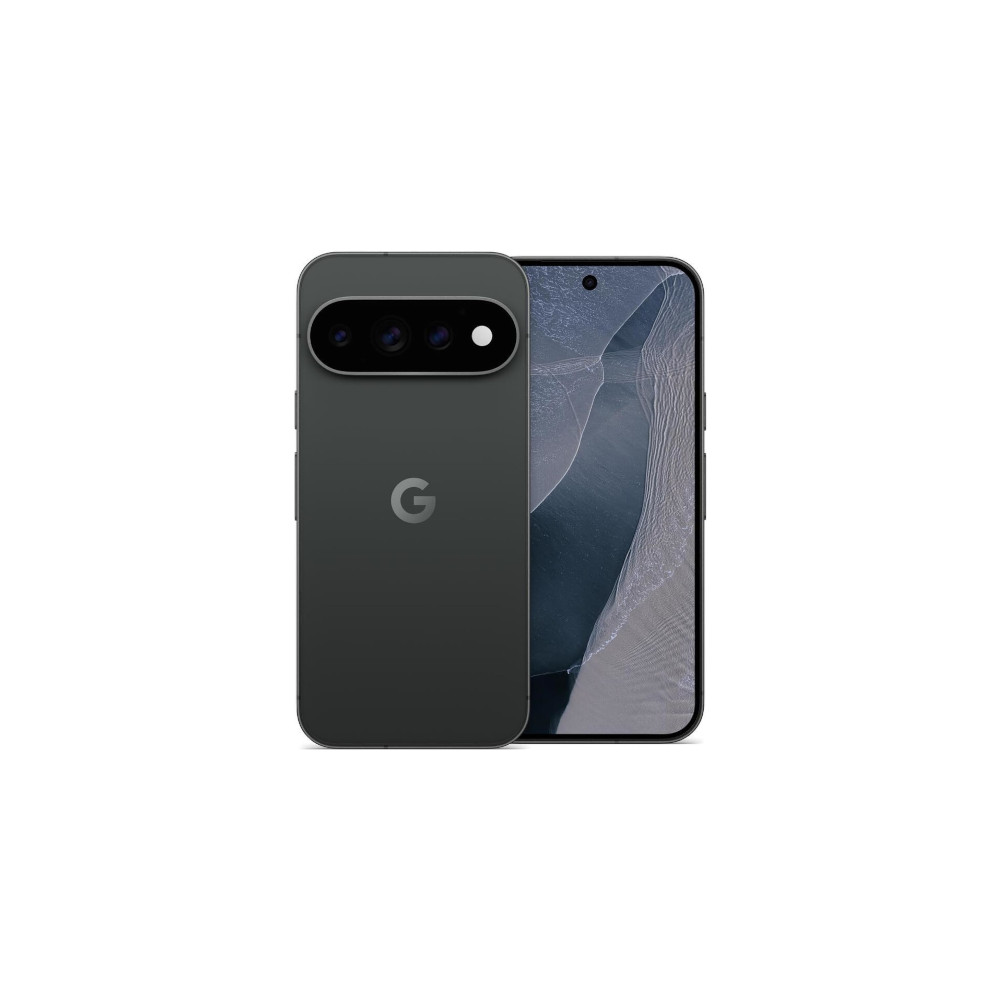
7 years of Android updates
Built-in magnets with Qi 2.2
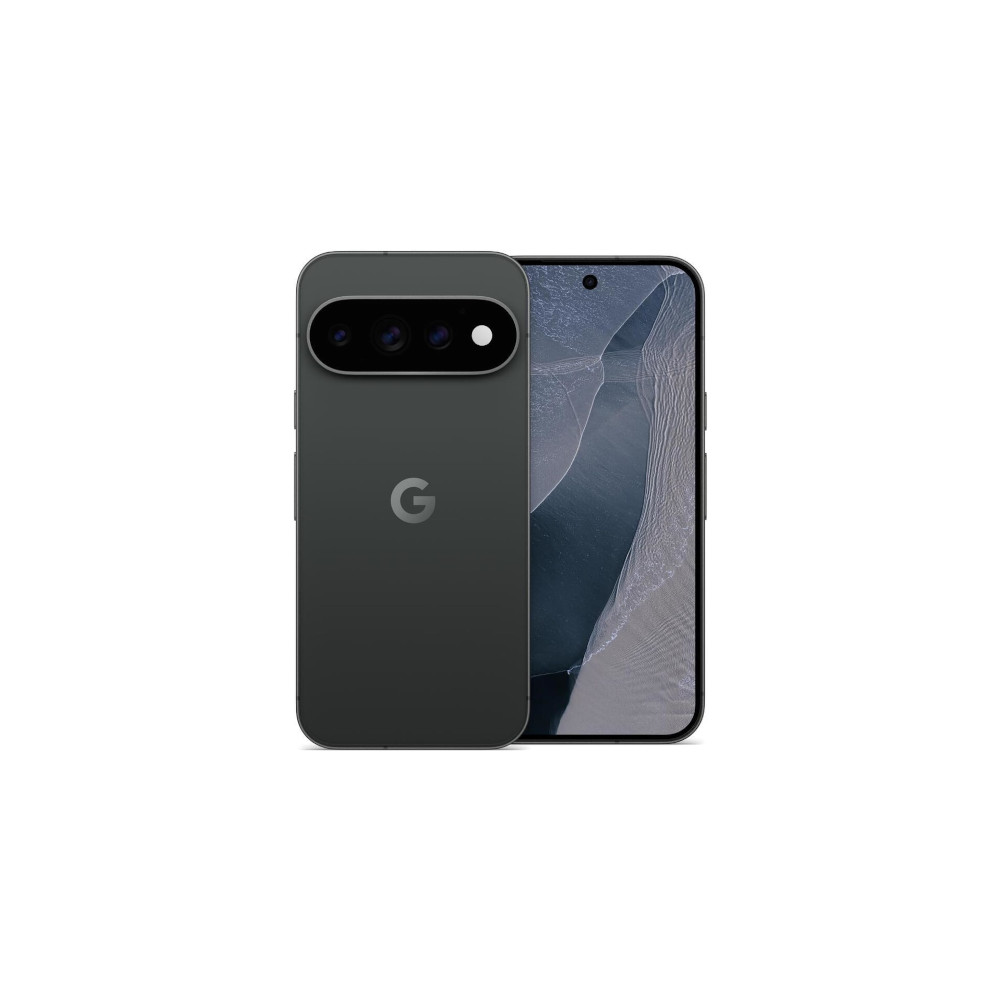
7 years of Android updates
Built-in magnets with Qi 2.2
Google Pixel 11 series release date, price, and availability

- Google Pixel 11 (12GB/256GB): $899
- Google Pixel 11 (12GB/512GB): $1,019
- Google Pixel 11 Pro (12/256GB): $1,099
- Google Pixel 11 Pro (16GB/512GB): $1,219
- Google Pixel 11 Pro (16GB/1TB): $1,499
- Google Pixel 11 Pro XL (12GB/256GB): $1,299
- Google Pixel 11 Pro XL (16GB/512GB): $1,419
- Google Pixel 11 Pro XL (16GB/1TB): $1,649
Google officially launched the Pixel 11 series on August 12 at its Made by Google event in New York City. This followed several weeks of teases by the company. The company also announced the Pixel 11 Pro Fold, and you can read more about it here.
There’s bad news if you were hoping to avoid price hikes in 2026. The RAM crisis means the Pixel 11 phones technically see a price increase. More specifically, the base Pixel 11 starts at $899, the Pixel 11 Pro starts at $1,099, and the Pixel 11 Pro XL starts at $1,299.
The Pixel 11 and Pixel 11 Pro have 256GB of base storage this year, up from 128GB. Google noted during a media briefing that their prices are therefore in line with the 256GB Pixel 10 and Pixel 10 Pro, respectively. This is still disappointing, though, as we usually expect more base storage from phone makers over time without a corresponding price increase. Then again, we’re living in special times as AI companies gobble up all the RAM and storage. Otherwise, the cheapest Pixel 11 Pro XL sees a $100 price hike over the base Pixel 10 Pro XL, but there’s no increased RAM or storage compared to a year ago. In fact, you’re getting less RAM in the cheapest XL compared to last year’s model.
Preorders for the new phones kick off today (August 12), with general availability from August 20. Google is also offering a free six-month Google AI Pro subscription when you buy one of the Pro handsets. The phones will be available in markets like North America, Europe, Australia, Japan, and Taiwan.
Google Pixel 11 series specs
| Pixel 11 | Pixel 11 Pro | Pixel 11 Pro XL | |
|---|---|---|---|
Display | Pixel 11 6.3-inch Actua display (60-120Hz) 1,080 x 2,424 Up to 2,000 nits (HDR) and up to 3,000 nits (peak brightness) | Pixel 11 Pro 6.3-inch Super Actua display (1-120Hz) 1,280 x 2,856 Up to 2,400 nits (HDR) and up to 3,600 nits (peak brightness) | Pixel 11 Pro XL 6.8-inch Super Actua display (1-120Hz) 1,344 x 2,992 Up to 2,400 nits (HDR) and up to 3,600 nits (peak brightness) |
Processor | Pixel 11 Google Tensor G6 | Pixel 11 Pro Google Tensor G6 Titan M3 security coprocessor | Pixel 11 Pro XL Google Tensor G6 Titan M3 security coprocessor |
RAM | Pixel 11 12GB | Pixel 11 Pro 12/16GB | Pixel 11 Pro XL 12/16GB |
Storage | Pixel 11 256 GB / 512GB with Zoned UFS | Pixel 11 Pro 256 GB / 512 GB with Zoned UFS / 1 TB with Zoned UFS | Pixel 11 Pro XL 256 GB / 512 GB with Zoned UFS / 1 TB with Zoned UFS |
Battery & Charging | Pixel 11 4985mAh 30W wired charging Pixelsnap wireless charging (Qi2.2-certified) up to 25W | Pixel 11 Pro 4850mAh 30W wired charging Pixelsnap wireless charging (Qi2.2-certified) up to 25W | Pixel 11 Pro XL 5115mAh 45W wired charging Pixelsnap wireless charging (Qi2.2-certified) up to 25W |
Cameras (Rear) | Pixel 11 48MP wide (Quad PD, f/1.7, 1/1.56-inch sensor size) 13MP ultrawide (Quad PD, f/2.2, 120-degree field of view, 1/3.1-inch sensor size) 10.8MP telephoto (5x optical zoom, Dual PD, f/3.1, 1/3.2-inch sensor size, Super Res Zoom up to 30x | Pixel 11 Pro 50MP wide (Octa PD, f/1.68, 1/1.3-inch sensor size) 48MP ultrawide (Quad PD, f/1.7, 123-degree field of view, 1/2.51-inch sensor size) 48MP 5x telephoto (Quad PD, f/2.8, 1/1.95-inch sensor size, 120x Pro Zoom) | Pixel 11 Pro XL 50MP wide (Octa PD, f/1.68, 1/1.3-inch sensor size) 48MP ultrawide (Quad PD, f/1.7, 123-degree field of view, 1/2.51-inch sensor size) 48MP 5x telephoto (Quad PD, f/2.8, 1/1.95-inch sensor size, 120x Pro Zoom) |
Cameras (Front) | Pixel 11 10.5MP (Dual PD, f/2.2, 95-degree field of view) | Pixel 11 Pro 42MP (Dual PD, f/2.2, 103-degree field of view) | Pixel 11 Pro XL 42MP (Dual PD, f/2.2, 103-degree field of view) |
Dimensions | Pixel 11 152.4 x 71.1 x 7.62mm | Pixel 11 Pro 152.4 x 71.1 x 7.62mm | Pixel 11 Pro XL 162.6 x 76.2 x 7.62mm |
Weight | Pixel 11 195.6 grams | Pixel 11 Pro 204.1 grams | Pixel 11 Pro XL 226.7 grams |
Durability | Pixel 11 IP68 Corning Gorilla Glass Victus 2 | Pixel 11 Pro IP68 Corning Gorilla Glass Victus 2 | Pixel 11 Pro XL IP68 Corning Gorilla Glass Victus 2 |
OS | Pixel 11 Android 17 7 years of OS, security, and Pixel Drop updates | Pixel 11 Pro Android 17 7 years of OS, security, and Pixel Drop updates | Pixel 11 Pro XL Android 17 7 years of OS, security, and Pixel Drop updates |
Security | Pixel 11 Titan M3 security coprocessor Fingerprint Unlock Face Unlock (via selfie camera) | Pixel 11 Pro Titan M3 security coprocessor Fingerprint Unlock Face Unlock (via selfie camera) | Pixel 11 Pro XL Titan M3 security coprocessor Fingerprint Unlock Face Unlock (via selfie camera) |
Connectivity | Pixel 11 Wi-Fi 6E (802.11ax) Bluetooth 6 NFC Thread | Pixel 11 Pro Wi-Fi 7 (802.11be) Bluetooth 6 UWB NFC Thread | Pixel 11 Pro XL Wi-Fi 7 (802.11be) Bluetooth 6 UWB NFC Thread |
SIMs | Pixel 11 US: Dual eSIM ROW: Single Nano SIM and eSIM | Pixel 11 Pro US: Dual eSIM ROW: Single Nano SIM and eSIM | Pixel 11 Pro XL US: Dual eSIM ROW: Single Nano SIM and eSIM |
Colors | Pixel 11 Frost, Hibiscus, Obsidian, Pistachio | Pixel 11 Pro Canyon, Fog, Obsidian (matte), Olive | Pixel 11 Pro XL Canyon, Fog, Obsidian (matte), Olive |
Google Pixel 11, Pixel 11 Pro/Pro XL features
Google’s Pixel phones typically offer good everyday performance, decently sized batteries, capable cameras, and a ton of cool software tricks. We’re expecting the same from the Pixel 11 series, but what’s different this time? Let’s take a close look.
Camera

Google debuted a telephoto camera on the base Pixel 10 last year, delivering a versatile triple-rear-camera setup in the process. A quick glance at the Pixel 11 spec sheet suggests the same camera hardware this time, but Google has actually upgraded the main camera. The 48MP primary camera is now a 1/1.56-inch sensor, up from last year’s small 1/2-inch sensor. It’s still not as large as the base Pixel 9’s 1/1.3-inch main camera, but Google says you should expect 56% better light sensitivity nonetheless. Otherwise, the standard Pixel 11 has the same 13MP ultrawide camera and 10.8MP 5x telephoto camera as the Pixel 10.
What about the Pixel 11 Pro and Pro XL? Google noted in a media briefing that it’s using a new main camera, although the sensor size and aperture appear identical to last year’s Pro phones. We’ve also got a slightly larger ultrawide camera (1/2.51-inch versus 1/2.55-inch). However, the 5x telephoto camera has received a significant hardware upgrade in the form of a 1/1.95-inch sensor. This is on par with the Xiaomi 17 Pro Max’s 5x camera, while being larger than the Galaxy S26 Ultra‘s 5x camera. Google says you can expect 30% better light sensitivity from this telephoto camera. So brace yourselves for low-light zoomed snaps that are brighter and cleaner than before.
The Pixel 11 gets a new main camera and the Pro models get a much-improved telephoto camera sensor.
There’s more to smartphone cameras than hardware, though, and Google is bringing some welcome features this time. Perhaps the most notable addition is Camera Looks, as Google follows in the footsteps of Apple and Android OEMs by letting you choose and tweak your own photo profile. Google says you can choose from four Looks to start with: Original, Natural, Shadows, and Vanilla. These Looks are customizable, and you can set them as your default photo profile. It’s also following the likes of vivo, OPPO, and Xiaomi by emulating film styles.
Another big addition this time is Magic Capture, which is effectively Google’s take on Samsung’s Single Take mode. Enter this mode to capture a 1080p video clip over a short period of time (e.g., 30 seconds). However, the kicker is that Magic Capture will automatically pick out five “HDR+” 12MP photos for you. You can also tap an integrated shutter button in this mode to manually capture a photo. And if you’re not happy with the selection, you can pick out your own shots too. Google told Android Authority that Pro devices can even use Video Boost on the Magic Capture clip to get a 4K video.
Creator Suite is another camera-focused feature worth knowing on the Pixel 11 series. This suite consists of three features, namely Refine with Storyboard to trim and rearrange clips, Project Folders to organize your clips, and a Teleprompter option. Brands like Xiaomi and vivo previously offered teleprompter modes in their camera apps, but Google’s implementation can match your speaking pace and even pause accordingly.
Want smoother video? Then the Pixel 11 Pro phones also offer a Pro Stable Video mode. This stabilized video mode is part of the cloud-based Video Boost feature and automatically kicks in when a shaky, bright-lit scene is detected. Unfortunately, you can’t enable it manually.
Finally, Google now offers an Instant Night Sight mode. This is apparently up to 4.5x faster than the conventional Night Sight mode seen on previous Pixel flagships. The bad news? It’s not available on the standard Pixel 11. In fact, there’s a host of camera features not coming to the Pixel 11.
Performance

The Pixel 10 series was powered by the in-house Tensor G5 processor, and this was a major transition for Google. The chipset was manufactured by TSMC after years of using Samsung Foundry. This was a notable turn of events, as TSMC had a long-standing reputation for producing more efficient, cooler-running chips.
The Pixel 11 series is powered by the Tensor G6 chip, but Google hasn’t confirmed many details about this processor. There was no word on the CPU setup or GPU model, but we installed a system-checking app on the Pixel 11 Pro XL. This reports a seven-core CPU (1x Arm C1-Ultra at 4.1GHz, 4x C1-Pro at 3.3GHz, 2x C1-Pro at 2.6GHz) and a PowerVR C-series GPU with six compute units. It’s worth noting that these CPU cores typically support SME2 for faster, more efficient AI performance without using a dedicated accelerator. That could be handy for AI workloads that aren’t optimized for Google’s TPU. Otherwise, previous leaks suggest that it will be a 2nm chip made by TSMC once again.
Fortunately, Google has dished out a few nuggets to give us a better idea of how the new chip stacks up. It says the Tensor G6 CPU is up to 20% more efficient, 25% faster for web browsing, and delivers 15% faster app loading. You can also expect an upgraded TPU with 50% more computing power and a two-fold improvement in memory bandwidth. This TPU improvement in concert with the latest Gemini Nano means you can apparently expect 3.5x faster AI features while using 3.5x less energy than before. Presumably, the new AI model is doing most of the heavy lifting here. All phones bar the Fold are also getting an upgraded ISP with a custom engine that enables 4K portrait video for the first time in the Pixel line.

Otherwise, Google told Android Authority that the Tensor G6 has “new modem hardware” but stopped short of revealing the part. For what it’s worth, previous leaks point to a MediaTek M90-series modem. The company also refused to divulge specific GPU details, bar saying that you can expect better gaming performance due to a combination of “silicon investments and software optimizations.” But our aforementioned sleuthing points to a new PowerVR GPU.
Moving to the storage arena, the good news is that the Pixel 11 and Pixel 11 Pro finally ditched 128GB of base storage. The bad news is that these phones now have higher starting prices than last year’s devices. There’s also bad news on the RAM front, as the cheapest Pixel 11 Pro and Pixel 11 Pro XL both come with 12GB of RAM. You’ll need to buy the 512GB or 1TB variants if you want 16GB of RAM. By contrast, the Pixel 10 Pro and Pixel 10 Pro XL had 16GB of RAM across the board last year.
Design, durability, and display

Hate the Pixel 10 and Pixel 9 designs? Then the Pixel 11 phones won’t change your mind. But we do see some notable changes here and there. For one, the trademark camera bar is now 40% thinner and features an all-glass surface rather than a mix of metal and glass. We also get a glass back on all three phones, along with an aluminum frame. All three phones are a little lighter this year, too.
One big addition this year is the HiLight feature, which is an LED indicator that sits in the camera bar. This is basically the classic notification LED, but stuck on the back of the phone. Google says it’ll glow in different patterns when using Gemini, and you can choose custom colors for calls from your favorite contacts. It’ll also glow when you receive messages from your favorite contacts, but this feature is coming in a future update. Unfortunately, this isn’t available on the standard Pixel 11.
Each Pixel 11 series phone has an IP68 rating and Gorilla Glass Victus 2 protection, but the HiLight feature is reserved for Pro models.
Google is serving up some notable color options this time. The standard Pixel 11 is available in Frost, Hibiscus, Obsidian, and Pistachio. Meanwhile, the Pro handsets can be found in Canyon, Fog, Olive, and Obsidian color schemes. Pro phones in the latter color also have a matte frame.
As for durability, the Pixel 11 phones have IP68 ratings and are equipped with Gorilla Glass Victus 2 on both the front and the back. We can understand if you expected more recent Gorilla Glass, especially with Gorilla Armor 2 and Gorilla Glass Ceramic 3 now available on the market. However, these screens also have a new coating that supposedly offers twice the scratch resistance of last year’s displays.
Staying with the displays, the Pixel 11 phones have the same screen size and resolution as last year’s devices. However, all three phones have brighter screens than the Pixel 10 range. The base Pixel remains the only one without LTPO tech, though, which means it can only drop to 60Hz. On the other hand, the Pro phones can drop down to 1Hz for maximum efficiency.
Battery life and charging speed

Samsung surprised us when it announced that the Galaxy Z8 foldables all have silicon-carbon batteries. This battery tech enables more capacity for the same physical size or the same capacity for a physically smaller battery. Unfortunately, Google is sticking with conventional lithium-ion batteries this time.
What’s more notable is that only the standard Pixel 11 gets a larger battery, albeit going from 4,970mAh to 4,985mAh. On the other hand, the Pixel 11 Pro drops from 4,870mAh to 4,850mAh, while the XL drops from 5,200mAh to 5,115mAh. So any battery life improvements will be down to the processor, modem, display, and software tweaks.
Don’t expect major charging speed improvements, either. Google is sticking with 30W wired speeds for the Pixel 11 and Pixel 11 Pro, while the XL model maintains 45W charging. The company says the Pixel 11 and Pixel 11 Pro can reach a 55% charge in a pedestrian 30 minutes, which is marginally better than their predecessors. The Pixel 11 Pro XL hits 75% in 30 minutes. That’s slightly better than the Pixel 10 Pro XL, which hits 70% in 30 minutes.
Otherwise, all three phones sport 25W Qi2.2 wireless charging. And yes, the phones have built-in PixelSnap magnets for easy attachment of wireless charging pads and accessories.
Software and updates

The Pixel 11 phones all come with Android 17 out of the box. Furthermore, all three devices will get seven years of security, feature, and OS updates. This is an exclusive club, as Samsung and HONOR are the only other major phone makers offering seven years of security and OS upgrades.
Pixel phones also stand out for their collection of AI features, and the Pixel 11 generation is no different. These phones debut Gemini Intelligence, bringing more agentic AI features to Android. Other notable software additions include the ability to use Circle To Search in your camera app, real-time audio dubbing in Live Translate (supported in YouTube and several other apps), and more seamless device setup if you’re coming from iOS.
25W Pixelsnap magnetic charging
Larger 48MP main camera sensor
7 years of Android updates
Built-in magnets with Qi 2.2
7 years of Android updates
Built-in magnets with Qi 2.2
Thank you for being part of our community. Read our Comment Policy before posting.