Affiliate links on Android Authority may earn us a commission. Learn more.
5 Android phones you should buy instead of the Motorola Razr (2026)
Apr 30, 2026 — 6:00 AM ET
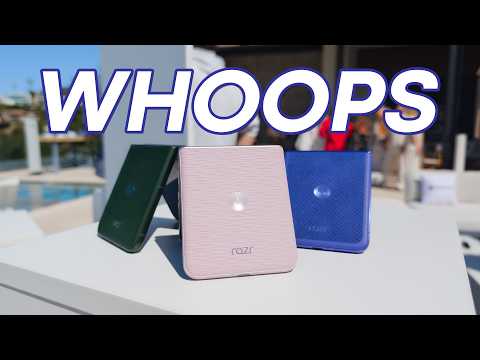


The Motorola Razr (2026) is finally here, and it’s the cheapest model in the entire 2026 Razr lineup. It still offers a few noteworthy features, such as a large cover display, a big battery with wireless charging, and an IP48 rating.
Don’t care about this new Razr phone? Or maybe you’re just curious about other options on the market? Either way, we’ve got you covered as we look at some of the best Android phones you can buy instead of the Razr (2026).
Which Android phone would you buy instead of the Razr (2026)?
Motorola Razr (2025)

I’d strongly argue that you should buy the 2025 Razr instead of the 2026 model, and there are a few reasons for this. The 2025 Razr launched at $700, making it $100 cheaper than the new model. And you’re not missing out on much by opting for the cheaper one.
The two phones have a lot in common, such as an IP48 rating, what appear to be the same screens (down to the peak brightness figures and screen sizes), and the same wired/wireless charging speeds. Furthermore, the old device actually has 256GB of storage compared to the new model’s 128GB. Yes, you’re paying $100 less but getting double the storage.
Even the upgrades aren’t game-changing additions for the most part. The 2025 Razr has practically the same processor, while the 4,500mAh battery is only slightly smaller than the new phone’s 4,800mAh battery. The Razr (2026) does bring a 50MP ultrawide camera, though, compared to the old phone’s 13MP ultrawide shooter. But again, are these upgrades worth at least $100 more? I don’t think so.

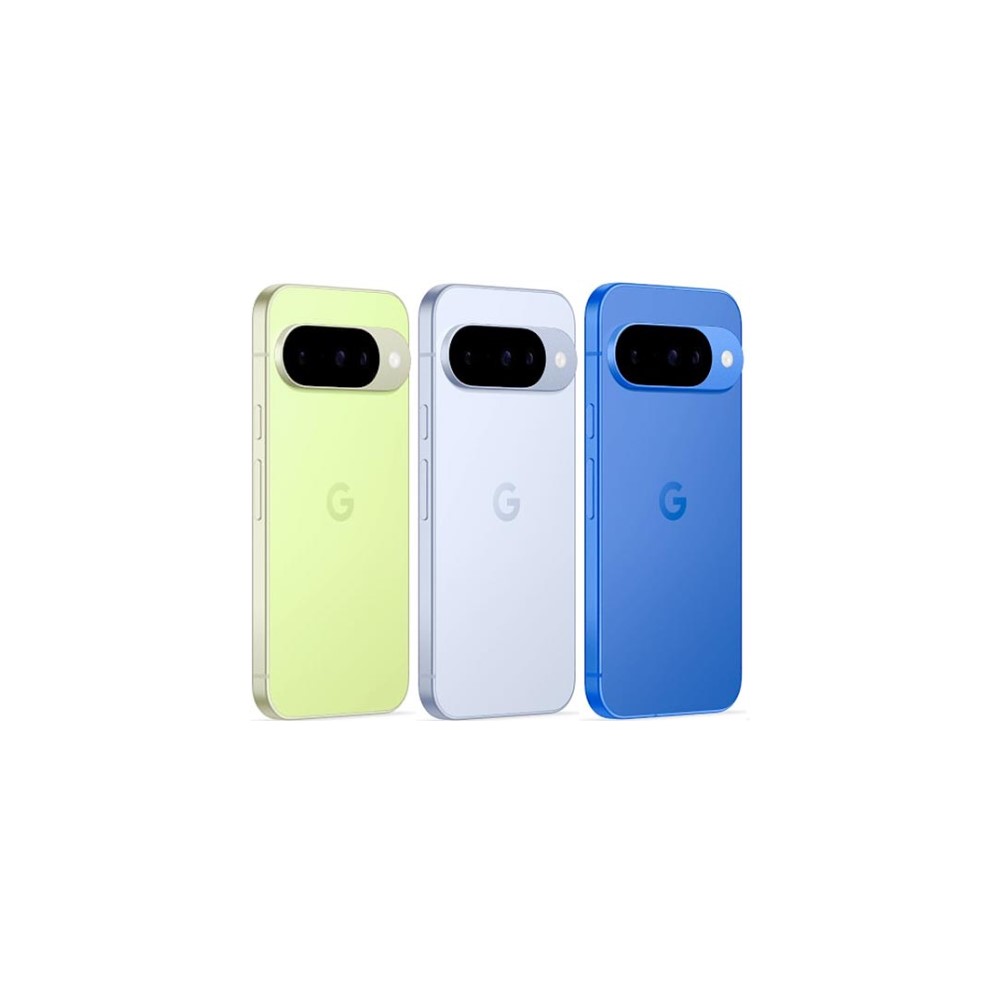
Google Pixel 10

A big reason to buy flip foldables is that they’re very compact, but what if you want a smaller phone without taking the foldable route? Well, the Google Pixel 10 might be for you, and it has the same $800 price tag as the Razr (2026).
The Pixel 10 has a 6.3-inch OLED screen, which puts it on the smaller (but not quite small) side compared to most other phones. It also stands out from the Razr (2026) thanks to the more powerful Tensor G5 processor, an IP68 rating, and a significantly larger battery. It’s a little slower than the Razr when it comes to wired and wireless charging speeds, but it differentiates itself from other Android phones thanks to integrated Qi2 magnets.
Don’t want to miss the best from Android Authority?
- Set us as a favorite source in Google Discover to never miss our latest exclusive reports, expert analysis, and much more.
- You can also set us as a preferred source in Google Search by clicking the button below.


It’s also worth noting that Google’s phone offers a 10.8MP 5x periscope camera. This means the Pixel 10 has better long-range zoom than the Moto handset. In fact, Pixels tend to offer great camera quality in general. So, keep this in mind if photography is a top priority.
Google’s base flagship also brings plenty of Pixel-exclusive features, such as Now Playing, a ton of call-related options, Add Me and Best Take photo modes, and more. Finally, you can expect seven years of updates, while Pixels are usually first to receive major software upgrades. Again, it’s not a foldable phone like the Motorola Razr (2026), but you should still consider the Pixel 10 if you want a pocket-friendly handset.

Samsung Galaxy Z Flip 7

The Galaxy Z Flip 7 might be worth a look for some people if you don’t mind the higher price tag. It has a significantly more powerful processor and more RAM, which is great if you want a future-proof purchase or play demanding games. Samsung’s phone also offers a few extras over the Motorola handset, such as faster wired data transfer speeds, a newer version of Gorilla Glass, 4K/60fps video recording, and a Single Take camera mode that works well with Flex Mode.
Look elsewhere, and you’ll find that the two phones are pretty evenly matched. The dual rear camera hardware is very similar on both Flips, battery capacity is within the same ballpark, and we’ve got 15W wireless charging. The Razr (2026) actually has slightly faster wired charging, too.
However, one of the biggest issues with the Galaxy Z Flip 7 is that its cover screen software is more limited than Motorola’s software. Samsung forces you to download a Good Lock module to run any app on the cover display, while Motorola supports this feature out of the box. Toss in the $1,100 launch price, and I can see why you might skip the Z Flip 7. But it’s one of the best options outside of Motorola if you want a more powerful flip phone.

Samsung Galaxy Z Flip 7 FE

Like the Galaxy Z Flip 7 but don’t want to pay that much cash? Then the Samsung Galaxy Z Flip 7 FE might be the Razr alternative for you. The phone features the same basic design as the Galaxy Z Flip 6, including the same folder-shaped cover display, IP48 rating, and aluminum frame.
Samsung’s FE phone also maintains Galaxy Z Flip 6 features like a 4,000mAh battery, 25W wired charging, 15W wireless charging, and a 50MP + 12MP rear camera pairing. Samsung swapped out the Snapdragon 8 Gen 3 processor for the Exynos 2400, but this chip is still way more powerful than the Razr 2026’s Dimensity SoC. Motorola’s phone still offers more robust cover screen software, though.
However, the biggest problem with the Galaxy Z Flip 7 FE was the $900 launch price. This was a mere $200 cheaper than the mainline Z Flip 7, and made us wonder whether you were better off with the Z Flip 6 instead. Nevertheless, Samsung’s FE model is still worth a purchase if you can find a good deal.

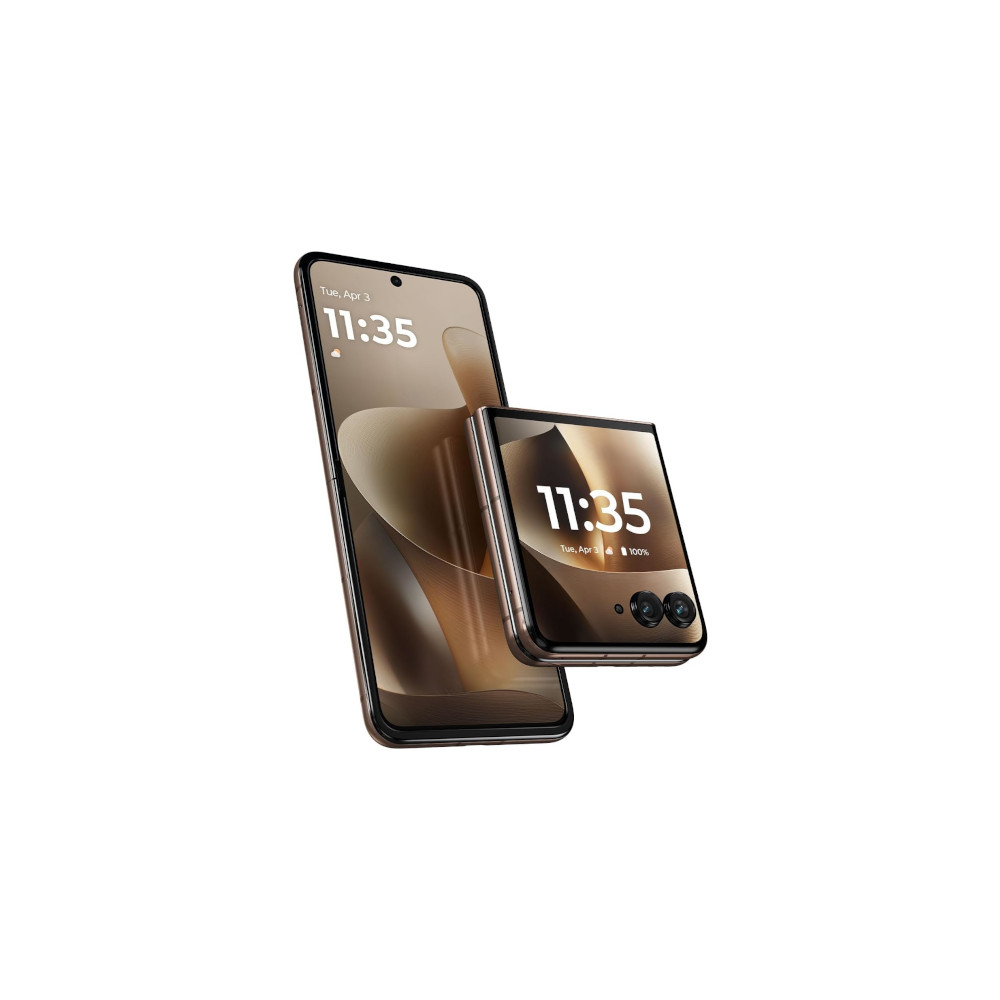
Motorola Razr Ultra (2026)

The standard Razr (2026) is in the upper mid-range, but what if you simply want the best flip-foldable money can buy? That’s where the Razr Ultra (2026) comes in, and it will set you back a crazy $1,500.
Your extra cash gives you a Snapdragon 8 Elite chipset (not the 8 Elite Gen 5, mind you), 512GB of storage, and a huge 5,000mAh battery. The phone also comes with a 7-inch 165Hz OLED folding screen and a 4-inch cover display. And both of these screens are brighter than the Razr (2026) displays.
The Razr Ultra (2026) offers a 50MP + 50MP rear camera setup that seems very similar to the base model’s pairing. However, Motorola is using a 50MP main camera with LOFIC technology. This tech effectively increases the camera’s dynamic range while reducing noise. So expect Motorola’s Ultra phone to take great 1x photos in low-light situations, backlit scenes, or at sunset.
Thank you for being part of our community. Read our Comment Policy before posting.