Affiliate links on Android Authority may earn us a commission. Learn more.

The Moto G Power (2026) is the cheapest Motorola phone you might actually like
Motorola Moto G Power (2026)
MSRP: $299.99
What we like
What we don't like
Motorola Moto G Power (2026)
I’m not afraid of much, but one thing about cheap Android phones worries me: they’ve started to feel like rinse-and-repeat copies of themselves. Well, maybe Nothing’s cheap options still have some personality, but my last few Motorola and Samsung reviews have felt just a little too familiar. And, when I first unboxed the Motorola Moto G Power (2026), alongside its other siblings in the most recent wave of Moto G refreshes, I was worried about more of the same.
After having spent just a little bit longer with the phone, though, I feel better. It might not reinvent the Moto G series in a meaningful way, but I think the Moto G Power (2026) covers its bases well enough to make it worth buying. At the very least, this should be Motorola’s new baseline, and here’s why.
There’s actually some polish to match the power

It was unboxing the Moto G Power (2026) that initially gave me pause. It looks and feels so much like the Moto G Play (2026) and the Moto G 5G (2026) — two phones I’m less than impressed with, but I’ll save that for another review — that I had a hard time telling them apart. And, when one phone costs nearly twice as much as another, that’s not really a good sign — I usually like more than six grams and a tenth of an inch of screen real estate as identifying features.
But, as I dug further into Motorola’s all-too-familiar design, I realized it wasn’t as identical as I first thought. Sure, it has many of the same elements as its siblings, like a headphone jack and expandable storage via the SIM tray, but it’s Motorola’s choice of materials that elevates the final product. No, the plastic frame doesn’t feel any different from the other plastic frames I’ve held, but it surrounds a Gorilla Glass 7i display that actually gives me peace of mind compared to the Gorilla Glass 3 I’ve become used to.
Along with that toughened-up glass, the Moto G Power is the cheapest member of Motorola’s lineup with an official IP rating — two, in fact. Like the last generation, the Moto G Power (2026) comes with both IP68 and IP69 protection, meaning it’s protected against immersion and jets of high-pressure water at up to 80 degrees Celsius. Is dual certification overkill for a phone like this? Sure, but I’m not going to complain when Motorola’s cheaper phones skip true IP ratings altogether.
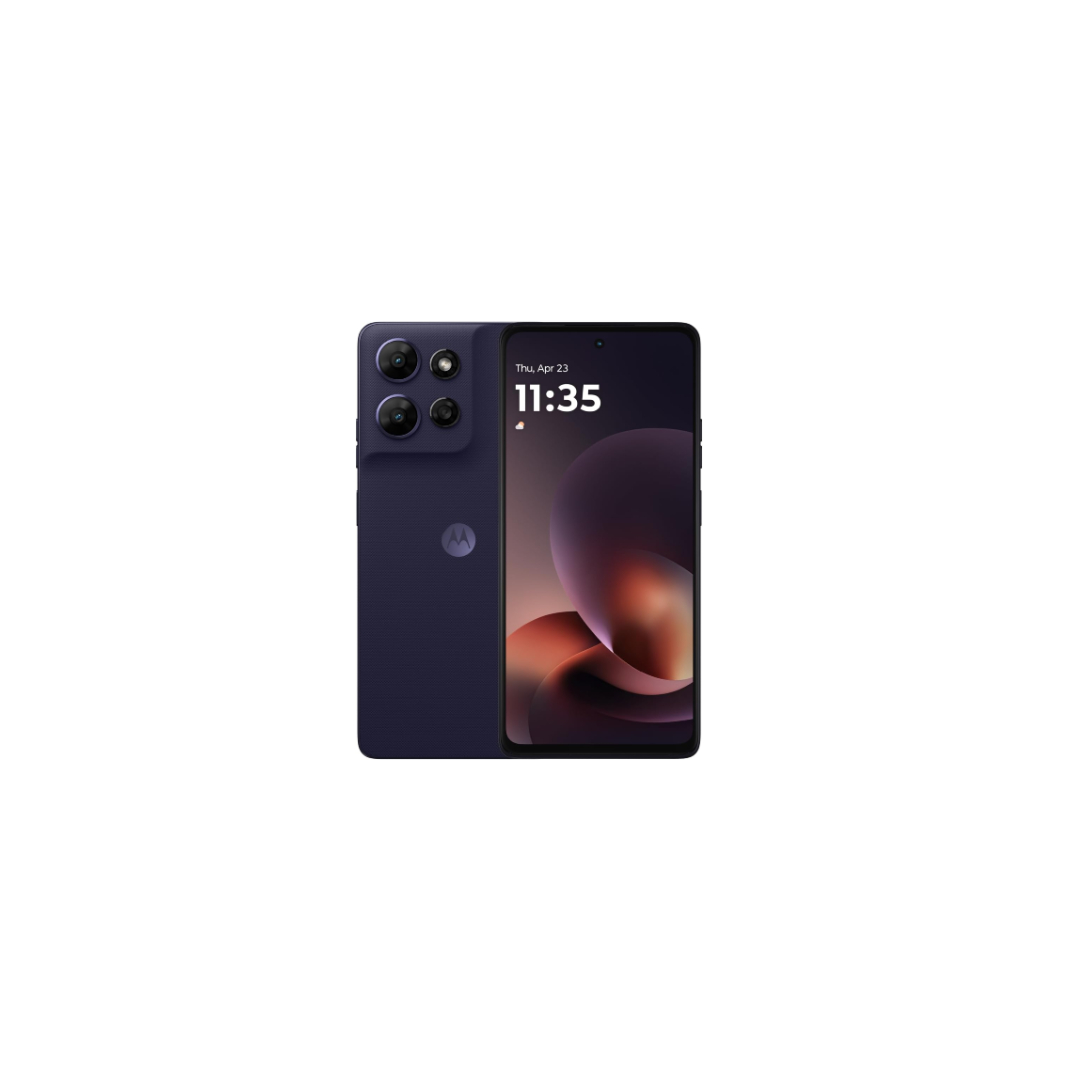
The Moto G Power (2026) feels so much tougher than its siblings, but it can't escape Motorola's strangest design choice.
Unfortunately, though, before I continue with the things the Moto G Power (2026) gets right, I have to touch on one of its sillier features. Just like the rest of its family, this bad boy gives the illusion that it has three rear cameras. It doesn’t. It has two. They’re more useful than the ones on the Moto G 5G (we’ll get to that), but there’s absolutely no reason for Motorola to pretend there’s an extra one. It could easily slim down the camera bump without raising a single eyebrow.
Anyway, back to the good stuff. I’ve said it several times now, but I really do like what’s become of Motorola’s partnership with Pantone. The Moto G Power’s Evening Blue finish is a dark enough shade of navy that it looks almost black, while the lighter Pure Cashmere version puts a classy spin on the white phones we’re used to. Both options use the same textured rubber for their back panels, which is blissfully fingerprint-free and grippy enough that I feel comfortable using the phone without a case.
Now that I’ve mentioned once or twice (or half a dozen) times about how similar the Moto G Power (2026) looks and feels to its siblings, allow me to change my mind. Yes, the frame is pretty much the same, as is the fingerprint reader and the positions of the buttons, but Motorola’s best upgrades lie in its display.
Specifically, this is the cheapest phone in Motorola’s lineup with a Full HD display — no lowly 720p to worry about. The 6.7-inch LCD panel bumps to a perfectly respectable 1080p to go with its 120Hz refresh rate and 1,000 nits of peak brightness, both of which match its siblings. And while I’ll admit I don’t always notice a difference in quality when scrolling through YouTube Shorts, the extra resolution has made following the Winter Olympics on Peacock just a bit nicer.
Of course, the slopes and rinks of Milan and Cortina are pretty well-lit, so I’ve had no trouble picking out details. Thankfully, I haven’t had issues with darker scenes, like those in Netflix’s Untamed, either. In fact, I’d say the only times I’ve had to rewind were when I briefly looked away from the Moto G Power (2026) while cooking — hardly the phone’s fault.
Unfortunately, though, I haven’t been able to shake one thought as I’ve been exploring the Moto G Power: Samsung is still more ambitious. Its Galaxy A17 5G is $100 cheaper, yet it packs Gorilla Glass Victus for protection and an AMOLED panel, albeit with only an IP54 rating and a 90Hz refresh rate. I do think the Moto G Power looks and feels better in hand, but I wouldn’t be surprised if Samsung’s materials and price sway people in its favor.
Is this… the Moto G Play’s chipset?

Perhaps another thing that might steer users away from the Moto G Power (2026) is Motorola’s interesting (read: confusing) decision to give all its cheap phones the same chipset. Just like every other member of the Moto G 2026 family, the Moto G Power packs MediaTek’s 6nm Dimensity 6300 chipset, which, yes, is the same as its predecessor. Sorry to anyone who thought the name Power would come with a bump in, well, power.
Of course, I shouldn’t be so hard on the Moto G Power right off the bat. It does have double the RAM of the Moto G 5G, checking in with 8GB instead of just 4GB. It also has 128GB of UFS 2.2 storage, which you can expand via the microSD slot — always a nice touch. Anyway, with the Moto G Power’s modest internals laid out, it’s time to see if there’s actually any difference in performance.
Unfortunately, there’s not. From the CPU-heavy Geekbench 6 and PCMark tests to the GPU-pushing Wild Life stress tests, the Moto G Power (2026) scores almost the same as its predecessor… and the cheaper Moto G 5G. Those extra 4GB of RAM don’t seem to make a lick of difference. Well, the Moto G Power (2026) scores at least a little better than the Moto G Power (2025) on the comprehensive PCMark test, but it merely matches the Moto G 5G — not an inspiring result when you’d have to spend another $100.
Against closely priced competition from Samsung and Nothing, the results aren’t as even. The Moto G Power (2026) falls behind in both the single- and multi-core legs of the Geekbench 6 test, including by a pretty significant margin when compared to the Nothing Phone 3a. It’s a bit closer on the PCMark side, actually beating the more expensive offering from Nothing, which is a pretty good result given the better efficiency of that phone’s 4nm Snapdragon 7s Gen 3 chipset.
When we switch to the GPU side, though, the Moto G Power (2026) falls right back in line with its cheaper siblings. It’s so close, in fact, that I couldn’t tell the three stress tests apart at first — at least not until I zoomed in on the graph to find the smallest deviations between the blue, green, and yellow lines.

This time, though, there’s no doubt that Samsung and Nothing pack more punch into their near-$300 offerings. The Galaxy A26 5G nearly doubles the average score from the lowly Moto phones, with the Nothing Phone 3a closer to tripling the score. This might not make a huge difference in your day-to-day life — none of these phones are designed for content creators or avid gamers — but it’ll give both Nothing and Samsung a bit of an edge if you do want to dip into lighter gaming titles.
I, of course, hoped that our controlled testing wouldn’t actually tell the whole story of the Moto G Power (2026). After all, its siblings had performed fine in real-world usage, so a little extra RAM should keep this one running smoother. Generally, I think that held true. I felt like things started just a little bit quicker and ran just a little bit smoother on the Moto G Power, whether I was streaming Brandi Carlile’s Tiny Desk performance while waiting for signed records to drop or frantically refreshing Winter Olympics coverage to keep up with the curling tournament.
No, Motorola, I really don't want a weather app with full-screen pop-ups, thank you.
While I’ll happily say most things ran smoothly, the Moto G Power (2026) isn’t without its quirks. Most of the software-based ones come from Motorola’s partnerships, including the one with 1Weather, which now shows full-screen pop-ups asking you to pay for a premium subscription to get your forecast without ads. This is a new low, given that I’ve already complained for years that Motorola’s default weather experience is one of the worst around.
The other issue that will undoubtedly upset me down the road is Motorola’s update support. Once again, its cheapest options come with only two years of Android support and three years of security patches — less than half of what Samsung offers for your money. And no, I know you won’t have to worry about this until 2028 or so, but the budget phone market has changed so much over the last few years that the Moto G Power will probably feel outdated before then.
As far as the proper day-to-day tasks go, though, the Moto G Power (2026) keeps up just fine. It takes a second or two to shift into gear when you bounce from one thing to the next too quickly, like switching from YouTube Shorts to the camera and back, but I had no issues if I just took a second between apps. The problem gets worse with gaming, though, as the Moto G Power (2026) struggles to get Pokémon Go off the ground just like its siblings did.
That said, if you stick to Motorola’s baked-in folder of games — which includes the basics like 2048 and a version of Solitaire — I guess you’ll be fine. It feels kind of like playing low-powered games on your grandpa’s computer when you were a kid, though.

As expected, Motorola’s modest reliability continues on the battery side. The Moto G Power (2026) matches its Moto G 5G sibling almost perfectly, trading leads between the Zoom and web browsing tests and nearly tying the rest of the way. Unfortunately, though, that means both phones get absolutely smoked by the Nothing Phone 3a in 4K playback, and neither supports 4K recording, so that’s a big old blank on our sheet.
My day-to-day with the phone tells the same story as the Moto G did: the Moto G Power easily lasts well into a second day on a single charge. I suppose the combination of a big 5,000mAh battery and solid 30W wired charging is still a good one, even if the processor doesn’t make the most of the power it has. That said, I feel like this phone should be above Motorola’s other affordable options, especially when it costs $100 more than the Moto G.

When you do need Motorola’s 30W wired charging, though, I’d say you’re in for a well-priced treat. No, it’s not as fast as the 50W peak of the Nothing Phone 3a, but it beats what you get from Samsung and Google (if we count an older Pixel A model that’s now priced around $300). I have no qualms about spending around 70 minutes tethered to a charger like the Moto G Power (2026) demands, though you might want to check out some of our favorite wall chargers if you think your setup needs an upgrade.
Also, there’s no wireless charging on the new Moto G Power, which is a downright odd decision after the last model offered 15W wireless speeds. It’s like Motorola was determined to take one step forward and two steps back, no matter what it took.
Finally, cheap cameras that make some sense

While the lack of difference under the hood isn’t really enough to separate the Moto G Power (2026) from the Moto G 5G (2026), or really the Moto G Play (2026), it’s around back where I finally notice a difference. Yes, it’s still silly that Motorola tacked on a camera bump with three rings to suggest a third sensor, but at least I find myself willing to use both of the lenses that are actually there, unlike just the one on both cheaper camera phones.
Once again, Motorola has decided to stick with its 50MP primary sensor, a move I’d readily say is good enough. It’s the same 1/2.88-inch sensor as last year, which means it still opens to a very wide maximum aperture of ƒ/1.8 for plenty of light capture. And yes, it bins down to 12.5MP images by default, but that’s still good enough for viewing and posting from the 6.7-inch LCD panel. The 2026 G Power also finally adds 60fps video recording to its 1080p resolution capture. There’s no 4K, but at least your clips will be nice and smooth.
Please, Motorola, use this ultrawide camera on your other cheap phones too.
The sensor that makes the Moto G Power stand out from the rest of Motorola’s 2026 launches is its ultrawide camera. Yes, it’s also the same as the previous generation, pairing an 8MP resolution with a 119-degree field of view, but it’s miles ahead of the dedicated macro sensor on the Moto G 5G and the, well, nothingness of the Moto G Play. Also, it supports software-based macro mode, so I guess it’s kind of like 1.5 sensors if you really want to throw Motorola a bone.
And with that, let’s look at some photos.
I’ll admit there’s not a whole lot to get excited about across these first four images. The ivy is crisp, but the color science doesn’t pop that much, and the portrait of a sign that I’ve taken dozens of times does a decent job of picking out the edges, only to miss the top of the pole. I like the low-light shot of the bar sign on the left, though it gets a little fuzzy in both the building’s bricks and the tree branches in the background.
In this row, things look a little better. The colors of the stickers in the window are a bit more lifelike, and the Moto G Power (2026) actually picked out its human subject over to the right. The disco ball, however, looks a little flat against the brick building behind it, almost making the scene feel too cluttered. That said, I once again like the colors, as the phone nailed the exposure of the late afternoon setting sun.
As for the Moto G Power’s ultrawide sensor, I largely think I like its results, too. The mural and creeping vines off to the right are exactly as I saw them, and the scale of Baltimore’s still-frozen harbor to the left is just right. I’m glad the phone didn’t lose the sunset’s colors, as I was worried the smaller sensor would muddy the blues and reds. There is, however, an interesting green cast to the church in the middle, which may be a result of Motorola trying to process different-colored streetlights through the 5MP sensor.
The other piece of Motorola’s ultrawide setup — and the half that actually surprised me — is its macro mode. It’s much sharper than I expected across all three of my samples, with excellent detail and colors in the carved leaves on the left. It’s tough to draw much texture out of the film camera on the right, but I like the way the light hits the logo, and at least I feel like the Moto G Power (2026) did a good job of highlighting the camera’s very small grip.
My shot in the middle, covering the text below the portrait of the bust I featured above, might be the most impressive of the bunch. It’s sharp from the decorative elements through the letters and numbers, and the different colors of aged bronze are easy to pick out. All told, I don’t get why Motorola’s dedicated macro cameras aren’t this good compared to what its software can do.
If you’ve read any of our other recent Motorola reviews, you’ll know that the 50MP primary sensor isn’t exactly flexible. It reaches up to 8x zoom before calling it a day, and the results are barely more than satisfactory. Sure, I’d post something at either 1x zoom or 2x zoom in my Instagram story, but the details just aren’t there once you go further. I appreciate that the color profile is generally the same across the board, save for a darker 4x zoom shot, but I’m pretty let down by the lack of sharpness.
As for the selfie camera, I’d say Motorola’s 32MP punch hole sensor is decent. It’s sharp enough despite the backlit window, and it captured my beard without reducing it to a brown blob, which happens often enough with cheap phones. I think the portrait mode captured enough of my hair to make a complete profile, but it missed a couple of thicker locks by the bricks and the tree, so I can’t say it’s perfect.
You can also check out full-resolution versions of these samples (and many more) at this Google Drive link.
The Moto G series is in a tough spot, but the Moto G Power gives me hope

At the end of the day, I don’t think the latest Motorola Moto G Power (2026) changes the game in any meaningful way. It doesn’t really need to, nor do I think it set out to do so. Instead, I’d say it’s a pretty good baseline for what Motorola’s cheap Android phones should feel like going forward. It does enough things well and incorporates just enough premium touches to feel like a worthwhile entry point into one of the cleanest Android families around.
And yes, I know that the Moto G Power (2026) isn’t the entry point into the Moto G family. On paper, both the 2026 iterations of the Moto G Play and Moto G 5G are cheaper while offering similarities, such as the same chipset, the same primary camera (as on the Moto G 5G), and the same update commitment. However, it’s the Moto G Power’s extras beyond that baseline that help justify its slightly higher price tag.
The Moto G Power (2026) isn't the entry point into the Moto G family, but it should be.
I’d reach for its wide and ultrawide setup over its fellow Moto G cameras any day of the week, and it’s the cheapest Motorola phone you can get with a proper IP rating. Not only that, but its dual IP68 and IP69 protection matches (or exceeds) the durability of phones that cost twice as much. Add in the headphone jack and expandable storage, and the Moto G Power (2026) feels like a pretty decent bridge between old reliable features and the new budget market.
Perhaps the biggest challenge Motorola faces, however, is making its Moto G Power stand out from its competitors. Yes, it’s the best cheap Motorola option (until we get a Moto G Stylus for this year), but it’s stacked against the likes of the Samsung Galaxy A26 5G ($228 at Amazon), and, if your carrier is compatible enough, the Nothing Phone 3a ($374 at Amazon) and the CMF Phone 2 Pro ($259 at Manufacturer site), all of which land within $100.
Unfortunately for Motorola, Samsung’s Galaxy A26 5G is good enough that we’ve been recommending it over the more expensive Galaxy A36 5G. It offers a much better update commitment, even tougher Gorilla Glass Victus Plus, and the IP67 rating is close to IP68/69 durability. No, it’s not exactly as tough, but we’d say the trade of an AMOLED panel and extra software support is worth it.
Up next, the CMF Phone 2 Pro and Nothing Phone 3a are like two sides of the same cheap Android coin. You’ll need to check that they work with your carrier, but if they do, you’re in for a treat. The CMF Phone 2 Pro takes a more refined approach to the original modular design, updating the interchangeable back panel and adding camera accessories. Oh, and a real third camera, not just an empty ring made to look like one.
As for the Nothing Phone 3a, its IP64 rating might not meet Samsung’s or Motorola’s standards, but its 50W wired charging and light-up Glyph Interface make up for it. It makes a pretty big difference when you can get yourself away from a charger just a bit faster, especially when you have a trio of wide, ultrawide, and telephoto cameras to explore, along with Nothing’s customized camera presets. Once again, you’ll have to make sure it works with your carrier — and that you can stand the Essential Key — but if so, Nothing might have the most interesting budget phones to buy.
The only other consideration to mention is the 2025 model of the Moto G Power ($299.99 at Amazon). There is a lot of carryover here between generations, and while the improved screen durability, upgraded selfie cam, smoother video recording, and a slightly larger battery are all nice to have, if you can find the Moto G Power (2025) on sale, it’s worth a look — plus that one has wireless charging.
- Decent ultrawide camera
- Excellent IP rating and durability
- Clean Pantone colors
- Solid battery life
- Limited software support
- Outdated chipset
- Odd camera bump design
- Removed wireless charging
Thank you for being part of our community. Read our Comment Policy before posting.