Affiliate links on Android Authority may earn us a commission. Learn more.
The iPhone 18 Pro is the antithesis to Android’s AI era
Oct 29, 2026 — 6:30 AM ET


I don’t need to reiterate that the tech industry has spent the past couple of years trying to convince us that AI is the next step of computing and that it needs to be shoehorned into every computing touchpoint. And as far as smartphones go, Android is at the forefront of this push.
For better or worse, Google has integrated Gemini into every aspect of the Android experience, be it messaging or photography, search and more. The end goal is pretty obvious – your phone should know what you need, anticipate your next move, and help you get things done without having to ask. Basically, an agentic future.
Apple, and the iPhone 18 Pro in particular, is taking a different approach. While Google wants AI to become the centerpiece of your smartphone, Apple seems content to keep it as an optional extra. What might look like Apple’s inability to keep up with Google is, in my opinion, perhaps its biggest strength if you, like me, are taking a more pragmatic approach to AI instead of jumping right in. Here’s why.
How important is on-device AI to you when buying a smartphone?
I don’t want cloud-connected AI to be a prerequisite for using my phone’s best features

Look, I’m under no illusions that Apple is any less invested in making AI-enabled smartphones a thing, but credit where it’s due, the company’s measured steps have so far created a user experience that’s additive rather than jarring. But more importantly, it is clear that the focus has been on building up its on-device processing capabilities to keep as much of its AI ambitions local and private as possible.
I’ll be honest: Siri and the myriad other Apple Intelligence features might not be as advanced as Google’s, but I appreciate that Apple’s endgame doesn’t revolve around sending every request to a remote server. As someone who’s deeply skeptical of the industry’s current obsession with generative AI, I’d much rather see manufacturers prioritize on-device processing, respect user privacy, and focus on genuinely useful utilities instead of turning every interaction into an opportunity for AI.
But let’s be real, Apple is hardly ignoring AI. The iPhone 18 Pro has plenty of intelligence features built into its software, with its Neural Engine specifically designed to handle machine learning tasks directly on the device. The difference is that many of these features can and do work without an internet connection. That’s sort of the point of Apple Intelligence.
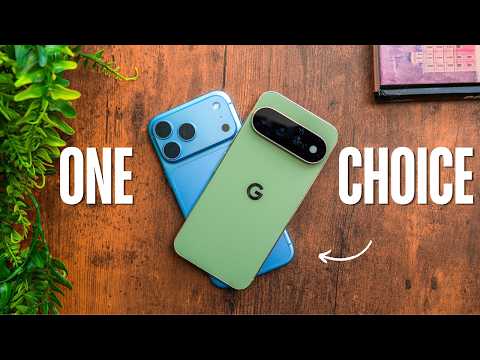
It might not sound particularly exciting in an era when we’re being promised AI assistants that can do just about anything. But I think there’s something to be said for having features that work regardless of whether you’re connected to the internet. If I want to summarize a note, edit a photo, or change a setting, I don’t want to worry about whether a server is available to process my request.
What is the point of selling me a phone on the merits of its AI capabilities when I still have to use the same cloud AI that could run on a dramatically cheaper phone?
There are obvious privacy benefits, too. When a task can be handled entirely on your phone, there’s no need to send the underlying data to a cloud server. Your photos, messages, and other personal information can stay on your device rather than being processed elsewhere. Local processing also means fewer things can go wrong regarding privacy. There’s no server response to wait for or connection issues to contend with. If a feature runs entirely on your phone, it should work just as well while you’re on a plane as it does at home. There are limits to that, of course. Siri AI’s capabilities are fairly limited when offline, but compared to Gemini, which largely doesn’t work offline, it is a step in the right direction. Just as important is the fact that Apple Intelligence isn’t being plugged into every facet of the operating system whether you want it or not.

That’s in sharp contrast to what Google is doing. In fact, Google seems to be moving beyond the on-device AI features it initially championed. Pixel Screenshots, for example, launched with the Pixel 9 series as a way to organize and search screenshots using AI directly on the phone. Google has since expanded the feature to include cloud processing and no longer works just on-device. Magic Cue, which uses information from your apps to offer contextual suggestions, has also gained cloud-based capabilities. Even Recorder, which demonstrated the benefits of on-device AI with its recording summaries, has expanded its transcription capabilities through cloud processing and expects you to use it as a cloud-first or cloud-connected tool.
I understand why Google is doing this. I just don’t empathize with it. Cloud servers have an order of magnitude more computing power than a phone, opening the door to more sophisticated features. But it also highlights a trade-off, and I’m not just talking about privacy. By some appearances, as Google’s AI ambitions grow, it is increasingly taking the easier way out of combining local processing with cloud computing to deliver the experience it wants. And it is doing so by cutting off local access to the very features it sold us on. What is the point of selling me a phone on the merits of its AI capabilities when I have to still use the same cloud AI that could run on a dramatically cheaper phone?
Google’s AI-first Android vision could make convenience come at the cost of privacy and choice

As an enthusiast, I can see the appeal of making Gemini a central pillar of the Android experience. Having an assistant that understands your personal context and can help you get things done across apps without any user intervention can be extremely powerful. Think of an agent that can find the lowest price on something you want to buy and make the purchase for you while you’re driving back home from work. In theory, it could save time by handling tasks that would otherwise require several taps and some digging through menus.
The problem is that this vision, by definition, goes beyond giving you a collection of useful tools. If Google wants AI to anticipate what you need and act on your behalf, it, by definition, requires an assistant with access to more of your context, deeper integration across apps, and, for most of its tasks, a connection to Google’s servers. I’m not sure I’m ready to give unfettered access to all my personal data to save you a few minutes.
There’s a financial angle to this, too. Running powerful AI models in the cloud isn’t cheap, and Google increasingly wants users to pay a subscription for access to its more advanced capabilities. I’ve previously written about how Google One has evolved from a cloud storage service into a way to bundle Gemini features, AI tools for Gmail and Docs, and other extras into a recurring subscription. The more Google pushes AI as an essential part of the Android experience, the more opportunities it has to upsell users on features that sit behind a paywall.

Call me a pessimist, but I see no positive endgame here. Smartphones as a pur hardware platform have matured, and cloud AI gives carriers and OEMs the perfect vehicle for a freemium software model. Get the base experience for free, pay up for the full suite of advertised capabilities.
I don’t think I’m in the minority when I say that most days I just want to use an app without having suggestions generated for me or an assistant trying to anticipate what I might need next. And I certainly don’t want to feel like I need another subscription to get the most out of a phone I’ve already paid for. You can choose not to use individual AI features, of course. But as these tools become more deeply integrated into the Android experience, opting out can mean giving up functionality that might otherwise be useful. More importantly, though, Android is opt-out by default; Apple treats AI as opt-in by context. That’s decidedly a pro-consumer move.
The more deeply AI gets woven into the fabric of Android, the harder it gets for users to switch platforms and the easier it gets for Google to charge you for using basic features on your phone.
All that said, I don’t think Google’s approach is inherently wrong. There are plenty of things that cloud-based AI can do that a phone simply cannot manage on its own, and paid subscriptions can make sense for people who use these tools regularly. But I would like to see a clearer distinction between features that genuinely benefit from cloud processing and those that could work just as well locally. I’m okay to wait an extra few seconds while my phone processes my screenshots if it means I don’t have to send across private conversations to Google’s servers.
It’s also what makes Apple’s approach more appealing to me. So far, Apple Intelligence hasn’t sunk its hooks into every aspect of the user experience. You might call it boring, but the core experience is largely AI-free. Instead, Apple Intelligence is there in case you want to add on to your experience. This, for me, is the preferred approach. Perhaps I’m being overly cautious, but at a time when rogue AI agents are blistering past banking-grade security frameworks, knowing that the iPhone is, for now, fairly limited when it comes to AI is a positive to me. I don’t want to open up that can of worms, not on the device that carries all my banking information, passwords and personal information. And when I really need it, things like AI-assisted essential smartphone controls, voice calling and more can all run offline without needing internet connectivity. I can even do some basic AI-based image editing right there on your device.
Apple is letting users decide how much AI they want on their phone

Look, I’m not a luddite. I enjoy experimenting with new apps and features, run my own local AI server on my home lab, and there’s a part of me that’s always interested in seeing what smartphones can do next. But I’m also convinced that there’s a need to take a more rational approach. And so, of all the brands, only Apple appears to be doing so. Between cautiously dipping its toes into AI and focusing more on giving you the hardware and tools to do with it what you want, Apple is leaving it largely on its users to shape the AI narrative on their phones. The iPhone 18 Pro might be the best-equipped phone on the market for AI, but you can choose to use all of it or none. And that’s the choice we all deserve.
The iPhone 18 Pro might be the best-equipped phone on the market for AI, but you can choose to use all or none of it.
Personally, for me, local processing has a few practical advantages. There’s responsiveness, since a task running on the device doesn’t have to wait for a request to travel to a server and back. There’s reliability, too. A feature that doesn’t need an internet connection is one less thing that can stop working when connectivity is poor or nonexistent.
And most importantly, there is privacy. I’d much rather have my personal data stay on my phone whenever possible than have it sent to a remote server unnecessarily, even if it means that the results aren’t quite as impressive as cloud AI. Once again, Apple’s decision to give you the choice of using cloud compute if you want to is, to me, one of the most important decisions in the trajectory of smartphone AI.
The irony of the AI race

There’s an irony to all of this. Apple is often criticized for lagging behind Android in AI, and there’s some truth to that criticism. Siri AI and Apple Intelligence are good, but they can’t hold a candle to Gemini’s capabilities. Moreover, Google’s cloud infrastructure gives it access to computing power that no smartphone chip can realistically match. If you want cutting-edge AI on a phone, cloud is the only approach today. But grounding AI integrations in what people actually do on their phone is equally important. I’d rather have a handful of useful features that work reliably than a long list of AI tricks that I rarely use, or simply can’t use unless I have stable connectivity. I’d also like the option to keep my data on my phone instead of having to rely on a remote service for tasks that don’t necessarily require one.
In an industry racing toward an agentic future, there’s something refreshing about a smartphone that doesn’t need to make AI the centerpiece of everything.
That doesn’t mean Apple’s approach is flawless, nor does Android need to abandon the cloud entirely. Cloud servers provide computational scale that local silicon simply cannot touch. But there is a fundamental philosophical divide between an operating system that quietly offers AI tools when you ask for them, and one that redesigns the entire user experience around anticipating your next move. In an industry racing headlong into an autonomous, agentic future, there is something remarkably refreshing about a flagship phone that treats AI as an optional utility rather than an inescapable mandate. And right now, the iPhone 18 Pro is the only flagship taking that stance.
Conversation
Read what readers said or add your take.