Affiliate links on Android Authority may earn us a commission. Learn more.
I switched from Android to the iPhone 18 Pro Max for 3 weeks — my 5 biggest takeaways
Oct 15, 2026 — 5:30 AM ET
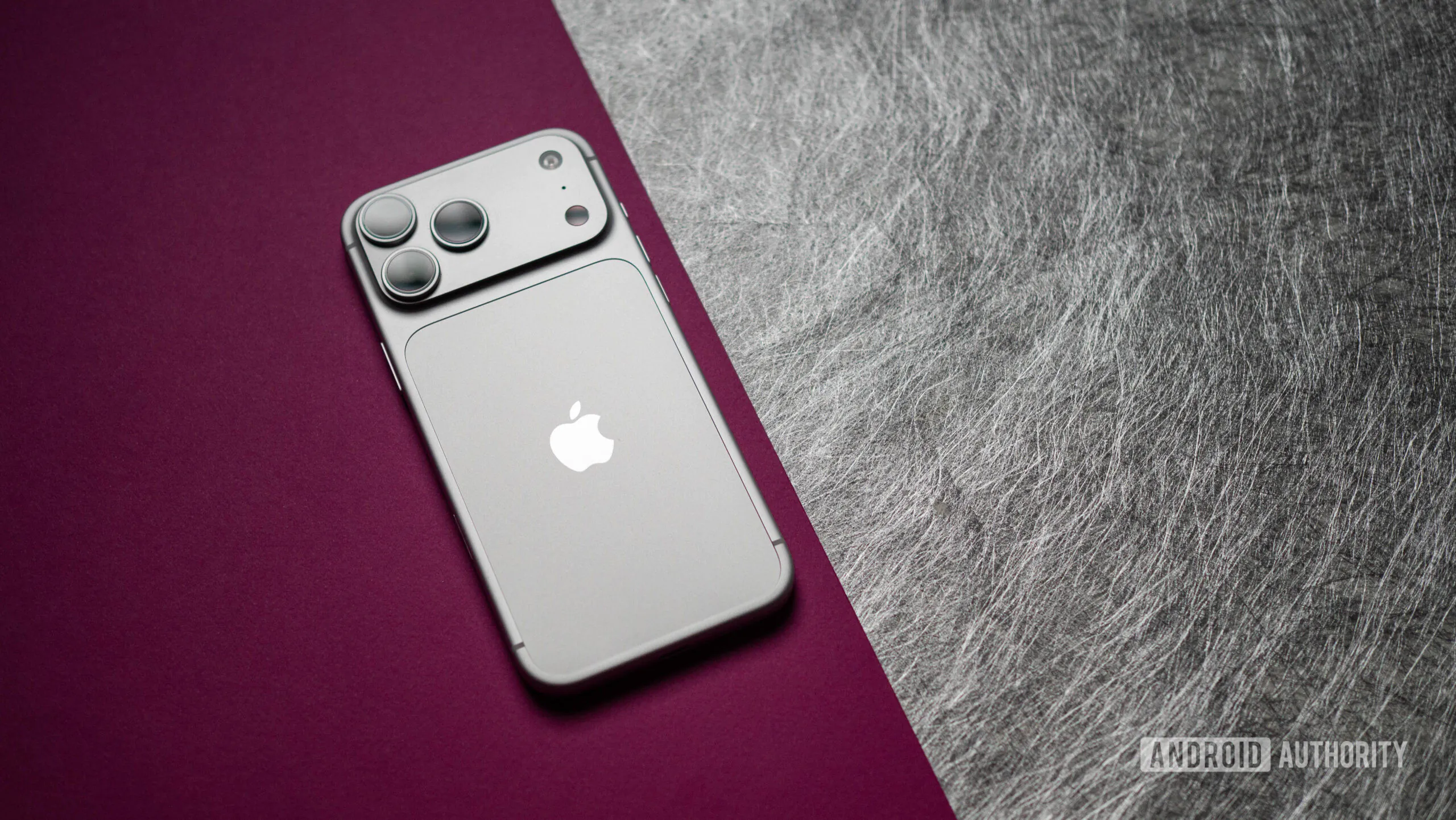


The iPhone 18 Pro Max looks identical to its predecessor, but there is a lot of new stuff under the hood: the cameras get new tricks (and much-needed manual controls), the A20 Pro silicon has a new architecture and all-new cooling system, there’s a bigger battery with faster charging, and iOS 27 brings a few UI changes.
I used the iPhone 18 Pro Max as my daily driver for just over three weeks now, and these are my biggest takeaways. I predominantly use (and test) Android flagships, so I’m highlighting where the iPhone 18 Pro Max stands out, and how it differs to immediate Android rivals.
Would you consider switching to iOS at some point?
This camera has style

Obviously, variable aperture is the biggest talking point with the iPhone 18 Pro Max’s cameras, and the ability to manually go from f/1.48 to f/4.0 provides greater versatility — particularly in low-light situations. You can just set it to Auto and leave it at that (which is what I did after a week of testing), but it’s good to see some level of flexibility in this area. Also, it is possible we’ll see Android manufacturers reintroduce this feature just because the iPhone is doing it.
What I like better is manual controls; the ability to adjust shutter speed, exposure, and white balance is a welcome addition. I also like that photographic styles can be adjusted after the fact; this makes it much easier to alter a photo’s tone after you’ve taken it. Google’s Camera Looks on the Pixel 11 Pro XL do something similar, but since they’re baked into the image pipeline, you don’t get the option to switch to a new style afterward.
Image quality on the iPhone 18 Pro Max is marginally better than last year, and it is on par with the Galaxy S26 Ultra and Pixel 11 Pro XL. Chinese flagships still have an outsized lead in this area thanks to their use of high-res camera modules and overhauled tuning algorithms, and I’d still grab the Find X9 Ultra or Vivo X300 Ultra instead of the iPhone 18 Pro Max. That said, the iPhone 18 Pro Max continues to have the edge in video recording, and while the X300 Ultra nails the technical side, I found the iPhone’s 24mm focal length easier to work with than the 35mm on the Vivo.
Liquid Glass already has Android copycats

Apple introduced Liquid Glass last year, and iOS 27 brings plenty of usability tweaks, including a slider that lets you adjust the level of transparency effects. I actually like Liquid Glass; it evokes fond memories of Windows Vista from nearly two decades ago (I had a gaming machine with the GTX 260 at the time, so I had no issues with Windows Aero).
If you like the look of Liquid Glass and want it on your Android phone, you don’t have to wait long. OPPO, vivo, and Xiaomi are all blatantly stealing using a variation of Apple’s aesthetic with their Android 17-based skins, and ColorOS 17, OriginOS 7, and HyperOS 4 come with transparent effects. Thankfully, it’s limited to notifications and first-party apps, and having used the X Fold 6, I can confirm that these effects contrast well with the overarching aesthetic. That said, it irks me that Chinese Android brands still feel the need to copy Apple’s designs in 2026.
The A20 Pro chip throws down the gauntlet

This year’s A20 Pro chipset isn’t just a generational upgrade; the switch to a 2nm node brings considerable gains across the board. In Geekbench, I saw a 19% uptick in single-core scores and a 22% increase in multi-core scores compared to last year’s A19 Pro, and it is now the fastest mobile platform around. Of course, with Qualcomm and MediaTek also moving to a 2nm architecture with their latest designs, it will be interesting to see whether Apple can hold on to its lead.
Also, tweaks to the memory architecture — with the DRAM now sitting alongside the silicon die — make the chip package design that much more efficient. It allowed the brand to use a new cooling system with the vapor chamber directly above the A20 Pro. More than anything else, this makes the biggest difference in daily use, with the iPhone 18 Pro Max delivering much better sustained performance without overheating. This has been particularly problematic on Android phones over the last 15 months, as the Snapdragon 8 Elite Gen 5 tended to overheat considerably, and I’m looking forward to seeing how Qualcomm addresses the issue in this generation.
Battery life is much better

Unlike Android flagships, the iPhone 18 Pro Max doesn’t use a silicon-carbon battery. That said, the 5,391mAh battery is 10% larger than the one we got last year, and overall battery life is much better. A lot of that is down to the efficiency gains driven by the 2nm node, but I had no problems getting over a day of use with the iPhone 18 Pro Max.
There was never a point where I felt the need to charge the phone before the end of the day — even on days with extensive video recording. More often than not, I got a day and a half with medium use, and battery anxiety just isn’t an issue (at least on the Pro Max). Charging is faster as well, and I got the battery to fully charge in under an hour while using a 100W USB PD 3.2 charger.
Also, integrated Qi 2.2 tech makes it easy to use the iPhone 18 Pro Max with any Qi 2.2 charger or power bank. While I preferred wired charging in the past, 25W wireless charging is good enough that I use it to charge phones with integrated magnets. I exclusively charged the iPhone 17 Pro and Pixel 10 Pro XL for a year using the Baseus Nomos desk charger (which has a Qi 2.2 pad), and I’m doing the same now with the iPhone 18 Pro Max and Pixel 11 Pro XL.
While it doesn’t last quite as long as the massive silicon-carbon battery phones like the Find X9 Ultra and Vivo X300 Ultra, it holds its own against the Galaxy S26 Ultra and the Pixel 11 Pro XL, and this is what the iPhone is targeting anyway. It’s unlikely we’ll see Apple switch to silicon-carbon tech, but it’s good to see some positive changes around battery life and charging.
The design is unchanged — and that’s okay

The iPhone 18 Pro Max shares the same dimensions as its predecessor, so you can use 17 Pro Max cases with the phone. It is 16g heavier due to the larger battery, but the in-hand feel is largely unaffected. While I like seeing new designs, it’s clear that Apple, Google, and Samsung have settled on how they want their phones to look, and we’re lucky if we even get incremental changes with the hardware designs.
Chinese brands, meanwhile, continue to experiment heavily with designs and finishes; Xiaomi’s 17 Ultra looks nothing like its predecessor, and the same is true of the Find X9 Ultra’s vegan-leather back, the vivo X300 Ultra’s dual-tone etched-glass design, and mid-rangers like the vivo V70 Elite.
The one area where the iPhone 18 Pro Max differs this year is the Dynamic Island: the IR sensor is now hidden beneath the panel, so the island is shorter and cleaner. It’s still bigger than the hole-punch cutouts that you get on Android, but it isn’t quite as distracting as the previous iteration.
On the whole, the iPhone 18 Pro Max isn’t too different from the Pixel 11 Pro XL; both phones have clearly defined visual designs — both hardware and software — and an ecosystem of connected accessories. Switching to iOS (or vice versa) in 2026 is easier than ever before, but it goes beyond just buying a phone; you’ll need to consider accessories, digital subscriptions, and the broader ecosystem.
Thank you for being part of our community. Read our Comment Policy before posting.