Affiliate links on Android Authority may earn us a commission. Learn more.
I tested the iPhone 18 Pro’s variable aperture camera. Now I want it on every Android phone
Oct 7, 2026 — 2:22 PM ET
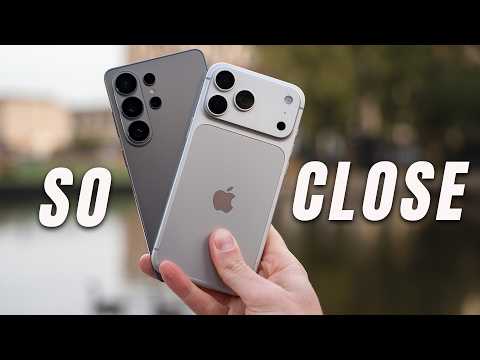


The iPhone 18 Pro offers some interesting lessons for premium Android phones to learn from, such as how to legally ship large batteries and less tangible lessons like how to sell users a narrative. But there’s also one element that Android phones need to relearn from Apple, even though Android pioneered it years ago.
A variable camera aperture is barely a feature worth highlighting on a DSLR, but its inclusion on smartphones remains rare. Several Android phones have offered this over the years, but right now the biggest brands in the US and Europe aren’t offering them, leaving a big opportunity for Apple to swoop in.
I’ve been trying out an iPhone 18 Pro Max with Apple’s new adjustable aperture, and it’s been an eye-opening experience. I want to see Samsung, Google, and friends adopt (or re-adopt) variable aperture in the future — not only to catch up with Apple, but also because they could probably beat the iPhone 18 Pro’s performance with relatively little effort.
Will variable aperture make you more likely to buy the iPhone 18 Pro?
What’s the point of a variable aperture anyway?

Let’s check the specs before we go any further. The iPhone 18 Pro and iPhone 18 Pro Max’s 48MP main camera can adjust to four different aperture sizes — the default f/1.8, a wider f/1.48, a smaller f/2.8, and an f/4.0 setting.
If you’re not familiar with those figures, they are f-numbers, which describe how large the opening of a camera (the aperture) is relative to the focal length, which effectively describes how large the range over which the camera can focus is.
Confusingly, a smaller number means a wider aperture, which means more light hitting the sensor but a smaller focal length. A higher number means a smaller aperture, which in turn means less light but a longer focal length.
If you’re still lost, fear not. The examples I’ve captured below will show what difference the four different apertures make (or don’t).
Varied variable aperture samples

By default, the iPhone handles aperture adjustments automatically. But with a couple of taps you can open a menu in the Camera app to switch between any of the four positions, or reset things to automatic when you’re done. I used manual mode for all of these shots, which is likely a big reason I don’t actually like how some of them turned out.
On a DSLR camera, there are numerous other settings you can adjust to account for changes in aperture size, preventing the scene from getting too dark and losing detail. To name a few, you could increase the exposure, slow the shutter speed, or alter the color balance — which incidentally are all available on the iPhone 18 Pro.
I deliberately didn’t touch any of these additional settings in order to avoid confusion from changing too many variables between shots at the same time. The problem is that in doing so, a number of my comparison shots ended up almost identical. In a number of cases, it seems you’re best going manual with multiple settings, including the aperture, or sticking with full auto.
You can see this in my shot of one of the Trafalgar Square lion statues from central London. Switching from the standard f/1.8 aperture to the smaller f/2.8 aperture increases brightness, rather than the reduction we would expect, because the Camera app compensates for less light reaching the sensor by increasing sensitivity.
But the good news is that you can definitely tell the difference when using the variable aperture, especially when getting in close to your subject, where the depth-of-field differences are most noticeable.
Take, for instance, this flowerbed in a local park. By adjusting the aperture, I could control how much of the flowers behind the ones I was focusing on was visible, giving me the freedom to capture more or less of the scene in focus as I wanted.
These shots, taken through the bars of the Buckingham Palace fence, are an excellent example of how you can change a photo’s impact by adjusting the aperture. You can use the f/4.0 version, which shows you as much of the building’s facade and patrolling guards as possible. Alternatively, you can use the f/1.48 version to draw the viewer’s attention to the bars keeping me away from the palace on the other side. After all, as a mere peasant, there’s no way I’m being let in to see the King any time soon.
The aperture adjustments still affect the main camera’s output, even when you’re using the built-in 2x zoom mode. That’s what I used for these shots of a pigeon in St James’s Park to keep my distance and not startle it. While this is an avian subject rather than a human one, it shows how changing aperture settings can affect the look of a portrait-style shot.
I think my favorite shots of my samples are these of this sculpture commemorating the writer Agatha Christie near Leicester Square. The profile of the author, with the porthole-style cut-out in the sculpture revealing the street on the opposite side,
Opening the aperture up to Android users

Now we’ve gone over how things work on the iPhone 18 Pro Max, let’s widen our scope a little. Variable apertures, as I briefly mentioned earlier, are not a new feature for smartphones. We first saw them on the Samsung Galaxy S9 series in 2018, which offered two aperture sizes that the phone would automatically adjust between by default, with manual adjustment available in the Pro camera settings.
More recent phones like the Huawei Pura 90s Pro Max have revived the feature, but only in an expensive, enthusiast-level device that is not sold as widely as we might like. Which is why Apple’s adoption of this feature for its mainstream flagship phone is a big deal.
Even if I’m a little underwhelmed by the results I got in some circumstances, I still feel that variable apertures ought to come as standard once again on any Android phone that claims to be a photography-focused device. Not just so they can offer the same features, but so they can, hopefully, push Apple to do better.
Variable apertures ought to come as standard once again on any Android phone with claims of being a photography-focused device.
Less aggressive automatic settings that better adjust to the user messing around with the aperture would be one area I’d love to see progress in. Additional cameras with variable apertures would also be a big step forward, especially since it’s arguably telephoto cameras that get the most out of this feature, rather than main/wide lenses. Plus, other upgrades like larger sensor sizes would bring out the full potential of variable apertures.
Plus, a new camera toy to play with would be the perfect antidote to an industry that seems a little stuck on hardware upgrades and is seeing diminishing returns on built-in AI features. So come on Android brands — show us what variable apertures can really do. Don’t let Apple have all the fun.
Thank you for being part of our community. Read our Comment Policy before posting.