Affiliate links on Android Authority may earn us a commission. Learn more.

The OPPO Find X10 Pro Max is the ultimate Android flagship, at a price
Oct 21, 2026 — 11:00 AM ET
OPPO Find X10 Pro Max
MSRP: €1,799.00
What we like
What we don't like
OPPO Find X10 Pro Max


If there’s one tech trend I can’t wait to see the back of this year, it’s the product name word salad. It’s Pro Max phones galore, with brands seemingly hoping that borrowing Apple’s naming formula will deliver the same success. When the new OPPO Find X10 Pro Max landed on my desk earlier this month, I was filled with dread that yet another brand was about to sacrifice its few remaining novelties at the altar of iPhone-sameness.
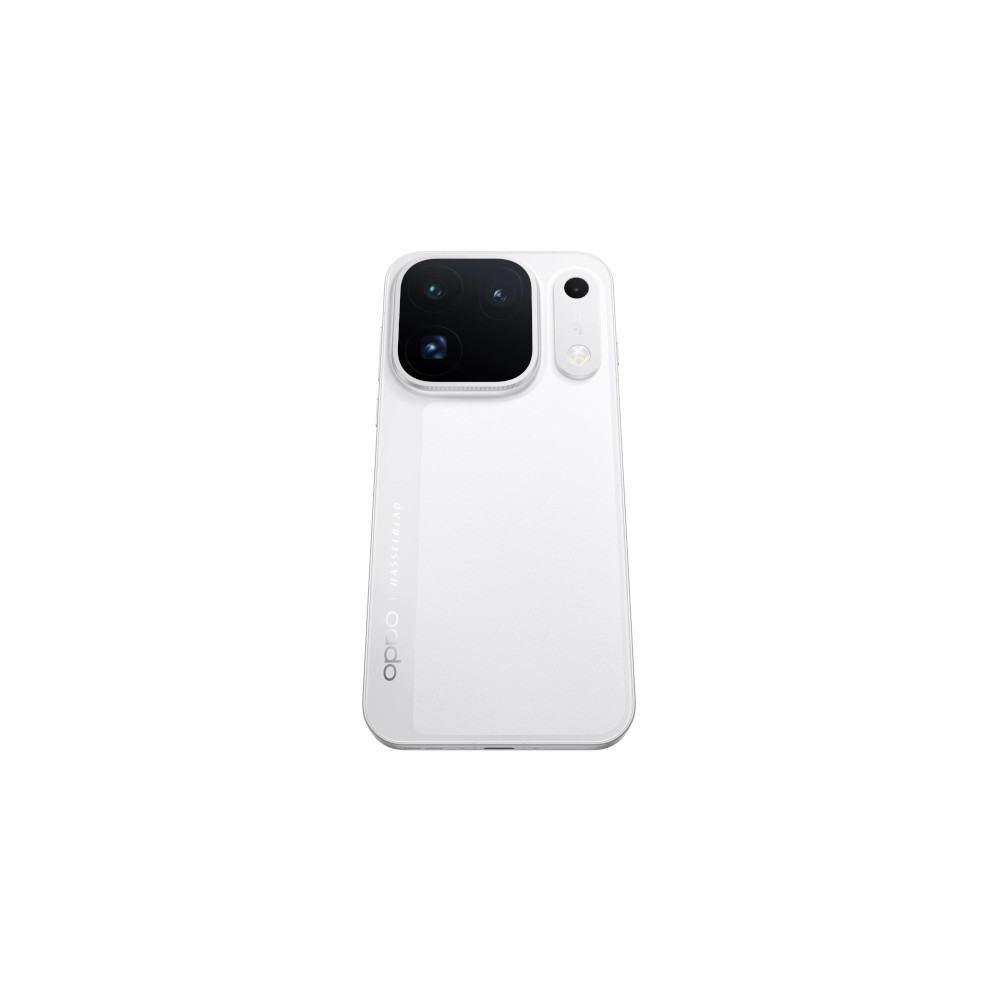
Look past the naming vanity, though, and there’s a lot more Max-ing going on here than on any other phone sharing the moniker. A blazing-fast 2nm processor, gargantuan 7,150mAh battery, 80W charging, and not one but three huge 200-megapixel cameras. If numbers made great phones, the Find X10 Pro Max would already be a clear winner.
But can OPPO turn that monster spec sheet into a phone that’s genuinely greater than the sum of its parts? I’ve spent three weeks with it to find out.
The only camera you’ll ever need

Regular readers will know that I’m a hard customer to please when it comes to photography, and it’ll take more than the promise of three 200-megapixel cameras to win me over. After all, light capture is about much more than resolution, and it’s still highly debatable that small smartphone sensors can make proper use of these huge megapixel counts. Still, what has caught my eye is the sheer size of the three cameras here.
Compared to the powerhouse Google Pixel 11 Pro XL, OPPO’s latest camera package is gargantuan. To put OPPO’s camera hardware into perspective, all three of these sensors are comparable to the main camera on the Samsung Galaxy S26 Ultra, with that hardware extending to ultrawide and telephoto photography as well.
| Camera | Google Pixel 11 Pro XL | OPPO Find X10 Pro Max |
|---|---|---|
| Camera Main / Wide | Google Pixel 11 Pro XL 50 MP, 1/1.3-inch sensor, f/1.68, OIS | OPPO Find X10 Pro Max 200 MP, 1/1.3-inch sensor, f/1.5, OIS |
| Camera Ultra-Wide | Google Pixel 11 Pro XL 48 MP, 1/2.51-inch sensor, f/1.7, Autofocus | OPPO Find X10 Pro Max 200 MP, 1/1.56-inch sensor, f/2.2, Autofocus |
| Camera Telephoto | Google Pixel 11 Pro XL 48 MP, 1/1.95-inch sensor, f/2.8, OIS | OPPO Find X10 Pro Max 200 MP, 1/1.56-inch sensor, f/2.1, OIS |
| Camera Front | Google Pixel 11 Pro XL 42 MP, f/2.2, Autofocus | OPPO Find X10 Pro Max 50 MP, 1/2.75″ sensor, f/2.0, Autofocus |
On paper, there’s no weak link in the camera package. But that’s doing OPPO’s accomplishment here a disservice; all three cameras are top of their respective classes. Autofocus, dynamic range, and white balance are every bit as good as you could expect from a phone at this price point, giving me very little cause for complaint with the photography essentials. You can check out full-res samples I took in this Google Drive folder.
Colors are vivid but not oversaturated or unrealistic, thanks to OPPO’s dedicated True Color camera, which captures 24-bit color data at 3.2-megapixel resolution to accurately calibrate the LUMO engine’s color processing. That same processing engine helps deliver 26MP photos at every zoom level from 0.5x to 9.9x, thanks to its image fusion capabilities. All three cameras are capable of making use of those extra megapixels, boasting crisp detail that isn’t oversharpened nor overly noisy, with only a reasonable, subtle grain in low light.
In addition to sheer size and megapixels, OPPO’s main camera boasts Samsung’s latest DeepPix technology. In a nutshell, the sensor’s pixel structure is more efficient at transferring electrons and converting them into a readable voltage, and it has a larger area for storing them. This enables up to 17 stops of dynamic range, without the use of software that can lead to potential ghosting. The reality, however, is more subtle — I couldn’t find many scenarios that caused any trouble for any of OPPO’s three cameras with HDR. When comparing against the Pixel 11 Pro XL, I eventually found a few cases that would wash out this rival phone, while the Find X10 Pro Max remained vivid. DeepPix can clearly help, but it’s not a game-changer in its own right.
All that said, by far my favorite camera of OPPO’s three behemoths is the 70mm telephoto zoom. There’s just a single camera dedicated to long-distance shooting this year, but it extends all the way from 3x (70mm) to 6x (140mm) and 13.2x (308mm) by cropping in from those 200 megapixels, resulting in near-lossless quality zoom, just sans the natural background compression and bokeh of those actual focal lengths. Still, of all the photos I’ve taken with this phone, my favorites were almost unanimously shot using this lens.
Much like last year’s model, it’s the sheer versatility on offer here that makes the telephoto camera such a joy to use. Not having to worry about a loss in quality or terrible low-light performance really frees you up to crop in and frame your snaps that other phones just can’t. The combination of high-end hardware and OPPO’s latest software really pays dividends for capturing emotive portraits — which are on the softer side but well-exposed with natural detail — and scenic landscapes with a single, impressive camera lens. That said, OPPO’s other 2026 flagship, the Find X9 Ultra, already boasted an incredible telephoto, and you can grab the same specs on the more affordable Find X10 if this is your preferred style, so it’s not reason enough alone to stump up for the Pro Max.
But regardless of your framing preference, the OPPO Find X10 Pro Max’s real photography superpower is that all three lenses look just as good as each other. There’s no major loss of detail, substantial color shift, or drop-off in low-light performance as you move from ultrawide to wide to telephoto. The phone is remarkably consistent across all three of its lenses, no matter the shooting environment. Granted, you do have to live with a little chromatic aberration on the ultrawide and a slight loss of sharpness compared to the main and telephoto, but that’s a very minor compromise compared to every other smartphone camera I’ve tested.
However, OPPO’s telephoto setup has its limits; you have to push it to 20x and beyond to really hit it. Once you reach 30x zoom, the camera app defaults to AI upscaling to enhance detail and reduce noise as the sensor begins to struggle. Although not as bad as some of the early AI upscaling efforts I’ve seen, I’m really not too impressed with the look of the AI-enhanced results. The denoising efforts are overly aggressive, robbing images of their depth and natural grain. The results look like a combination of flat textures and artificial-looking sharpening that don’t quite appear true to life.
I haven’t needed to break out OPPO’s telephoto extender accessory, but it would undoubtedly be the way to go for more natural image quality if you regularly shoot at 30x or beyond. But in all honesty, the Find X10 Pro Max’s 30x photos are more than good enough in bright outdoor lighting that you don’t need a bulky accessory to grab the occasional distant snap.
Not all of OPPO’s latest software camera tools are a hit, then. But one area it has absolutely nailed this year is Color Palettes. While OPPO and its rivals have offered similar filter features for years now, they’re much more tightly and intelligently integrated this year. These 18 built-in Hasselblad palettes are available in Photo, Portrait, Pro, and Video camera modes and feature an Apple-inspired UI for fine-tuning your chosen style, which is automatically saved for the next time you need it. I’m not usually one for aping iOS features, but it’s hard to argue with the implementation here; it just works.
One particularly useful property is that you can go back and edit or completely change styles post-shot, without constantly reprocessing the image. This takes the stress out of capturing the perfect look, freeing you to experiment at leisure without resorting to RAW editing. Though that remains an option if you want that added flexibility.
Nothing is ever quite perfect, however, and there are one or two minor problems with OPPO’s triple camera powerhouse. Lens sharing between the main and ultrawide cameras is a persistent problem when shooting in the general direction of the sun. At longer ranges, some fine zoom details can look oddly upscaled, hinting at AI-style upscaling that looks overly fake on solid textures (such as railings). These problems are occasional rather than persistent, but once you notice them, they do take the shine off an otherwise unrivaled camera package.
I leave my mirrorless camera at home with the Find X10 Pro Max in my pocket.
Then there’s video. Color, detail, and HDR deliver an excellent photography experience, while the ability to shoot 8K at 30fps and 4K at 120fps across all three lenses is a boon for seamless zooming, and Ultra Steady Video helps remove shake and judder with a small cost to cropping. But serious videographers are much more likely to find value in the Pro Max’s support for Open Gate Capture to leverage the camera sensor’s full image area and O-Log2 for greater color-grading flexibility in post-production. OPPO has also worked closely with Blackmagic, ensuring all of the phone’s best features work seamlessly with the popular capture app. Bottom line, this is every bit as great a setup for videographers as it is for photographers, and with 512GB UFS4.1 storage as standard, you won’t run out of space in a hurry.
Setting the standard for Pro Max phones everywhere

OK, the camera is fantastic, but it takes more than that to build a brilliant smartphone. Battery life consistently ranks among the top consumer demands, and the combination of a large Silicon-carbon hybrid battery and a 2nm MediaTek Dimensity 9600 Pro processor makes this one of the most endurance-focused phones on the market.
OPPO says that two days of “typical” use are readily achievable, and I’ve often made it well into a third day before reaching for the charger. Our battery benchmarks deliver over eight hours of content capture and over 20 hours of web scrolling, results unheard of in our testing suite. That’s more than double the screen-on time for these use cases than the Samsung Galaxy S26 Ultra.

Now, a small caveat. The unit I tested has an 8,000mAh cell, slightly larger than the 7,150mAh dual-cell design you’ll find in Europe, so the metrics below will be about 10-15% worse on some models. Still, that’s more than enough to keep the phone comfortably ahead of rival flagships. OPPO also notes that the battery is rated to retain 80% of its capacity after 5 years of typical charging, so the cell will last for years to come.
A huge battery and efficient 2nm processor redefine multi-day use.
Now, a huge battery has the drawback of taking a long time to charge to full. Unfortunately, OPPO has coupled this with a more conservative approach to charging power than in previous years. Don’t let the 80W SuperVOOC tagline bamboozle you; charging power generally hovers around 30W for much of the charging cycle, resulting in a sluggish 80 minutes to fill the tank. Given that the OnePlus 15 can charge a similarly large battery in 40 minutes, this feels like a step back from OPPO’s in-house technology. The upside is that you can hit similar power levels with both UFCS and USB PPS chargers, so you don’t need a proprietary brick to get the most out of the phone. Plus, around 25 minutes on the plug is still enough to take you through a busy day.
Returning to the processor, OPPO’s implementation of the Dimensity 9600 Pro doesn’t quite match Qualcomm’s latest Snapdragon 8 Elite Extreme Gen 6 or Apple’s new A20 Pro. It’s not far behind on the leaderboards, but we’re looking at minor improvements to last-gen performance rather than anything groundbreaking. It’s also paired with 12GB LPDDR5 RAM, a downgrade on many last-gen models but still sufficient for everything I could throw at it. The new chip provides a solid 48% single-core and 20% multi-core CPU uplift over the Find X9 Ultra, according to GeekBench 7, ensuring day-to-day performance is as snappy as you’d expect while sipping power to help prolong battery life.
GPU performance is less of an upgrade but still robust enough, clocking a 5.6% boost in 3DMark’s Wild Life Extreme and a virtually identical score in the ray-tracing Solar Bay test compared to last year. If you need more, you can enable OPPO’s Performance Mode, but it only makes a small difference while increasing power draw and keeping a firm lid on temperatures. Unfortunately, this mode is not enough to close the gap on the Apple A20 Pro or even the last-gen Snapdragon 8 Elite Gen 5 in GPU benchmarks. Even so, real gaming performance easily locks at 60 fps in the games and emulators I tested, with headroom to spare for titles that support 90 fps and 120 fps modes. The phone’s default profile offers a superb balance for daily tasks and gaming, but note there’s a hard clamp at 40°C as the max internal temperature, which might be a drawback for longer play sessions in warmer climates.
OPPO hasn’t neglected the broader hardware package either. The display boasts 3840Hz PWM dimming for those sensitive to flicker, and it also seamlessly transitions from 1Hz for low power consumption to 144Hz for gaming and multimedia. The Find X10 Pro Max also boasts IP66, IP68, and IP69 ratings, should you require such extensive protection against dust and water ingress.
If there’s one complaint I have about the OPPO Find X10 Pro Max, it’s purely aesthetic. I can’t fathom why OPPO has put so much effort into creating a class-leading piece of hardware, only for ColorOS 17 to go to such great lengths to clone iOS and its gaudy Liquid Glass design. It’s not as indecipherable as Apple’s first attempt, but the Quick Settings panel still ends up unnecessarily busy to my eye. You can disable some of the glass effect. It’s hidden away under Settings > Home screen, lock screen & style > More > Textured visual effects and turn off Visual Blur, but even this leaves the UI overburdened with squircles and makes no difference to apps like Camera and Gallery, leaving the UI feeling even more disjointed. Thankfully, ColorOS continues to feature an extensive array of customization options, pre-designed themes, and widgets to help make this Android handset feel like your own.
AI additions attempt to close the gap on Pixel and Galaxy.
This minor gripe aside, ColorOS is arguably one of the better Android skins overall in terms of features. Take Snap Key, for example. The little button on the right side of the phone provides quick access to vibrate or mute settings, the flashlight, or AI Mind Space for basic AI summary features, depending on your preference. Speaking of AI, OPPO has added agentic support to AI Mind Pilot, allowing it to help you sort files on your phone, organize media into event-based folders, or create plans, book flights, and work on documents. More advanced agentic features work with cloud accounts from Manus or OpenAI, though the lack of a Gemini account option feels like an oversight on Android. Bring-your-own-API-key would be even better, given how many providers to choose from these days.
There’s also a more powerful AI Photo Agent in the Gallery app that lets you edit your snaps with text-like requests, such as expanding an image’s border, applying extra bokeh, or changing the color palette. While helpful in some cases, I’m still not quite convinced any of these AI tools are must-haves; touching up photos is already easy enough, and I couldn’t find a regular use for the phone’s new agentic capabilities. Still, these additions make the Find X10 Pro Max feel more feature-complete against AI leaders like Google and Samsung, so perhaps that’s a good thing.
OPPO Find X10 Pro Max review verdict: Should you buy it?

Hardware-wise, there’s no contest: the OPPO Find X10 Pro Max is a better piece of kit than the Google Pixel 11 Pro XL ($1299 at Amazon), Samsung Galaxy S26 Ultra ($1299.99 at Amazon), or Apple iPhone 18 Pro Max ($1299 at Amazon). It takes better pictures, lasts longer on a single charge, and is an immaculately built piece of hardware. It’ll also see updates for seven years, making this a solid long-term buy. Even software-wise, I think ColorOS has closed the gap enough in recent years that you’re unlikely to miss the few minor AI in-house features the US big three have crammed into their latest models. Between AI image edits, agentic and translation tools, and Gemini, OPPO can do AI too.
I don’t say this lightly, but the OPPO Find X10 Pro Max is probably the best smartphone I’ve ever used. However, this Pro Max is primarily built for media enthusiasts and could easily be considered overkill for those simply looking for a competent, daily, flagship driver. If you never plan to shoot 8K ultra-high-resolution video, run demanding emulators, or take pristine pictures at half a mile away, OPPO’s Pro Max is probably surplus to requirements. Rival flagships can do the essentials, and more, very well, too.
More than just a brilliant camera phone, OPPO's built the definitive Pro Max.
The big problem is the price — the OPPO Find X10 Pro Max doesn’t come cheap. €1,799 (~$2,020) is a small fortune and significantly more than you can pick up a Galaxy Ultra or iPhone Pro Max for. While the hardware is superior, it’s not necessarily easy to justify the extra cost unless you’re going to take full advantage of every extra the Find X10 Pro Max offers. Even within the OPPO portfolio, the regular Find X10 is only a marginal camera downgrade compared to the Pro Max, making it the better buy for customers with a sensible approach to their budget. Availability is also an issue for US customers, as OPPO doesn’t sell the phone through official channels.
Still, the OPPO Find X10 Pro Max is undoubtedly the best smartphone the brand has ever made, and it’s arguably the most complete hardware package ever assembled. If you’re a photography and video enthusiast after an ultra-premium, high-endurance phone to keep up with your shutterbug lifestyle, I wouldn’t hesitate to hit that buy button.
- Amazing triple cameras
- Multi-day battery life
- Efficient 2nm processor
- Universal charging
- Impeccable design
- Dubious Liquid Glass UI
- Not quick to charge
- Conservative performance
- "Only" 12GB RAM
- Expensive
Thank you for being part of our community. Read our Comment Policy before posting.