Affiliate links on Android Authority may earn us a commission. Learn more.
I studied the iPhone Duo and Galaxy Z Fold 8 for a week. 5 reasons I only want Samsung's phone
Sep 22, 2026 — 5:00 AM ET



Apple’s foldable iPhone is no longer a dream. John Ternus, Apple’s new CEO, officially unveiled the iPhone Duo at the company’s September 9 launch event. The iPhone Duo isn’t available to buy just yet, and we’ll have to wait another month before it hits store shelves. But its arrival means Samsung, for the first time in years, has some genuine competition in the foldable phone market.
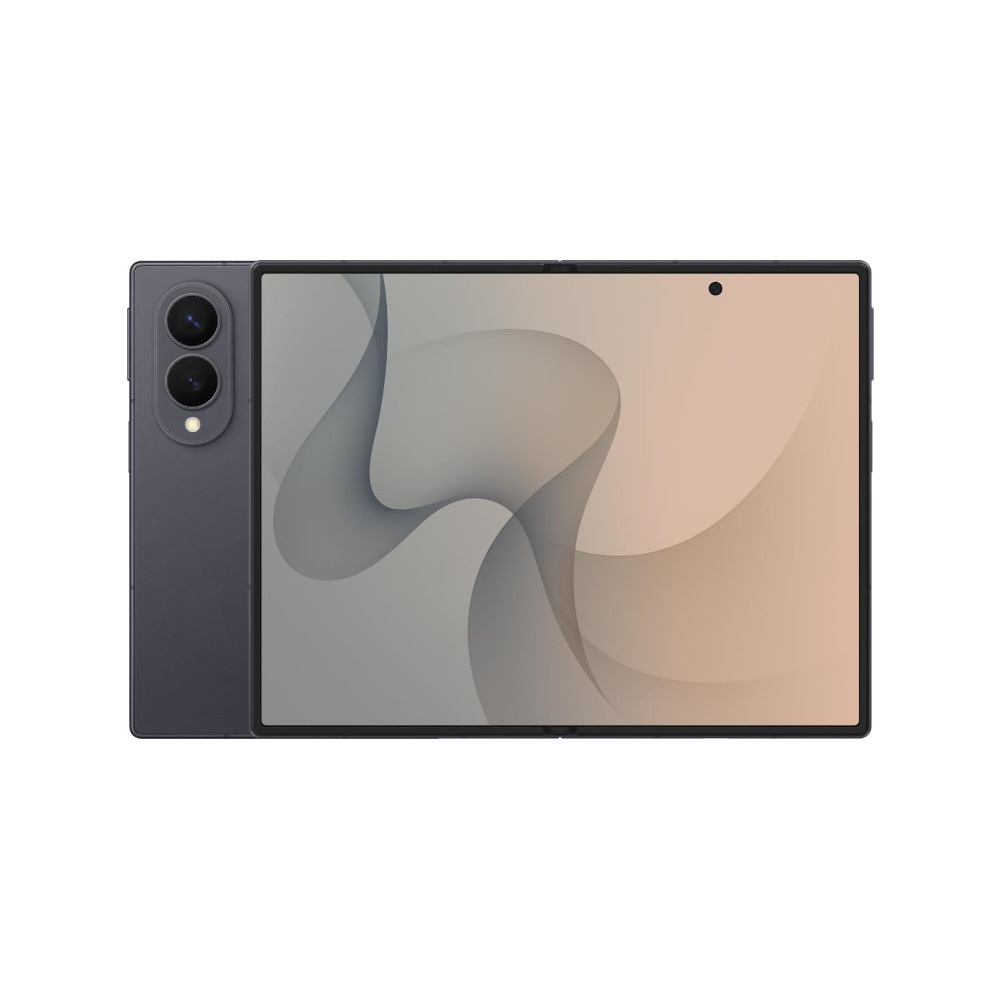
Samsung launched the Galaxy Z Fold 8 a couple of months ago with a similar wider, passport-style form factor. And after spending the past week studying both foldables in detail, I think I’ve made up my mind. If I were spending my own money on a foldable phone right now, I’d still pick the Galaxy Z Fold 8.
Which foldable phone would you buy with your own money?
The Galaxy Z Fold 8 is noticeably lighter and thinner

The iPhone Duo looks like an impressive device for Apple’s first attempt at a foldable phone. But dig a little deeper into the specs, and you’ll notice that the iPhone Duo is by no means a thin or lightweight foldable. It weighs 254 grams and measures around 11.3mm thick when folded.
Compared to most Android foldables today, that’s quite thick and heavy. The Galaxy Z Fold 8, for comparison, weighs just 201 grams and measures only 9.7mm when folded. That makes Samsung’s foldable both noticeably thinner and more than 50 grams lighter than the iPhone Duo.
With a foldable, every millimeter and gram you can shave off makes a difference.
As someone who’s been using foldable phones for the past half-decade, I can confidently say that shaving even a millimeter off the thickness or a few grams off the weight makes a surprisingly big difference in everyday use. Based purely on the specs, the iPhone Duo already seems a little too thick and heavy for me.
The lower price makes Samsung tempting

Apple surprised a lot of us, me included, when it announced the iPhone Duo at $1,999. I was expecting Apple’s first foldable to land somewhere closer to $2,200, so a starting price of around $2,000 isn’t as bad as I initially expected.
But even then, the Galaxy Z Fold 8 undercuts it. Samsung’s foldable starts at $1,899 in the U.S., making it $100 cheaper than the iPhone Duo. And that price difference does matter to me. In my region, the difference between the Galaxy Z Fold 8 and iPhone Duo is actually closer to $1,000, which is simply too big for me to ignore and makes Samsung’s foldable significantly more appealing.
Even if you’re in the U.S., though, that $100 saving isn’t nothing. It’s enough to get yourself a good pair of earbuds, a couple of nice cases, or some other accessories for your Galaxy Z Fold 8.
Samsung is still miles ahead at multitasking

With the launch of the iPhone Duo, Apple has finally brought split-screen multitasking to the iPhone. For the first time, you can run two apps side by side on an iPhone. But compared to what the Galaxy Z Fold 8 offers in terms of multitasking, that’s still pretty basic.
Not only can you run up to three apps at once on the Galaxy Z Fold 8’s inner display, but you also get floating windows, which I find particularly useful on a foldable phone and something Apple doesn’t offer on the iPhone Duo.
Apple finally brought split-screen to the iPhone, but Samsung is still miles ahead.
And that’s not all. Going with the Galaxy Z Fold 8 also gives access to Samsung DeX. This means I can just connect the Fold to an external monitor and use it almost like a full-on computer, with full-screen apps and a proper desktop-like interface. That is, again, something you can’t really do with the iPhone Duo.
A physical SIM slot is still important

I know this might sound like a very small difference, and maybe I’m being a little picky here, but I’d still much rather have a physical SIM card slot on my smartphone than rely entirely on eSIM. The iPhone Duo only supports eSIM, while the Galaxy Z Fold 8 still gives you a proper physical SIM card slot. And that gives the Galaxy Z Fold 8 an edge, for me.
Sure, eSIM has gotten much better over the past few years. It’s easier to activate and transfer between devices, and more carriers now support it. But for me, it still doesn’t match the convenience of simply taking a physical SIM out of one phone and putting it into another.
As someone who tests a lot of phones and travels a lot, I find that having a physical SIM slot matters a lot. And for that reason alone, I find the Galaxy Z Fold 8 simply a more convenient option.
Android gives me freedom that iOS still can’t

Probably the biggest factor influencing my decision is Android itself. Sure, Google may be cutting back on some of Android’s freedom with tighter sideloading restrictions, but it’s still a much more open operating system than iOS.
There are still some small things on the iPhone, like the requirement that third-party browsers use Apple’s WebKit engine (in most regions), that continue to frustrate me. And the fact that sideloading on the iPhone is still largely restricted to the EU, even though iOS is clearly capable of supporting it, just baffles me.
And then there’s also the added flexibility that comes with owning a Samsung phone. You get access to tools like Good Lock, which lets you tweak pretty much everything, from the lock screen and Recent Apps menu to the notification panel. It’s the kind of customization I’ve gotten so used to that I don’t think I’ll be able to give it up for the iPhone Duo.
Inner screen is great for videos
Powerful
Overall, I’m not saying the iPhone Duo isn’t an impressive device. Apple has clearly done its homework with its first foldable, and I love that it still manages to offer features like full IP68 dust and water resistance (something Samsung still doesn’t offer), but going through both devices closely, I just can’t seem to convince myself to pick the iPhone Duo over the Galaxy Z Fold 8.
Thank you for being part of our community. Read our Comment Policy before posting.