Affiliate links on Android Authority may earn us a commission. Learn more.
Two big reasons why I won't buy a new charger for my Pixel 10 Pro XL
Oct 15, 2025 — 8:00 AM ET



Picking out the best wall charger for the new Google Pixel 10 Pro XL is not the easiest task, thanks to some quite specific power requirements. Even then, I wasn’t too impressed when testing out Google’s new 67W plug — partly because of some aggressive power throttling to prevent the phone from overheating. This made me wonder if I could just stick with an older adapter and receive pretty much the same charging experience.
The thing is, the Pixel 10 Pro XL’s higher 39W power limit is locked behind a rarer 20V PPS charging protocol requirement, meaning most customers are looking at buying (another!) new plug.
Like many of you, I’m sure, I have plenty of only slightly older chargers lying around that don’t support 20V PPS but do have the more common 9V/3A or 11V/1.5A PPS modes that the Pixel 10 Pro XL also supports. So, I grabbed my older Anker Prime 100W and powered up the phone again using the same 3A Google USB-C cable, screen-off, and starting from a cool ambient temperature.
| Time to 25% charge | 50% charge | 75% charge | 100% charge | |
|---|---|---|---|---|
Google Pixel 10 Pro XL 37W (18V, 2A) | Time to 25% charge 11 mins | 50% charge 23 mins | 75% charge 40 mins | 100% charge 77 mins |
Google Pixel 10 Pro XL 27W (9V, 3A) | Time to 25% charge 13 mins | 50% charge 26 mins | 75% charge 41 mins | 100% charge 80 mins |
As you’d expect, the phone is a bit slower out of the gate when it’s limited to 27W compared to the 37W peak I recorded from Google’s 67W and 45W chargers. Clearing the first 25% mark takes around 13 minutes instead of 11, and filling up half the battery takes 27 instead of 23 minutes. A small difference — and I doubt many will quibble over a few minutes.
But around the halfway mark, the Pixel 10 Pro XL’s temperature sensitivity kicks in when using higher-power chargers, throttling charging power to around 24W and then well below by around 35 minutes. Heat doesn’t build up as quickly when charging at a slightly lower power level, meaning my slower charger sustains its 27W output for just over 40 minutes. I recorded a peak temperature of just 34.6°C versus 38.7°C — a notable win for battery health as well.
With total charge times landing at 77 and 80 minutes for the faster and slower charging options, there’s really nothing between the two by the end of the test either.
Cooler charging is healthier charging
So there you have it — despite dropping about 10W of peak potential, I recorded less than five minutes’ difference to key charging milestones with a two-generation-old charger. Better still, the Pixel 10 Pro XL charges cooler with the slower plug, which should hopefully help offset battery degradation issues — especially if you typically charge overnight. Since Google’s Battery Health Assistant begins managing capacity for safety within the first year, keeping the XL’s battery cool and healthy has never been more important.
With that in mind, I wouldn’t suggest buying a new 20V PPS charger for your Pixel 10 Pro XL unless you regularly charge in a hurry. The 10 Pro XL ended up with an 8% battery lead after half an hour, but that was by far the widest gap. For slightly shorter or longer sessions, you’re buying yourself just a smidgen of extra charge for the same time on the plug.
Cooler and barely any slower, there's nothing wrong with an old 27W charger.
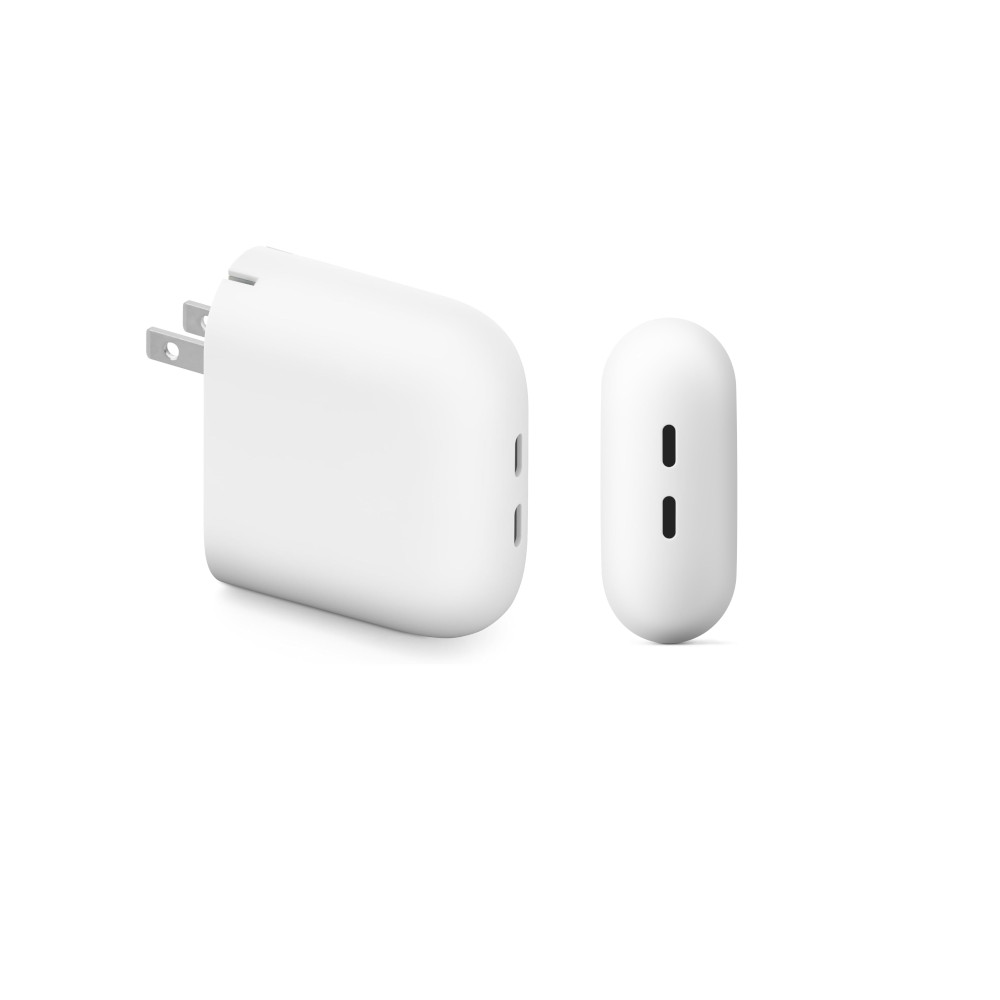
As for the baseline Pixel 10 and Pixel 10 Pro, those models are capped at 30W wired charging anyway — meaning an older 9V/3A PPS plug is all you need. While you can still benefit from the Google Pixel Flex 67W charger’s Pixel-priority charging mode, which ensures your Pixel still pulls maximum power when charging alongside tablets or laptops, it hardly seems worth spending $60 on either.
So don’t fret the plug. If you have a moderately capable USB PD PPS charger, stick with it, safe in the knowledge that your new Pixel 10 Pro XL isn’t missing out on much. When it is time to upgrade, I’ve carefully curated a list of chargers that can handle Google’s latest flagship at its fractionally faster full speed.
Thank you for being part of our community. Read our Comment Policy before posting.