Affiliate links on Android Authority may earn us a commission. Learn more.
If Gemini can do everything for me, what's the point of Android?
May 17, 2026 — 6:00 AM ET



We didn’t see it coming (honestly, neither did Apple), but Google just showcased what could perhaps be the biggest moment for AI: Gemini Intelligence. It brings to reality Gemini’s agentic mode that we have all been dreaming of: where AI can execute multi-step tasks on your behalf as you watch your phone screen do things on its own, as if it were a moving newspaper from a Harry Potter movie.
Gemini Intelligence does appear futuristic, and honestly, it is tempting enough that I’d want to try it out. But once you step back away from its dazzle, you realize that it fundamentally changes how we interact with our smartphones. If Gemini can search, plan, compare, reply, and execute tasks on my behalf, where exactly do I come into the process? Do I actively participate, or just hover over its actions to supervise it? Do I only approve what AI has already done, or let it mess up and come to me later to fix things?
And, most important of all, does Android have any purpose of its own left anymore?
What worries you most about agentic AI on smartphones?
It’s hard to draw a line with convenience
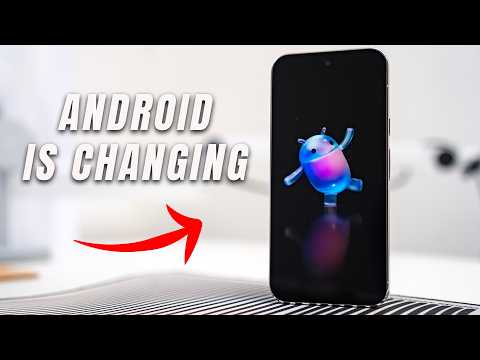
AI agents are increasingly pushing humans into an ‘approval reality’. Their makers often emphasize that you always have the final say. And Gemini Intelligence gives us a glimpse of phones evolving into devices and systems where a human’s role mostly involves approving AI-generated actions throughout the day. But I don’t want my role reduced to being just a supervisor.
Do companies like Google really believe that an artist paints only to see the final result in front of their eyes, and not for the joy of the process itself? I may be getting ahead of myself, but even as an average tech enthusiast, I genuinely enjoy the painful process of comparing two gadgets until the point my brain feels fried. The eventual purchase is almost always secondary, but it’s the process that creates the attachment to the device.
With AI agents, I'd be accepting someone else's choices — those of a lifeless robot running on a remote server, no less.
And everyone has their own version of this passion. Some like to meticulously put together playlists (which may have evolved from collecting cassettes), while others may feel proud of knowing all the good restaurants in a city at their fingertips. If AI were to completely replace this discovery layer, we would be left as mere passive consumers.
It may be portrayed as delegating a mundane task to AI, but in reality, I’d be accepting someone else’s choices — those of a lifeless robot running on a remote server, no less.
AI assumes intent — but humans don’t work that way

No matter how smart the intelligence gets, it would still be artificial. Humans, on the contrary, are messy, emotional, and exploratory beings, and to their own benefit. I usually open my food delivery app already knowing what I want, but then I explore the photos, new dishes, offers, or get new cravings, which change my mind completely. That discovery — that journey — changes the entire outcome. If Gemini were to order food for me, would it also get tempted on my behalf?
Some of the best discoveries happen by accident, and I’m not talking about major inventions, but about regular, everyday life stuff, like discovering new music or finding a new place to dine. When you optimize the process to its fullest, you kill serendipity. AI agents are built to execute what you already have an intention for, without factoring in the human aspect of discovering what you want during the process.
If Gemini were to order food for me, would it also get tempted on my behalf?
So, it’s only the execution part — perhaps the tiniest one in the process between intent and approval — that AI is trying to replace right now. In a way, it is not reducing effort but shifting it toward reaching a decision (which itself is the biggest and most tedious part), composing prompts, refining instructions in follow-ups, and correcting any AI mistakes.
Even today, I frequently get frustrated at Gemini because I repeatedly have to help it understand my instructions. In those moments, I find it better to do the task manually rather than rely on automation — and I see that multiplying with multi-step agentic workflows rather than reducing.

Maybe a collaborative middle ground is the answer here, where AI doesn’t assume full autonomy but collaborates with the user throughout the process. It could ask questions along the way or verify assumptions before proceeding. Perhaps Gemini could give you options for a fully autonomous mode, a manual mode, and everything in between.
But given the pace at which AI is leapfrogging on the consumer side, it’s hard to say what the most viable solution would be at this point.
Can Gemini Intelligence make Android obsolete?

Right now, it may seem fun and insignificant, but delegating all your tasks to AI can fundamentally shift how you interact with your devices and, by extension, how their interfaces look. If AI starts acting on my behalf entirely, there would come a point where I wouldn’t need a screen at all. Something like smart glasses sitting on my nose would eventually be enough. And if I did need a screen for the final approval step, a small smartwatch display would easily suffice. That would mean I could stop carrying my phone entirely.
It could finally allow me to walk upright, look at the sunset, or spend time with my family like a human being should.
Gemini Intelligence is being described as the biggest update to Android, not just for marketing effect, but because it genuinely carries the potential and weight to transform Android as we know it. The current Android user experience, from customizations and tinkering to app ecosystems and controls, is built around how we visually and physically interact with the OS. But the agentic version of Gemini sort of demotes that interface to a secondary layer, as the operating system may soon become less about the apps it runs and more about how AI can leverage it to execute your tasks.
In hindsight, the Rabbit R1 feels almost ahead of its time.
I’m not fully opposed to this future because it has the potential to be the best well-being technology ever created. It could finally allow me to walk upright, look at the sunset, or spend time with my family like a human being should. But it has equal potential to go the opposite way and keep people from participating in their own digital lives, which have increasingly become critical to our existence.
It’s all about control
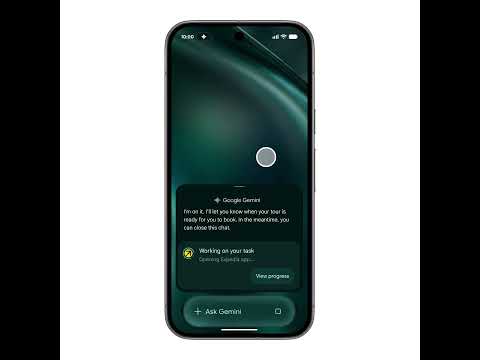
When AI is taking actions on your behalf while you are merely approving them, who is actually in control: AI or you?
There is no doubt that AI will change how we use our phones, but the better question is: how much control over the experience will remain with us? There would be moments when Gemini makes decisions that are not fully aligned with my thoughts and intentions. Maybe it’s acting on a flawed interpretation, gets influenced by code injection, or even advertisers (ads will most likely come to Gemini — it’s Google, after all).
Even if the implications aren’t too grave, what if Gemini books a terrible hotel, sends an incorrect message, or buys the wrong size of a product? Who would be blamed for it? Did I do it, or did my assistant?
What if Gemini books a terrible hotel or sends an incorrect message? Who would be blamed for it? Did I do it, or did my assistant?
I agree that offloading repetitive tasks to AI will free up mental space, improving work-life balance. At the same time, it’s hard to overlook that hijacking the discovery process can dim our curiosity while automating choices rooted in our inherent personalities.
Nothing much may be changing for both humans and Android right now — but a lot of it is coming. It may eventually be AI that shapes us, not the other way around.
Don’t want to miss the best from Android Authority?
- Set us as a favorite source in Google Discover to never miss our latest exclusive reports, expert analysis, and much more.
- You can also set us as a preferred source in Google Search by clicking the button below.


Thank you for being part of our community. Read our Comment Policy before posting.