Affiliate links on Android Authority may earn us a commission. Learn more.

The ANBERNIC Nintendo clone I would recommend you buy isn't the one I use the most
Oct 28, 2026 — 5:00 AM ET
ANBERNIC RG 55G1
MSRP: $139.99
What we like
What we don't like
ANBERNIC RG 55G1


ANBERNIC is no stranger to Nintendo-like handhelds, as we’ve already seen devices “inspired” by the Game Boy Advance, Game Boy Color, and Nintendo DS. So, is it any surprise to see the company releasing a take on the Nintendo Switch Lite and another take on the DS form factor?
Yep, ANBERNIC recently released the RG 55G1, which bears more than a passing resemblance to the Nintendo Switch Lite. But it’s also released the RG DS Plus, its latest dual-screen handheld, which takes after the Nintendo DS Lite and DSi. But after spending a few weeks with both devices, I realized that the one I recommended wasn’t the one I was playing most of the time.
The one I recommend for most people

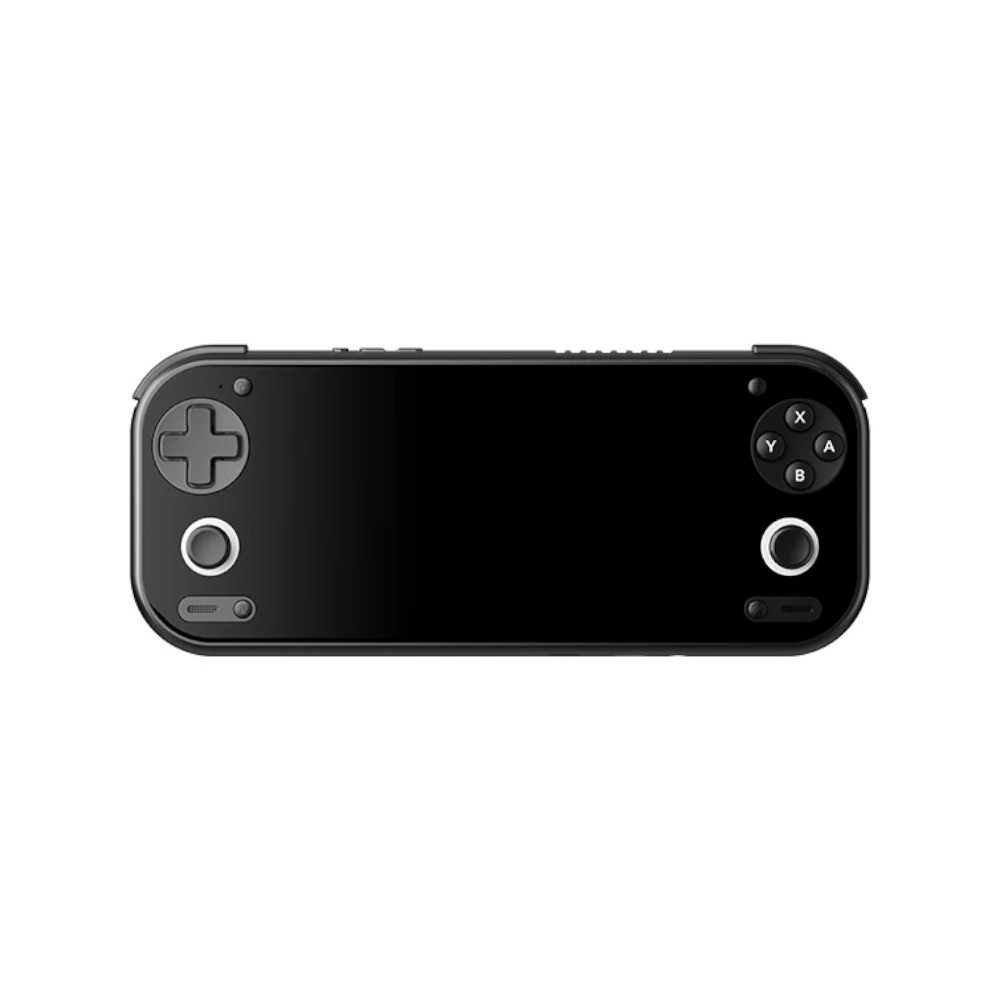
Let me get this out of the way. The ANBERNIC RG55 G1 is the Anbernic Nintendo clone I’d recommend for most people who want an affordable yet capable Android handheld. Yes, it’s an unabashed Switch Lite copycat in many ways, albeit with a thicker, heavier design. Seriously, that 339-gram weight took me by surprise. Nevertheless, the device ticks all of the boxes for a sub-$150 handheld in 2026.
The design and build quality aren’t going to blow you away, for one, but I thought ANBERNIC punched slightly above the price point. There’s a plastic back that isn’t a fingerprint magnet, along with an all-glass front.

I was also happy with the controls here. Perhaps the biggest giveaway that you’re not looking at a Switch Lite is the decision to place both analog sticks below the D-pad and face buttons, rather than the Nintendo console’s staggered layout. I much prefer the staggered layout, and I would’ve liked slightly larger sticks too. Nevertheless, I thought they were perfectly fine for most console games I tried. I also thought the analog L2 and R2 triggers were fantastic additions here compared to the firm’s more expensive RG477M.
The ANBERNIC device also has decent horsepower in theory. The device packs a Snapdragon G1 Gen 2 chipset and your choice of 4GB/64GB or 8GB/128GB models. That chipset is at the bottom of the totem pole among Qualcomm’s dedicated gaming processors, but benchmark results show it’s pretty solid for a low-end Android handheld.

It’s a big win on the CPU front for the ANBERNIC handheld, as it offers roughly double the performance of the MANGMI Air X and the AYANEO Pocket Air Mini at the very least. This is largely due to the ANBERNIC handheld offering newer CPU cores, albeit in a 2+6 layout. Nevertheless, this performance bodes well for CPU-bound emulators.
Benchmark figures show that the console has a small but consistent performance advantage over the Snapdragon 662-toting Mangmi Air X in GPU stress tests. However, both consoles lag far behind the AYANEO Pocket Air Mini, which runs on its ancient yet capable Helio G90T processor.
The ANBERNIC nets a massive win when it comes to temperatures, though, with average temperatures of 19 and 21 degrees Celsius in each test. Meanwhile, the AYANEO handheld recorded average temperatures of 33 and 35 degrees Celsius in each test, while the MANGMI device recorded average temperatures of 32 and 35 degrees Celsius. None of these handhelds get into truly hot territory, but the ANBERNIC RG 55G1 is actually cool.
I was pleased with the RG 55G1’s real-world performance for the price. It comfortably handled everything up to and including PSP games. Many PS2, GameCube, and PC games won’t run at playable speeds. However, I was able to play some GameCube and PS2 games with decent performance. I could even play lightweight PC games like Broforce, although the overworld map was a chugging mess. In other words, don’t go in expecting to emulate sixth-generation console games or even indie games on PC, but there are a few exceptions.

I also appreciated the handheld’s endurance, owing to the 6,000mAh battery. This should keep you gaming for most of the day. It’s not quite on par with my Retroid Pocket G2 in terms of standby power consumption, but it still draws very little power overnight.
On the software front, the ANBERNIC RG 55G1 runs Android 14 with a mostly stock-like interface. The company also offers the RG Home desktop, although I still prefer the AYANEO UI. Nevertheless, staple features like fan control, performance profiles, Xbox or Switch button layouts, and touch mapping functionality are all welcome additions.
- Affordable
- Decent performance
- Pleasant controls
- Good battery life
- Derivative design
- Thick and heavy
The RG DS Plus is what I’ve actually been playing the most

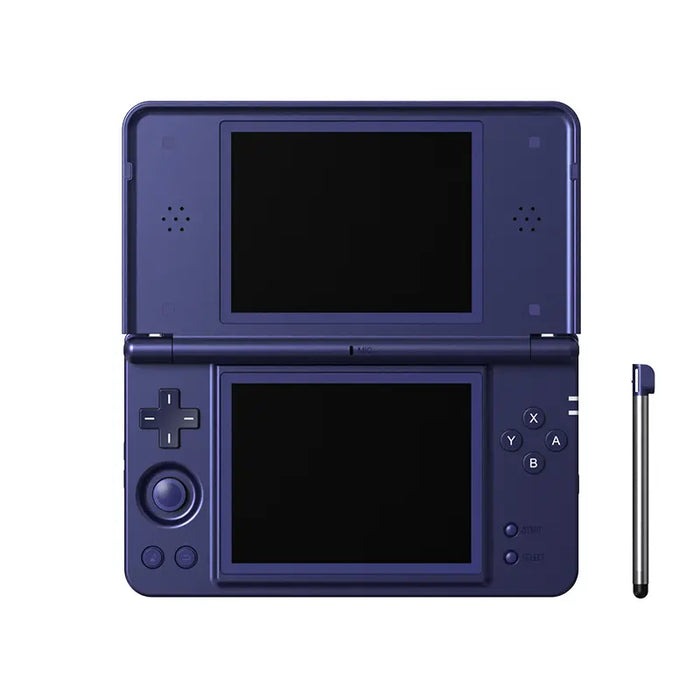
ANBERNIC’s other recent Nintendo clone is the RG DS Plus, and it’s clearly a copycat of the Nintendo DS Lite or DSi. This extends to the hinge-mounted microphone, the stylus slot location, the button layout, and more.
I was disheartened to see that the RG DS Plus lagged behind the original RG DS on the spec sheet. We have the same low-end Rockchip RK3568 chipset, featuring a low-powered quad-core Cortex-A55 cores and a Mali-G52 2EE GPU, along with the same 4,000mAh battery. However, ANBERNIC has dropped the RAM from 3GB to 1GB and cut the storage completely from its previous 32GB base option. Yep, you’ll need to use a microSD card for the OS, and there’s a second slot for your games and media, as you’d expect from a Linux handheld.
Speaking of Linux, this is indeed a Linux-only affair, although the GammaOS Android ROM is now available if you’re keen on Google’s OS. The stock Linux OS is very basic, although it’s fairly intuitive to navigate. You use the shoulder buttons to switch between a carousel of menus shown on the top screen (e.g., applications, settings, DS games, RetroArch), while the bottom screen shows you what’s in each menu. It’s all very easy to understand and a neat way to use both screens. I do wish ANBERNIC used the second screen for more features when you weren’t playing DS games. Instead, RetroArch just shows a static icon on the lower screen (e.g., PS1 controller when playing PS1 games).

If you’re new to Linux on handhelds like me, it can be a little confusing. You can’t simply plug your device into your computer via USB to transfer data, so you’ll need to plug in your microSD card instead. Even the built-in file manager with its two-pane layout takes some getting used to if you’re accustomed to Google Files or OEM file managers on Android.
So what does this downgrade mean for actual gaming performance? You won’t be surprised to learn that anything more than PSP and Nintendo DS emulation is virtually a no-go. I was able to comfortably play SNES, GBA, and PS1 games, but demanding PSP titles like GTA: Vice City Stories and Ace Combat: Joint Assault ran in slow motion most of the time. I did find that some other titles ran well enough, but you certainly shouldn’t buy this handheld thinking PSP emulation is a foregone conclusion. And you can absolutely forget about Nintendo 3DS emulation.
Another notable downgrade compared to the original RG DS is that we only have one analog stick this time, instead of a dual-stick setup. That means some PS1 games won’t be ideal here.
The ANBERNIC RG DS Plus has a ton of downgrades compared to its predecessor, but it's still fantastic for Nintendo DS emulation.
Despite the low-end internals and the downgrades compared to the original model, I’ve been spending far more time playing the RG DS Plus than the RG 55G1. That’s simply because it’s a fantastic way to play Nintendo DS games.
The RG DS Plus offers the new NNDDSS emulator as well as the venerable Drastic emulator via RetroArch. Either way, you’re getting the full, fat DS experience across both screens. I previously said the Galaxy Z Fold 8 was the best smartphone I’ve used for DS emulation, but the RG DS Plus blows away smartphones by having two displays, like a real DS. I had a blast playing games like Cooking Mama, New Super Mario Bros, Mr Driller, and Aliens: Infestation without having to deal with a cramped screen or dodgy virtual controls.
However, ANBERNIC also ups the ante with the bundled capacitive stylus and integrated stylus slot. Sure, capacitive touch screens reduce the need for a stylus, but this is still a welcome addition for a more faithful experience.

It’s also worth noting that the handheld has two 1,024 x 768 screens. That’s a welcome jump over the original model’s 640 x 480 resolution. Either way, I had no problem playing games on these screens, although they’re quite dim in direct outdoor sunlight.
Otherwise, the RG DS Plus delivers some solid physical controls. However, I did find that the plastic edge of the analog stick could hurt my thumb at times. Furthermore, the handheld’s size can make it uncomfortable if you don’t have large hands. I didn’t find this to be an issue during regular gameplay, but I definitely thought it was awkward while playing games like Metroid Prime: Hunters, which sees you holding the console with one hand while you aim with a stylus.
I also have to note that the combination of a dual-screen handheld and a 4,000mAh battery doesn’t sound great on paper. Unsurprisingly, this isn’t great in practice either. I definitely noticed the battery percentage dropping significantly after a single play session, and I don’t think I reached ANBERNIC’s claim of six hours of battery life. This won’t keep you going for a day trip, although a two or three-hour flight is well within reach.
- Built-in stylus
- Lightweight OS
- Sharper dual screens
- Runs DS games well
- No internal storage
- Only 1GB of RAM
- Just one analog stick
- Average endurance
- Stock OS lacks features
A tale of two very different handhelds

My head says that there’s no contest between ANBERNIC’s Switch Lite clone and its DS Lite doppelganger. Most people should absolutely buy the RG 55G1 if they want a well-rounded Android handheld without breaking the bank. Despite the derivative and heavy design, it brings respectable performance for the price, great battery life, and all the expected controls (including analog triggers). It also doesn’t hurt that it has a promo starting price of $139.99 for the 4GB/64GB model, with a standard price of $149.99.
By contrast, the RG DS Plus isn’t the handheld to get for most people. It lags behind its predecessor due to downgraded RAM and storage, and it also lacks a second analog stick. It doesn’t even have an Android variant like the original model, which is perhaps for the best given the paltry 1GB of RAM. Even the handheld’s battery life is average at best.
Despite these very obvious downsides (some of which can be attributed to the RAM crisis), I spent more time playing the RG DS Plus than the RG 55G1 due to my hankering for Nintendo DS games. The dual-screen design, stylus with integrated slot, and pleasant displays all make for a cost-effective DS emulation platform at just $95. I still think the RG55 G1 and even the original RG DS are better all-around handhelds, but if you have a very specific DS emulation itch that needs scratching, the RG DS Plus does a great job. That said, if you really want a great DS-style handheld and have the money, the AYN Thor and Retroid Pocket Duo are objectively better picks. You also can’t go wrong with the MANGMI Air X or AYANEO Pocket Air Mini if you want a similarly cheap alternative to the RG55 G1.
Full suite of controls
Good performance for price
Long endurance
Conversation
Read what readers said or add your take.