Affiliate links on Android Authority may earn us a commission. Learn more.
These are the 5 best budget camera phones of 2026 that can take great photos while saving you money
You don’t need to buy one of the most expensive phones to get a good camera system. Budget phones have been improving by leaps and bounds in recent years, including in the camera department. Some have better cameras than others, though. Those who don’t want to spend the big bucks on the best camera phones but still want to shoot great images have come to the right place. We’ve tested a plethora of devices and researched pretty much all of them here at Android Authority. Let’s go over our picks for the best budget camera phones you should spend your money on.
Google Pixel 9a: The best budget camera phone overall
- Solid, reliable cameras
- Excellent update commitment
- Clever AI-powered features
- Great battery life
- New, streamlined design
- Excellent price
- Relatively slow charging
- Aging Gorilla Glass 3 (again)
- Missing Pixel Screenshots
- Check out our Google Pixel 9a camera samples
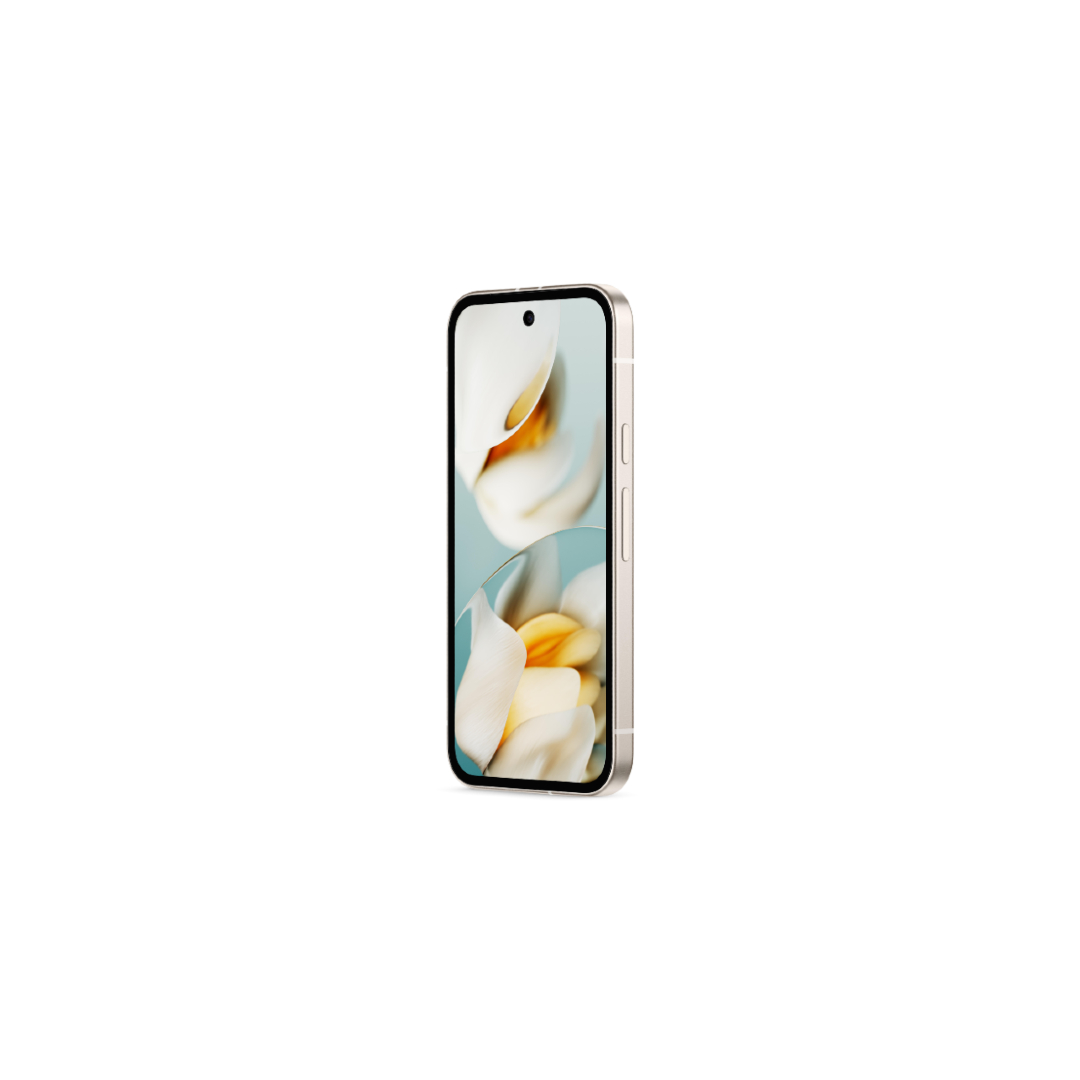
Google Pixel phones have an excellent reputation in the world of mobile photography. While the premium lineup usually gets the spotlight, Google’s budget phones also have awesome camera systems. The latest is the Google Pixel 9a, and it’s no exception to the rule. We mentioned it in our Google Pixel 9a review, and still stand by it: The Google Pixel 9a has a fantastic camera system that performs way above its price range.
We can thank the Google Tensor G4 chipset for making imaging so special in this budget phone. After all, computational photography is what has made the Google Pixel phones so good in mobile photography. The good news is this processing doesn’t change much from phone to phone, as it is all software enhancements.
Of course, hardware matters too. The Pixel 9a comes with a 48MP main sensor, which may seem like a downgrade from the Pixel 8a’s 64MP sensor, but photo quality is not always about megapixels. This one gets a wider f/1.7 aperture, allowing more light to reach the sensor, hence making it faster and sharper. Additionally, Google added a software-based macro mode to this shooter, giving it more functionality.
The Google Pixel 9a has a fantastic camera system that performs way above its price range.
During our tests, we found that both the main sensor and the secondary ultrawide 13MP camera performed well. Even the software-based macro mode performed amazingly. We did mention this is one of the best camera phones around!
As if excellent picture quality wasn’t enough, Google has turned the camera experience into a seamless and fun one, with plenty of extra features to try. The app is clean and straightforward, making shooting a breeze. Simplicity isn’t always synonymous with feature-lacking, though. You can also take advantage of fun capabilities like Panorama Mode, Add Me, Long Exposure, Magic Editor, and more.
If you care for shooting video, the Pixel 9a can handle 4K at up to 60fps. If you reduce the resolution to Full HD, you can increase the frames per second to 120fps.
At just $499 (and often on sale), you really can’t do much better than the Google Pixel 9a. And we’re not only referring to the camera system; the phone is pretty fantastic overall.

Samsung Galaxy A36 5G: The best budget camera phone for Samsung users

- Slimmer and lighter than the A35 5G
- Big, bright AMOLED display
- Fast wired charging
- Long software support
- Ultra-slow fingerprint scanner
- Sluggish performance
- No wireless charging
- Check out our Galaxy A36 5G camera samples
If you aren’t a fan of the Google Pixel 9a and are more fond of Samsung phones, there’s also the Samsung Galaxy A36 5G, which actually costs a more pocket-friendly $399.99. It certainly has its flaws, especially around performance, but we praise it for its vibrant display, slim design, fast charging, and long six-year update promise. Most importantly, though, the camera is also pretty good for under $400.
The device comes with three cameras: a 50MP main one, an 8MP ultrawide shooter, and a 5MP fixed-focus macro lens. Many would consider the latter a spec filler, but I personally like shooting macro photos, so it will come in handy when I am feeling creative.
While not absolutely amazing, the main and ultrawide cameras take really good photos. Images come out crisp, and we really liked the portrait mode performance.
You can shoot video at 4K quality and 30 fps. The videos came out really nice, which is surprising for a camera phone at this price point. If we had to complain about anything, it would be that the performance affects the experience a bit, as using the camera can be a bit slow at times. Otherwise, it can shoot some great photos if you’re into Sammy handsets. We can’t deny that their designs are sleeker, and many of you love the UI implementations Samsung has to offer.

Apple iPhone 16e: The best budget camera phone for iPhone users
- Great update support
- Improved AI features
- Solid performance
- Simple, straightforward design
- Rich OLED screen
- Only one rear camera
- Notched display for Face ID
- No MagSafe
- Bluetooth issues at launch
- Check out our iPhone 16e review for camera samples
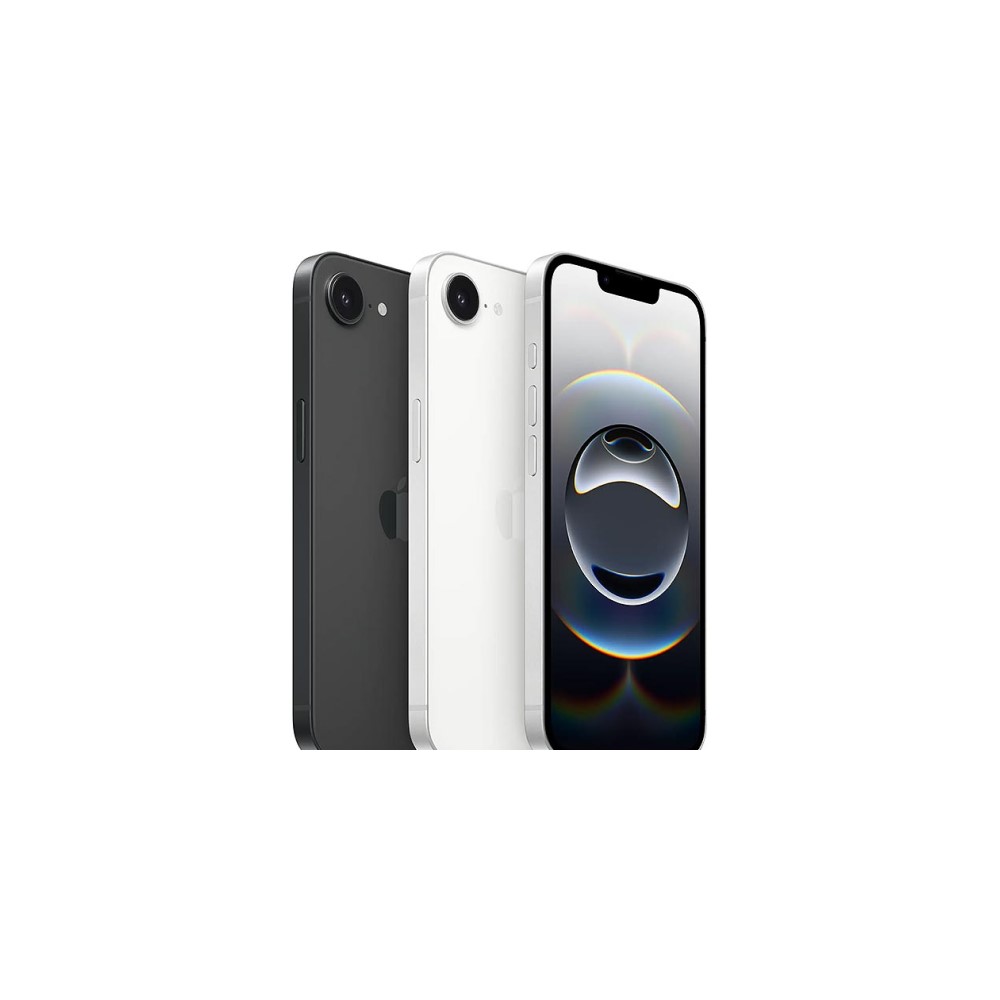
Think of the iPhone 16e as 2025’s Apple budget phone, much like the SE models. It’s a pretty capable iPhone, and Apple is known for good camera quality, too. The iPhone 16e is not the exception. Many don’t like the fact that it has a single camera on the back. More specifically, it has a 48MP Fusion camera. That said, it is actually a pretty good camera.
During our testing, we found that the camera performs very similarly to the one found on the main iPhone 16 and iPhone 16 Pro models. The sensor happens to be a bit smaller, but in terms of quality, it gets very close. It has an F/1.6 aperture, too, which is quite a nice aperture.
Stabilization won’t be lacking, as the iPhone 16e comes with PDAF and OIS. Additionally, it supports 4K video recording at up to 60fps.
During our tests, we found that the colors were bright, the definition was sharp, and the phone actually did well in low-light environments. Sure, we wished we had more options in terms of lenses, but the lone primary camera does an excellent job for most casual shooting, which is a lot to say in the world of budget phones.

Nothing Phone 3a Pro: The best budget zoom camera phone

- Triple camera setup with dedicated zoom
- Excellent Essential Space
- Clean Nothing OS
- Fast wired charging
- Eye-catching design
- Limited, unofficial US carrier support
- 3a Pro top heavy due to hefty camera bump
- No wireless charging
- Only IP64
- Check out our Nothing Phone 3a Pro camera samples
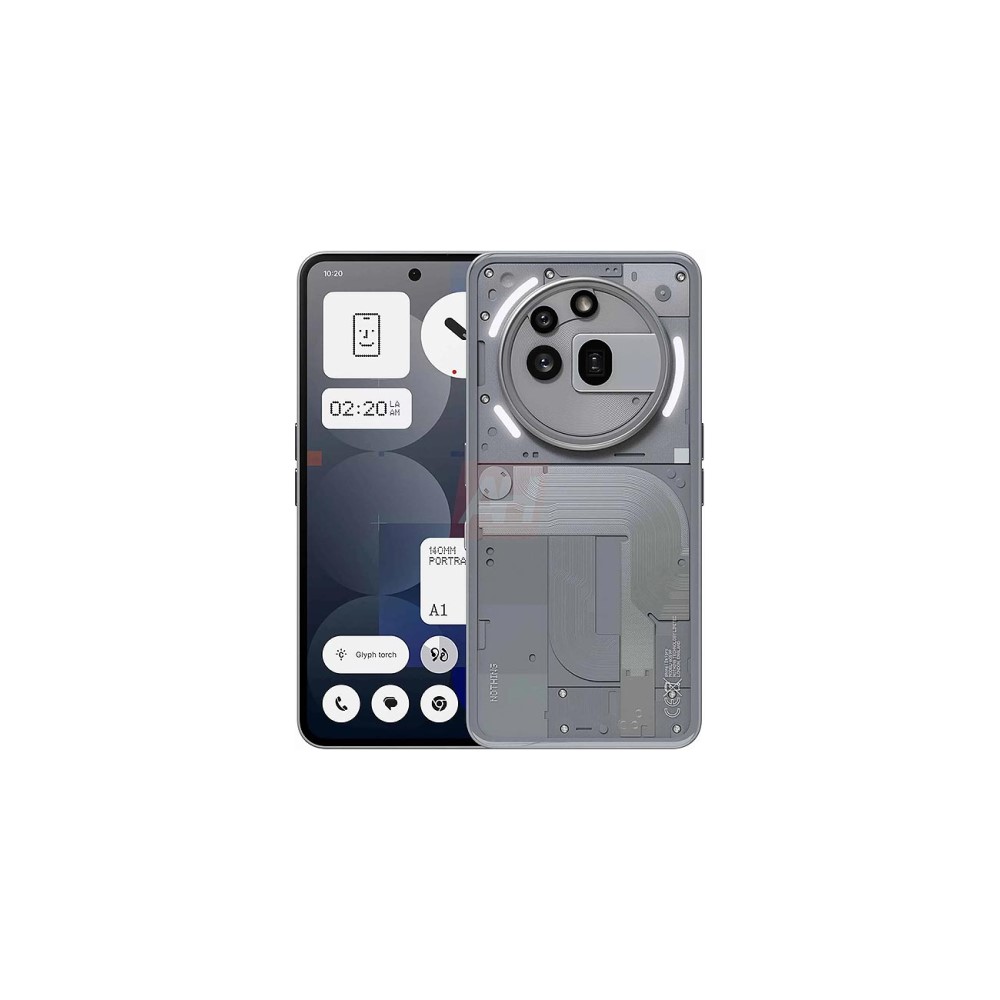
The Nothing Phone 3a Pro is a very special device, and it costs just $459. For this price, you get a pretty capable phone with mid-tier specs and a great overall experience. Two things stand out the most, though. The first one is obviously its unique design, but it also has a very interesting camera system, especially for a budget phone.
The Nothing Phone 3a Pro comes with three cameras. The first one is a 50MP primary shooter, the second one is an 8MP ultrawide camera, and the third one is a 50MP periscope telephoto optical zoom camera with a 3X magnification. The latter is what makes this phone special, as periscope lenses are usually exclusive to high-end, expensive phones. The fact that a budget device has one makes it very special, and it makes this the best camera phone if you care about zooming capabilities.
The primary sensor gets a 50MP definition, but it is actually better than the base Nothing Phone 3a’s, so this one will get better results than its smaller brother. We were a bit underwhelmed by the 8MP ultrawide camera, as previous models have had 50MP ultrawide sensors.
If you don’t mind the slight ultrawide camera downgrade, though, the main camera will work very well, and the periscope shooter is very nice to have on a phone that is this affordable. Of course, all this goodness comes with some kind of sacrifice, and this time it seems to be the camera bump. It is large, thick, and heavy. If you don’t mind that and want impressive zoom capabilities on a tight budget, though, this is your best bet.

CMF Phone 2 Pro: The best budget camera phone outside the US

- Incredibly low price
- Amazing design and display
- Cool modular features
- Primary, ultrawide, and telephoto lenses
- Good update commitment
- Not good for a US-based buyer
- Controversial Essential Key
- Check out our CMF Phone 2 Pro camera samples
Get this: The CMF Phone 2 Pro is only $279! And to be honest, we were pretty impressed by it. The phone is amazing for the price, and in many ways, it actually beats phones that cost over a grand. That said, it lacks band support to make it a worthy investment for those in the US. People outside the US should really consider it, though, and it is quite an impressive shooter for the price.
When we tested the CMF Phone 2 Pro, we only complained about two things. The main one is that you can’t use it in the US, as already mentioned. The other is that many believe the Essential Key is unnecessary (or even cumbersome). Otherwise, this is a fantastic phone with a low price, outstanding design, gorgeous screen, interesting modular features, and a pretty nice update commitment. Of course, it also has a really nice camera system!
The CMF Phone 2 Pro comes with three shooters, which is a bit rare at this price range. These include a 50MP primary sensor, an 8MP ultrawide shooter, and a third 50MP telephoto camera with 2X optical zoom.
This camera system is already impressive for such an affordable handset, but Nothing took things a step further with this one. Remember that we mentioned it is somewhat modular? One of the customization options is that you can attach lenses to it. This means that you can hot swap macro or fisheye lenses whenever needed, and remove them at will, much like you would in a DSLR or mirrorless camera. Pretty awesome, if you ask me!
This definitely makes it one of the very best and most innovative camera phones available. Again, the sad news is that we can’t use it in the US, but the rest of you should definitely consider it!

What to look for in a good budget camera phone
The budget camera phones we list here are great options, but we can understand if you still have some doubts. There’s a world of possibilities out there. Let’s help you further with some indications of what you should look for in the best budget camera phones.
- How many cameras do you need? There’s a popular trend in which smartphone makers slap as many cameras onto a phone as possible to make you think it’s better. You might find four lenses on a $300 device, but you may never use them all, and they may not hold a candle to a pair of higher-quality shooters. No matter what, you can ignore devices that pass off macro cameras and depth sensors as extra lenses to fill space. A good ultrawide lens can replace a macro one, and depth information doesn’t really require its own shooter anymore.
- What type of cameras do you need? Picking up from the point above, it’s good to consider the kind of images you want to capture. If you’re into landscapes, you might want a sweeping ultrawide lens to bring in every last detail. However, you might find yourself looking for a telephoto lens if you’re hoping to capture some wildlife. Or maybe you are into macro shots, in which case you should look for a good macro camera, but these are rare in smartphones.
- Megapixels aren’t everything: Just like the fact that four cameras aren’t always better than three, you also shouldn’t focus on looking for a high-megapixel camera phone. We would consider these phones with 50MP sensors or higher. That said, 108MP isn’t always better than 12MP. Many cameras with massive megapixel counts bin down to smaller images by default, while some 12MP lenses take advantage of larger sensors for excellent results. Google stuck with a 12.2MP primary sensor for years before adopting (and binning) a higher-resolution sensor for the Google Pixel 6 series.
- Do you want manual controls? If you’re coming from the world of DSLRs or mirrorless cameras, you might like a little more control in your life. Some phones offer in-depth apps that let you tweak settings like white balance and exposure compensation. If none of those terms sound familiar, you might be after a device with a more straightforward setup. For example, the Google Pixel series lets you control portrait mode and a few basic effects, but limits your manual power in favor of the Tensor processing smarts. If you’d rather do it all yourself, the Sony Xperia 1 VI is a perfect example of a mighty manual setup. Alternatively, you can always find a third-party camera app with manual controls.
- Software matters a lot: Sticking with the Pixel example, one of the reasons that Google didn’t update its hardware very often was because the processing software is just that good. Two phones may share the same image sensor, yet produce entirely different results, which all comes back to the onboard software. Powerful software also leads to better editing control over colors and object removal.
FAQs
Not really. Camera sensors can offer great quality with fewer megapixels. Sensor size, pixel size, software enhancements, and other factors make a more significant difference.
Absolutely! Especially now that smartphone cameras are starting to rely more on software than hardware. Computational photography can do amazing things.
DSLR and mirrorless cameras are starting to phase out of the consumer market. Professionals still prefer full systems for many reasons, though. They usually have larger sensors, better lens options, more customizable settings, and offer more versatility.
Most budget camera phones worth their salt cost anywhere between $300-$500. Anything below that and quality usually starts to fall behind.
Thank you for being part of our community. Read our Comment Policy before posting.