Affiliate links on Android Authority may earn us a commission. Learn more.
Inside the Galaxy S26 Ultra's Privacy Display: The science and the settings
- The Galaxy S26 Ultra introduces Privacy Display, a hardware-level feature that physically limits viewing angles instead of relying on screen protectors.
- The tech works by controlling how different pixels emit light, keeping the screen clear head-on while making it unreadable from the sides.
- Privacy Display can be toggled in Quick Settings, customized by app or scenario, and is currently exclusive to the Galaxy S26 Ultra.
Screen privacy on smartphones has always been more of an illusion than a reality. Maybe it’s your partner sneaking a glance, or a stranger on a subway just close enough to see what you’re up to; unless you have one of those dark and grainy privacy screen protectors on, your phone’s display will always have an uninvited audience. Samsung is changing that for good with the Galaxy S26 Ultra’s new Privacy Display — tech that doesn’t rely on screen protectors, but rather hardware-level display tweaks that limit viewing angles.
What is Privacy Display, and how is it different from anything we’ve seen before?

It’s not like smartphone OEMs haven’t flirted with the idea of private screens before. BlackBerry once marketed a feature (and even released an Android app) called “Privacy Shade” that allowed users to dim parts of the display to keep their information private.
We’ve also seen phones with whose off-axis views were dim enough to feel accidentally private. But none of it was ever intentionally baked into the display or customizable.
Samsung is now changing that for good, turning screen privacy from a quirk or software trick into a deliberate, switchable feature built directly into the display itself.
Don’t want to miss the best from Android Authority?
- Set us as a favorite source in Google Discover to never miss our latest exclusive reports, expert analysis, and much more.
- You can also set us as a preferred source in Google Search by clicking the button below.


Samsung’s Privacy Display on the Galaxy S26 Ultra is a fusion of hardware and software that works at the pixel level, narrowing viewing angles only when privacy is needed. Samsung says the tech has been in development for 5 years and works by controlling how light is dispersed by pixels.
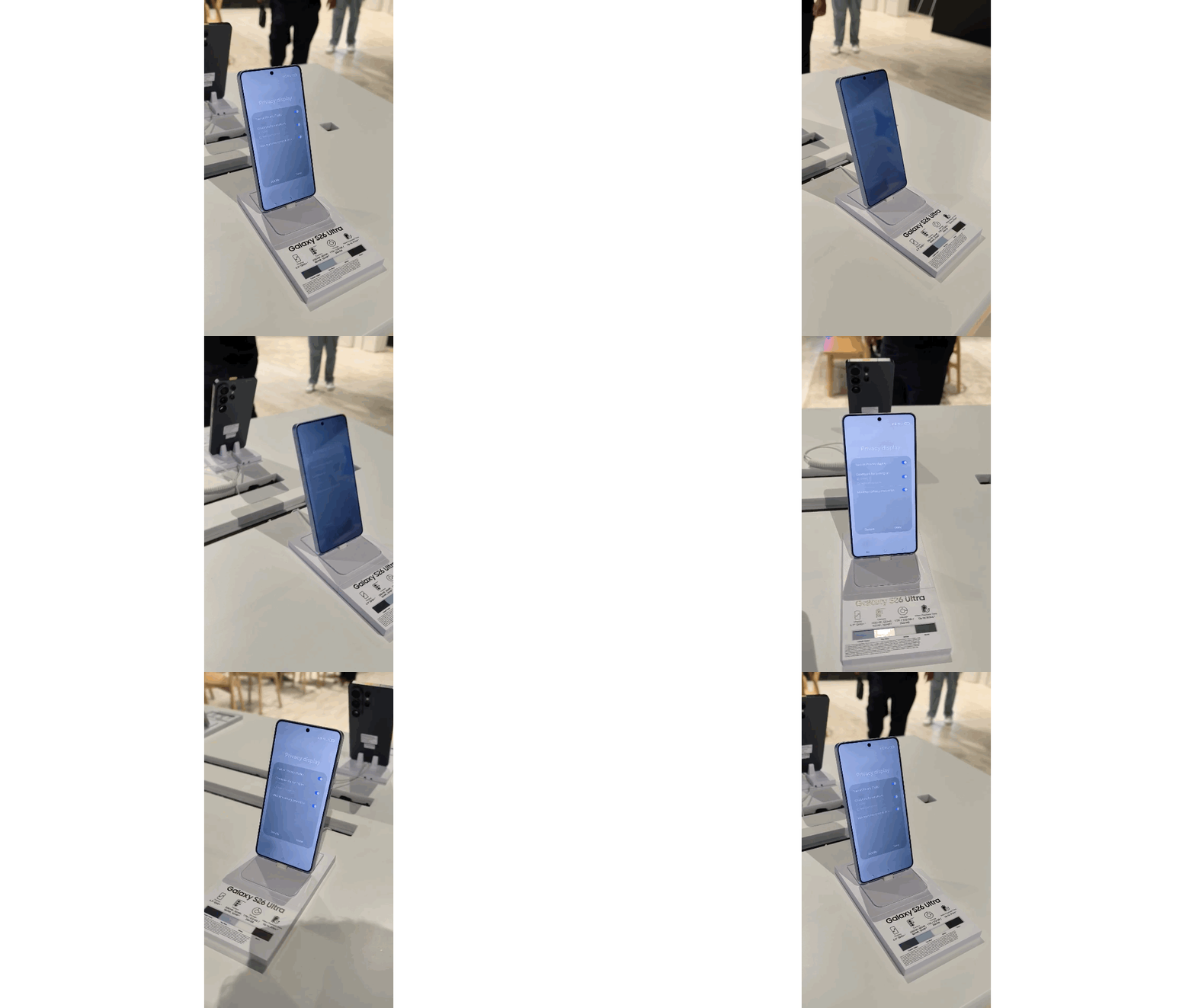
In normal mode, both narrow and wide pixels are active, allowing light to spread across a wide range of angles so the screen looks clear from almost anywhere. When Privacy Mode is enabled, the display prioritizes narrow pixels that emit light straight forward, while wide pixels are reduced to a minimal level. This significantly limits how much light escapes to the sides, keeping the screen clear for the user head-on but difficult or impossible to see from an angle.
What’s great is that the feature also works seamlessly when switching between portrait and landscape orientations.
How to use Privacy Display on the Galaxy S26 Ultra?
On the Galaxy S26 Ultra, users can easily toggle Privacy Display on or off from the Quick Settings dropdown. The phone offers two types of Privacy Display protections. One is a regular dimming level, and the other is “Maximum privacy protection,” which dims the screen further and makes it even harder to view from a side angle. However, Samsung notes on the settings page that this maximum protection can also affect normal viewing angles, as well as viewing from the sides, so you might not want to keep it on all the time.
Beyond enabling Privacy Display for specific apps, users can also set additional triggers for when the feature activates, such as during PIN, password, or pattern entry, or when notifications appear. All of these options can be customized and fine-tuned from the Privacy Display settings menu. It’s as simple as that.
Availability
As for availability, the Galaxy S26 Ultra is the only phone in Samsung’s new flagship lineup to support Privacy Display. In fact, it’s the only phone on the market with this tech right now. However, if leaks are to be believed, more Android OEMs are already testing similar display tech for their flagship phones. Specifically, Chinese smartphone OEMs are expected to release phones with this hardware-level screen privacy as early as September this year.
During a recent media roundtable, Samsung also said that it’s will monitor customer feedback for Privacy Display, and if it’s positive, the company will consider expanding the tech to future devices. Unfortunately, the company didn’t say which devices could be next to get it.
Thank you for being part of our community. Read our Comment Policy before posting.