Affiliate links on Android Authority may earn us a commission. Learn more.
The iPhone 18 Pro's new camera feature is a sneaky trap for Android brands
Oct 14, 2026 — 6:00 AM ET
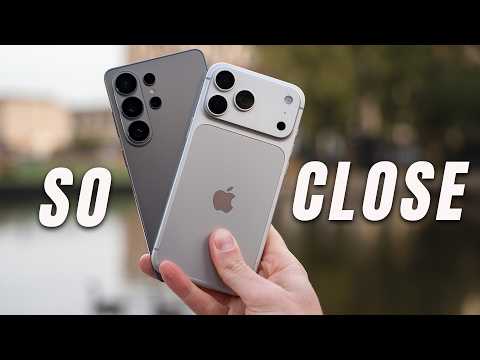


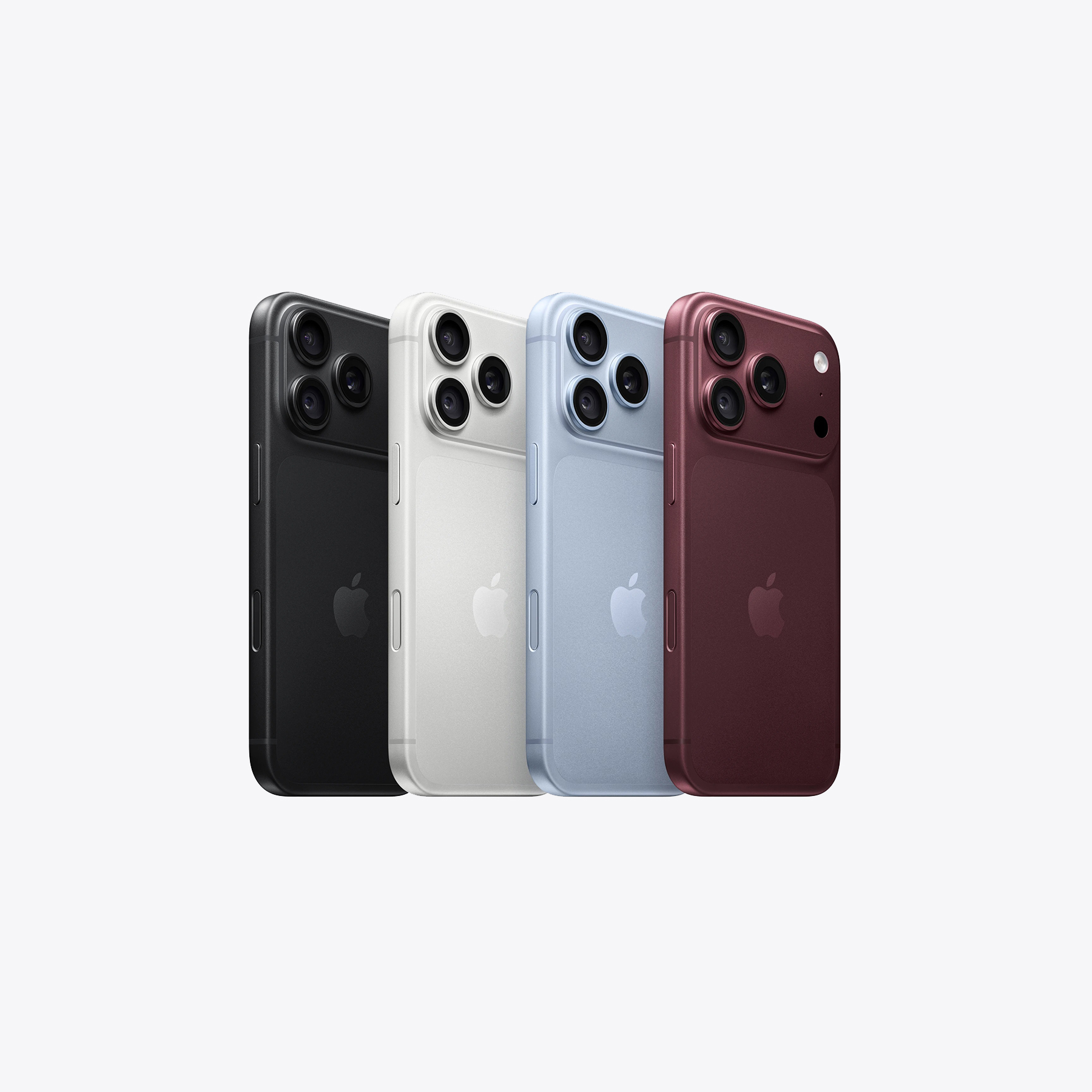
One of the biggest talking points about the iPhone 18 Pro series is the mechanical variable-aperture lens on the primary rear camera. Apple is far from the first to market with this tech, but as we see time and again, Android brands will rush to copy this feature into upcoming flagships.
In the interest of our collective wallets, Android OEMs should resist the knee-jerk impulse: without a substantially large imaging sensor to back it up, variable aperture adds unnecessary manufacturing costs and mechanical complexity for little real-world payoff.
Would you pay more for a phone with a variable aperture camera?
What is variable aperture on a phone?

In traditional photography, “aperture” refers to the physical opening inside a lens that dictates how much light reaches the sensor, measured in f-stops such as f/1.6 or f/4.0. A wider physical opening (lower f-number) pulls in more light for night shots and produces a shallow depth of field with a creamy optical bokeh. A narrower opening (higher f-number) restricts light but broadens the plane of focus, keeping both the foreground and background simultaneously sharp.
Nearly every modern smartphone uses a fixed aperture because shoehorning miniature motorized aperture blades into a sub-millimeter lens assembly is an engineering nightmare. Variable aperture replaces the fixed opening with movable physical iris blades that contract or expand the opening depending on lighting conditions and creative needs.
Without a large sensor, variable aperture adds unnecessary costs and complexity for not enough real-world payoff.
The engineering nightmare is lower when the variable aperture only switches between two or more fixed presets, as we saw on the Galaxy S9, whose dual apertures let the lens switch between f/1.5 and f/2.4, but nothing in between. The engineering challenges, cost, and complexity skyrocket with a stepless variable aperture, as seen on the Xiaomi 14 Ultra and now on the iPhone 18 Pro, where the aperture blades can stop at any point between the two aperture ranges, yielding theoretically infinite stops in between.
Yes, the iPhone 18 Pro has stepless variable aperture, which can be accessed through third-party apps like Halide and BlackMagic Camera, as the stock iOS Camera app artificially restricts users to just four presets.
The sensor size catch: Physics demands a bigger sensor

The catch is that physical aperture control only solves a problem when a camera naturally produces an excessively thin depth of field. As demonstrated in our Galaxy S24 Ultra vs. Xiaomi 14 Ultra camera shootout, the 14 Ultra genuinely needs a variable aperture because its massive 1-inch-type LYT-900 sensor has a paper-thin focal plane.
Shooting close-up text, food, or group portraits wide open yields soft, blurry edges. Stepping the lens down to f/2.8 or f/4.0 physically broadens that focal plane, delivering sharper results without relying on erratic computational algorithms to reduce the blur.
In the images above, you can see the difference in the plane of focus between the Galaxy S24 Ultra’s 200MP 1/1.3-inch f/1.7 sensor and the Xiaomi 14 Ultra’s 50MP 1-inch-type f/1.6-f/4.0 sensor. The above shot is in auto mode, but the Xiaomi 14 Ultra smartly shifted to f/2.0 to balance the plane of focus against the abundant daylight, keeping the central foliage crisp without throwing the rest of the surrounding flowers and foliage out of focus, but still getting that creamy bokeh for the background to denote a good, layered photo.
Notice how the hardware behaves here. The Xiaomi 14 Ultra narrowed its aperture because, wide open at f/1.63, the sheer physical scale of its 1-inch-type sensor would have left only a sliver of the flower in focus, turning even the foreground petals into a mush of premature bokeh.
The smaller 1/1.3-inch sensor on the Galaxy S24 Ultra, on the other hand, handled the entire bush at a fixed f/1.7 aperture without needing any mechanical intervention, simply because smaller sensors inherently have a wider depth of field.

Here’s another example of why sensor size matters, and why you need a variable aperture to complement it. In this shot from the Xiaomi 14 Ultra with a wide f/1.63 aperture, notice how narrow the focal plane is. While the center of the camera body is sharp, both the front lip of the mounted lens hood as well as the upper edge of the lens behind it dissolve into blur. In this relatively low indoor light, auto mode prioritized exposure over depth of field.
On a 1-inch-type sensor, this is where having a physical variable aperture is invaluable: manually stopping down to f/2.8 or f/4 would have pulled the entire camera setup into clean focus.
On a typical 1/1.3-inch sensor, that natural falloff wouldn’t be nearly as aggressive, eliminating the mechanical need for a variable aperture camera in the first place.
That isn’t to say variable aperture does nothing on the iPhone 18 Pro Max. As the sample shots above from my colleague Richard Priday’s test of variable aperture on the iPhone 18 Pro Max show, stopping down from f/1.48 to f/4.0 can create a noticeably deeper focal plane, bringing both the foreground iron bars and Buckingham Palace into sharp relief.
But that only happens in extreme compositions where you have massive physical distance between your immediate foreground subject and the background behind it. In more typical day-to-day shooting scenarios without such dramatic layered depth, that utility evaporates.
Look at the flower bed comparison above: between f/1.48 and f/4.0, there is virtually no discernible delta in subject isolation or overall sharpness. While the background greenery looks pleasantly soft, that blur is driven entirely by distance separation rather than optical shallow depth of field. On a 1-inch-type sensor, a close-up like this wide open would yield an aggressively razor-thin plane of focus, making an f/2.8 or f/4 step-down a creative necessity to keep the entire cluster sharp.
On sub-1-inch sensors, however, the underlying optical physics simply doesn’t justify the hardware. Mainstream flagships, including the iPhone 18 Pro and its direct Android rivals such as the Samsung Galaxy S26 Ultra (which has the same primary sensor size as the S24 Ultra) and the Pixel 11 Pro, rely on smaller primary sensors, typically hovering around the 1/1.3-inch ballpark. These smaller formats already possess a wide native depth of field even when shooting wide open. Stopping down a lens over a modest sensor yields virtually imperceptible gains in practical sharpness.
On sub-1-inch sensors, the underlying optical physics simply don't justify variable aperture hardware.
Worse, narrowing the physical opening on a smaller sensor format prematurely triggers optical diffraction. When light waves bend around the miniature aperture blades, they interfere with one another, actively degrading optical resolving power and softening fine detail, which is the exact opposite of what you want when stopping down.
Android has already walked away from this gimmick twice

Apple isn’t the first to the variable-aperture party; Android has been here twice and walked out both times before the crowd gathered.
The Galaxy S9 and S10 championed f/1.5-to-f/2.4 switching, but Samsung dropped the hardware on the Galaxy S20 series because computational photography eliminated the need to stop down in bright daylight, while multi-frame HDR stacking made a wider mechanical opening rather redundant at low light. The fragile moving blades, electromagnets, and millimeter-level chassis space simply were not worth the bill-of-materials hit for a modest sensor, and all of that budget could be used elsewhere, such as on high-MP sensors and periscope zoom assemblies.
Xiaomi quietly dropped its mechanical variable aperture system with the launch of the Xiaomi 15 Ultra, reverting to a fixed f/1.63 opening on its massive 1-inch Sony LYT-900 sensor. This was primarily a mix of reasons like space constraints, costs, and complexity, as the phone also came with a colossal 200MP 1/1.4-inch periscope sensor — there’s just not enough headroom to keep throwing more hardware into the phone without making it even thicker, heavier, and more expensive.
In the age of super-expensive flagships that are expected to last seven years, introducing a physical point of failure is too risky.
As important as the cost-and-complexity argument is, the argument for reliability is equally important. Moving parts inside a phone introduce new challenges, as the phone must ensure the entire system works through constant movement, vibrations, and even accidental drops. We’ve seen this play out with pop-up selfie cameras, where OEMs had to engineer ways for the camera to retract quickly in case of a drop.

While the mechanical iris blades remain enclosed in the camera assembly, they are significantly more fragile than a pop-up camera, and any cost-cutting could directly impact the mechanism’s durability. In the age of super-expensive flagships that are expected to last seven years, introducing a physical point of failure is too risky without proper engineering and quality control.
A stepping stone for Apple, but a trap for blind Android brands

There is, of course, the distinct possibility that variable aperture is a deliberate stepping stone for Apple. The company rarely introduces a brand-new mechanical supply chain pipeline for a single hardware generation. Supply chain leaks already point to Apple testing a massive 200MP 1/1.12-inch sensor for future iPhones, bringing the company within spitting distance of a 1-inch-type footprint.
Introducing a stepless variable aperture on its current sensor footprint could simply be Apple laying the groundwork for an eventual shift to a bigger sensor in future generations. If Apple does eventually move to a larger sensor, having this mature variable-aperture hardware ready will let them truly capitalize on it.
If you want to copy Apple, please do it smartly, not blindly.
For Android OEMs, however, blindly copying the iPhone 18 Pro today without a larger camera sensor underneath is a trap. If Android brands want to bring back variable aperture, they should do so only alongside 1-inch-class sensors that legitimately demand it. Slapping moving iris blades onto standard 1/1.3-inch sensors will only inflate retail prices and introduce hardware headaches, all for an empty spec-sheet flex that will go completely unnoticed by most users.
Thank you for being part of our community. Read our Comment Policy before posting.