Affiliate links on Android Authority may earn us a commission. Learn more.
Are Googlebooks the future? Not even Google seems to know
May 15, 2026 — 5:30 AM ET



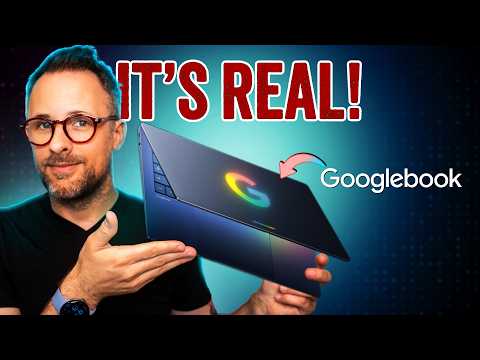
It’s official: Googlebooks have arrived. The new laptop platform is powered by Android, yet in many ways it looks and feels more like an upgrade to ChromeOS than a whole new platform. While it’s still early days and there’s a lot we don’t know, the core idea of the new Android variant is arguably the same as ChromeOS in 2026.
Both platforms are designed to offer web-centric experiences while acting as a bridge between the Android world. You’ll even find Android app support on both platforms, along with some level of Gemini integration. The only major difference is that Googlebooks crank Gemini features up quite a few extra notches, as AI becomes the cornerstone of the new experience.
While I’m sure Google has a wider plan here, it does make me wonder if there’s enough to set Googlebooks and Chromebooks apart. When the first rumors of a new desktop-focused Android variant hit, many of us assumed Google would replace its aging Chromebook platform with the new Android-based system. Google eventually confirmed that Chromebooks weren’t necessarily going away, and then we learned that new Chromebook and Chromebook Plus models are still on the way.
The big question is why.
Do you think Chromebooks and Googlebooks should coexist?
Chromebooks and Googlebooks are similar, so why keep the legacy platform?
ChromeOS has evolved a lot since its debut in 2011, with its first major evolution happening in 2014 with the arrival of ARC apps, which expanded the Chromebook’s original web-only vision into something more robust. This push continued over the years, with Google Play coming to ChromeOS in 2016, and then again with Gemini’s arrival on the platform this year.
The new OS takes many of the same approaches and even aesthetic cues from over its years in the Chromebook game, including many design elements from ChromeOS, such as a familiar-looking taskbar. The end result is a more refined experience than the bubblegum-and-glue approach ChromeOS had been using to achieve the same goal.
This new Android platform feels like a successor, not a whole new product category. So why isn’t Google being clearer on why it is keeping Chromebooks around? Good question. To be fair, Google wasn’t just going to end its Chromebook game overnight, so we shouldn’t be too surprised that new models are on their way. We also know that at least some of these models will be eligible for an upgrade to the new OS. The real issue is a lack of clarity.

In our own attempts to learn more about the plan, Google didn’t give us much else to go on but basically said that Chromebooks are an “invaluable tool for educational institutions, businesses, and consumers throughout the globe, bringing powerful features, security, and simple-to-use management tools for commercial users.”
When you piece it all together, it seems likely Chromebooks will mostly target education and enterprise sectors going forward, with Googlebooks more focused on everyday consumers. Basically similar to the old Windows days, when Windows NT and mainstream Windows were essentially different platforms, with their own fragmentation and compatibility issues.
It seems likely Chromebooks have a limited future, mostly aimed at entry-level enterprise. But Google sure is cagey about it.
What makes this more complicated is that Google seemingly confirmed Chromebook Plus models will continue as well. These are higher-end devices that are more consumer-focused, which seems to be the same crowd Googlebooks are targeting. It’s possible Google might be planning to upgrade every Chromebook Plus device down the road, so it doesn’t see this as a problem.
In fact, Google’s own comments seem to indicate that Chromebooks are more of a transition than a major part of their product line going forward. Again, why not just tell us that in the first place?
Google could have just been upfront about its Chromebook upgrade program and how it sees the two platforms co-existing. It might still, as the Googlebook family isn’t expected to arrive until the fall. The problem is that a lack of detail leaves big questions to our imaginations. I certainly wouldn’t want to buy a Chromebook right now without knowing more about its future, so I feel like this is a mistake on Google’s part and could cause Chromebook adoption to tank in the meantime.
The lack of clarity also feels like a lack of confidence from Google

Until Google gives us more clarity, many Google fans like myself may assume Google isn’t fully confident in its Googlebook strategy and is once again just throwing spaghetti at the wall.
Google has a history of caution with new product categories, and not all of them make it long-term. It tests the water, has new products co-exist with older platforms, and eventually fades out the less successful one. For example, Google didn’t immediately replace the remote-less Chromecast family with the Chromecast with Google TV variants. There was a short transition period. This helps the change feel less forced, while also providing an escape hatch if a new idea doesn’t pan out as well as Google planned.
Now you could argue that Google had no choice here. The upcoming Chromebooks have probably been in the pipeline for a long time, and Google isn’t just going to dump support overnight. It could be that Chromebooks will only exist for a few years before Googlebooks largely absorbs them. Again, the real problem isn’t that Chromebooks and Googlebooks will co-exist at least for a while. The real issue is how cagey Google is being about it.
I worry about user confusion, and hope Google explains its reasoning

Unless it has some big surprises up its sleeve, Google will have a hard time explaining exactly how Googlebooks are better. Two platforms also mean potential fragmentation issues, and could lead to consumer confusion over the differences. You also have to convince happy Chromebook users that the upgrade has real benefits that make it worth the switch.
Not everyone is sold on AI, so Google can’t count on that alone. Google would really need something big, such as full desktop applications made with partners like Adobe, Microsoft, and other heavy hitters, if it wants to show how a true Android experience is better than the Chrome and Android hybrid experience that Chromebooks already offer.
Right now, Googlebooks are all about deeper Gemini smarts, but beyond that seem to offer mostly the same experience as a Chromebook.
Even keeping the enterprise and education sectors separate, as their current plan suggests, seems somewhat like a recipe for confusion. You might argue that Chromebooks are cheaper, but Android is much more scalable and could easily support lower-end hardware in the future. The sandbox nature of the ChromeOS platform does make it easier to employ in commercial use cases, but I’m sure a similar solution could be achieved on the Android side with a few tweaks as well.
Google has a rep for throwing things at the wall and tweaking them as it goes, rather than giving them the thought and commitment they deserve. I already worry about this somewhat, thanks to earlier rumors about third-party customizations, and what we are learning about the platform has done little to ease my concerns.
Now, there’s still a chance Google has bigger strategic reasons for keeping Chromebooks in the spotlight a bit longer and for not clarifying the details just yet. After all, it’s still early. Google could have surprises in store, including a solid marketing plan that makes the differences between ChromeOS and the new platform more evident.
But judging from Google’s history, I wouldn’t count on things going too smoothly at first launch.
Don’t want to miss the best from Android Authority?
- Set us as a favorite source in Google Discover to never miss our latest exclusive reports, expert analysis, and much more.
- You can also set us as a preferred source in Google Search by clicking the button below.


Thank you for being part of our community. Read our Comment Policy before posting.