Affiliate links on Android Authority may earn us a commission. Learn more.
The one missing feature that stopped me from buying a Fitbit Edge
Oct 17, 2026 — 7:00 AM ET



As a reluctant smartwatch user that only puts a screen on my wrist for fitness and health tracking, minimalist trackers like the Google Fitbit Air and the new Fitbit Edge always grab my attention. Often, basic trackers skip the advanced sensors I value on premium smartwatches. In this regard, the Fitbit Edge is a breath of fresh air — it’s loaded with features, including ECG readings, skin temperature measurements, and blood-oxygen sensing.
There’s only one smartwatch feature I care about that has nothing to do with fitness or health. Unfortunately, it’s the one the Fitbit Edge lacks.
How often do you use NFC on wearables?
The Fitbit Air was too little, but the Fitbit Edge sounds just right

I tried to switch to the Fitbit Air as my 24/7 fitness tracker, relegating my Apple Watch and Garmin smartwatches exclusively to workout duty. I even bought a second Fitbit Air for my partner, but we both ended up having the same major complaints: automatic workout detection wasn’t accurate enough, and the lack of onboard GPS was a dealbreaker. We’re back to using dedicated smartwatches for running, because the Fitbit Air couldn’t keep up.
The Fitbit Air still stays on my wrist for casual, passive health and sleep tracking. It’s just not good enough to serve as my only fitness band — could the newly announced Fitbit Edge fill that role? From a fitness and health perspective, I’m leaning “yes.” To me, the price is the best part. At $179.99, it’s only $80 more than the Fitbit Air, and you get a whole lot more.
The Fitbit Edge sports built-in GPS, an ECG sensor, a photoplethysmography (PPG) optical heart rate sensor, and a skin temperature sensor. It also boasts an altimeter, accelerometer, and gyroscope. In other words, everything you’d need for in-depth workout tracking is here. The Fitbit Edge lacks the dual-band GPS available on premium watches like the Pixel Watch 5, but regardless, it’s an excellent all-rounder for the price.
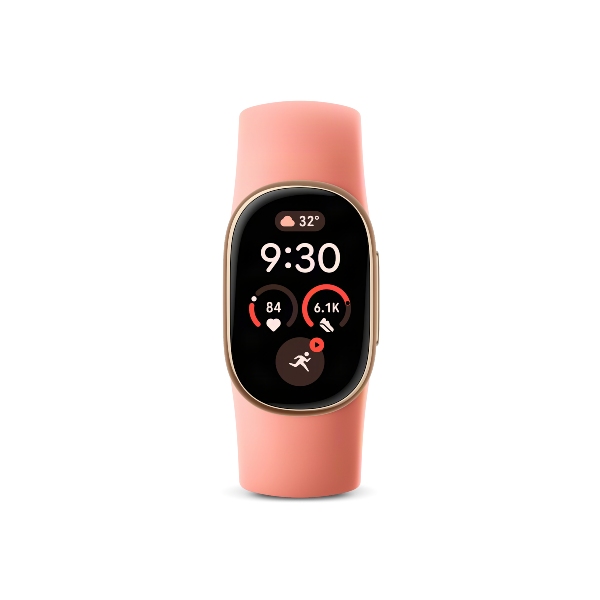
Google’s Fitbit Air relied on automatic activity detection because it lacked any way to manually start workouts without a paired smartphone. The Fitbit Edge addresses this shortcoming with a 1.34-inch AMOLED display and Fitbit OS. To be clear, the Fitbit Edge isn’t inherently superior to lightweight bands like the Fitbit Air. The latter is smaller and better for comfort, but for many, it makes too many sacrifices to get there.
That said, the Fitbit Edge makes one sacrifice that’ll make it hard for the fitness band to earn a spot on my wrist.
The Fitbit Edge is missing one feature I can’t live without

The Fitbit Edge runs on a software interface that looks similar to Wear OS 7 on the Pixel Watch 5, but its functionality is much different. For instance, the Fitbit Edge misses out on a speaker and microphone. That means no custom voice-based text replies, no voice assistant functionality, and no calls. This isn’t a surprise, because the Fitbit Charge 6 also skipped a speaker and mic. However, the Fitbit Charge 6 is equipped with NFC functionality, and the Fitbit Edge isn’t.
This omission might not seem like a huge deal, but I end up using NFC on a smartwatch or fitness tracker more often than you may expect. NFC unlocks digital wallet payments, namely via Google Wallet. I can load credit card, transit passes, and tickets onto my Google Wallet account and use them from my wrist. Why wouldn’t I just pull out my phone? I leave my phone at home during all my runs, and sometimes leave it behind during walks, cycles, and hikes.
I don’t carry water on my runs, but sometimes I feel unexpectedly parched. When I’m wearing an Apple Watch, Galaxy Watch, or Pixel Watch, I can pop into a convenience store or smoothie shop in the middle of a workout. I don’t have a phone or wallet on me, but with the right wearable on my wrist, I always have a way to pay in a pinch.
It’s impossible to understate the importance of being able to ride public transit with only a fitness watch or band on your wrist. When I lived in New York, I’d often take the bus or train to a running spot before completing a workout and heading home. With an NFC-equipped wearable, I didn’t need to carry a transit card, credit card, or phone. While I don’t always use wearables to pay at the grocery store checkout line, I’ll tap my wrist against a fare gate every time.
Don’t get me wrong, the Fitbit Edge’s fitness-tracking hardware looks incredible. In theory, I could leave my smartwatches behind and take only the Fitbit Edge on walks, runs, and hikes. But then I’d be without a digital wallet, and I value mobile payments on a wearable more than a cellular connection. Considering this is a feature the Fitbit Charge 6 had, it’s disappointing NFC didn’t make its way to the Fitbit Edge.
I’ll need to skip the Edge, or put two screens on my wrist

I’m really intrigued by the Fitbit Edge. I disable the “smart” features, like notifications and assistants, on my Apple Watch Ultra to limit intrusions throughout the day. This should make me a perfect candidate for the Fitbit Edge, but without NFC, I’m struggling to see how the Fitbit Edge will earn a spot on my wrist. It’s not capable enough to replace my Apple Watch Ultra, and it’s not light and minimalist enough to replace my Fitbit Air.
NFC is not something I use on wearables every day, but it’s an incredible peace-of-mind feature that has my back during phone-free workouts. Without it, the Fitbit Edge leans into its health-first identity. That could be a good thing for those who want a fitness band without the smartwatch nonsense. For me, the switch would require giving up a feature I’ve used on my wrist for a decade.
Affordable price
Excellent sleep tracking
Thank you for being part of our community. Read our Comment Policy before posting.