Affiliate links on Android Authority may earn us a commission. Learn more.
Thinking of upgrading your Charge 6? The $179 Fitbit Edge has a major dealbreaker
Oct 13, 2026 — 6:30 AM ET



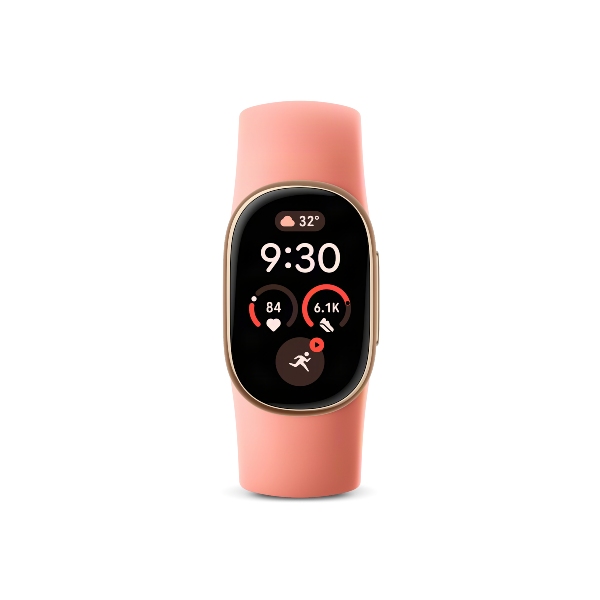
After years of being neglected under Google’s umbrella, Fitbit Charge 6 owners are finally getting a new compact fitness tracker to consider. Called the Fitbit Edge, it packs a screen and many of the fitness-tracking smarts you’ll find on the screenless Fitbit Air and the fully-fledged Pixel Watch 5 smartwatch. For all intents and purposes, it’s a Charge 7 by any other name.
But before Charge 6 owners reach for their wallets, there are several key differences, downgrades, and upgrades to consider. While the Edge bests the older model in several areas, it’s not a completely cut-and-dry win.
Would you upgrade to the Fitbit Edge if you own a Charge 6?
The Charge 6 still wins in one key area

The Fitbit Edge might be the newest wearable in Google’s stable, but it drops a core feature from the Fitbit Charge 6’s loadout. It lacks NFC functionality and, therefore, cannot be used as a quick payment card substitute via Google Wallet.
It’s a particularly baffling omission, given that many who use the Edge would likely have appreciated the convenience of wearable tap-and-pay. Since the Edge includes built-in GPS that isn’t reliant on a tethered smartphone, users could theoretically leave their phones at home. However, without sneaking cash into a sock or sleeve, they won’t be able to snag a coffee or another refreshment on their way home.
Tracking the ups and downs

While missing mobile payment features is a huge chink in the Edge’s armor, it packs plenty of fundamental upgrades over the Charge 6. One of these is the return of the altimeter, a feature that was unceremoniously dropped after the Charge 4’s release.
Seemingly innocuous, altimeters on wearables are incredibly useful for more accurate tracking of elevation gain and loss. This makes the Edge a better pick for hikers, high-rise dwellers, or those who climb numerous flights of stairs daily. More importantly, since elevation affects horizontal distance, the newer wearable should yield more accurate distance tracking than the Charge 6.
Insulin, blood pressure, and breathing quality tracking

Looking solely at software features, the Fitbit Edge gains access to Google Health’s new Health Guardian smarts. The feature tracks three additional trends using the data made available to the tracker and AI models specifically trained to understand it. Using this combo, the Edge can now track trends in insulin resistance, blood pressure, and sleep breathing quality.
Importantly, this ability does not mean the Fitbit Edge has specialized new sensors trained to detect these conditions. For the most part, the Edge’s sensor loadout is largely congruent with the Charge 6. However, the older tracker will not have access to Health Guardian’s bounty.
What is broken can now be fixed

Reparability has never been one of the Fitbit range’s biggest selling points, but this changes with the Edge. The new tracker now packs a replaceable battery, which significantly increases the device’s usable life and directly addresses a criticism many Charge 6 users have of their tracker.
It’s worth noting that battery endurance hasn’t been fundamentally improved from the Charge 6 to the Edge. Both devices will last a week between charges, according to Google.
Sleeker versus bigger

Lastly, and perhaps the most significant change, is the overall design. The Fitbit Charge 6 is a visually sleeker wearable thanks to its seamless band connection to the tracker body. With the Edge, Google is taking a different design approach. The new tracker looks a little more like a smartwatch than the Charge line, which may put off some and appeal to others. It packs a far rounder display with a bevy of new band options.
Then there’s the increase in display size. Google says that Edge buyers can enjoy 46% more screen real estate than Charge 6 owners. It might not sound like much, but that’s a substantial upgrade and should result in a more usable tracker and a more legible display.
Fitbit Edge vs. Charge 6: Stick or upgrade?

Charge 6 owners have been stuck without a direct upgrade for several years now, so the itch to leap for the Edge, a device that seemingly takes the Charge idea and expands on it, must be palpable. However, I don’t think that the new tracker will suit every current Charge owner. I’d hold on to the Charge 6 if you value its mobile payments feature, as it’s a core part of your workout schedule. You can enjoy a run sans phone with the Charge 6 and then pay for a coffee with nothing more than a tap. This isn’t a luxury afforded to Edge users.
There’s also the price to consider. Starting at $179, the Edge costs $20 more than the Charge 6 at launch, but that price difference carries far more weight in 2026. With the rising costs of everything, not just tech, forking out $179 for a marginally upgraded device isn’t a slam-dunk decision. If your Charge 6 continues to work reliably, there’s no explicit need to upgrade it.
For me, the Charge 6 is the more attractive wearable thanks to its sleeker, more conservative design and profile. This is purely subjective, though.
As I mentioned, the Fitbit Edge is an attractive proposition, and not just for marooned Charge owners. It now sits between the far pricier Pixel Watch 5 and the minimal Fitbit Air, while offering users a broad array of features from both. It’s the perfect entry point into the Pixel smartwatch lineup.
It has other things going for it, too. You can expect to hold onto the Edge for far longer than the Charge 6, thanks to its replaceable battery. It’s a positive sign to see Google pushing its repairable design philosophy onto the cheaper fitness trackers, too. Then there’s the return of the altimeter — a boon for anyone who wants more accurate elevation tracking. Combine this perk with Health Guardian tracking upgrades courtesy of Google Health and a larger display, and you have a compelling new fitness tracker that keeps tabs on potentially serious health indicators while covering the basics.
So, should you upgrade to the Fitbit Edge if you own a Charge 6? As always, that’s a question that only you can answer. I will say that the decision to upgrade is far more complicated than it appears at first glance. However, if you’re a first-time fitness tracker buyer, the Fitbit Edge is the more confident buy.
Thank you for being part of our community. Read our Comment Policy before posting.