Affiliate links on Android Authority may earn us a commission. Learn more.
One Android phone just exposed the biggest problem with US foldables
Jul 7, 2026 — 5:00 AM ET



Booklet foldables are an interesting paradigm. They’re unbelievably pricey, premium products that offer a whole new take on the smartphone form. However, the perceived wisdom is that you have to accept a few compromises to make it all work.
Smaller batteries and less screen-on time due to the thin frame, performance throttling due to the cramped internals, trade-offs in IP ratings due to the hinge mechanisms, and a smaller, less well-equipped camera setup to avoid an unbalanced weight in hand. You name it, and there’s probably a believable excuse for why a $1,700 foldable doesn’t quite compete with the very best hardware specs you’ll find in an Ultra flagship that costs $500 less. Still, it’s a price some are willing to pay for the form factor’s less conventional perks.
However, the new vivo X Fold 6 has upended that old adage, offering some seriously long battery life and impressive camera capabilities at a price that makes Google and Samsung look like they’re overcharging. Not only are the specs impressive on their own, but the X Fold 6 has exposed a serious lack of progress at the heart of the most popular Western foldable phones.
Are Google's foldables still competitive?
Failing to embrace new battery tech

Let’s start with one of foldables’ biggest pain points: battery capacity. If you bought the latest Google Pixel 10 Pro Fold or Samsung Galaxy Z Fold 7, you’d be looking at modest 5,015mAh and far more disappointing 4,400mAh cell capacity, respectively. Samsung’s battery size is particularly disappointing and hasn’t meaningfully improved since 2019’s original Z Fold.
Once again, the magic is the introduction of silicon-carbon batteries, which allows vivo to pack a colossal 7,000mAh cell into its similarly sized flagship foldable. That’s a bigger battery than you’ll find in Samsung’s Galaxy S26 Ultra.
It continues to baffle me why Google and Samsung have been reluctant to jump into silicon-carbon; perhaps they are biding their time and waiting for the technology to mature. But while they wait, others are moving quickly to offer far longer endurance on similarly priced phones. Case in point, Motorola’s latest foldables sport Si-C batteries, allowing them to surpass the competition as well.
Cameras without compromise
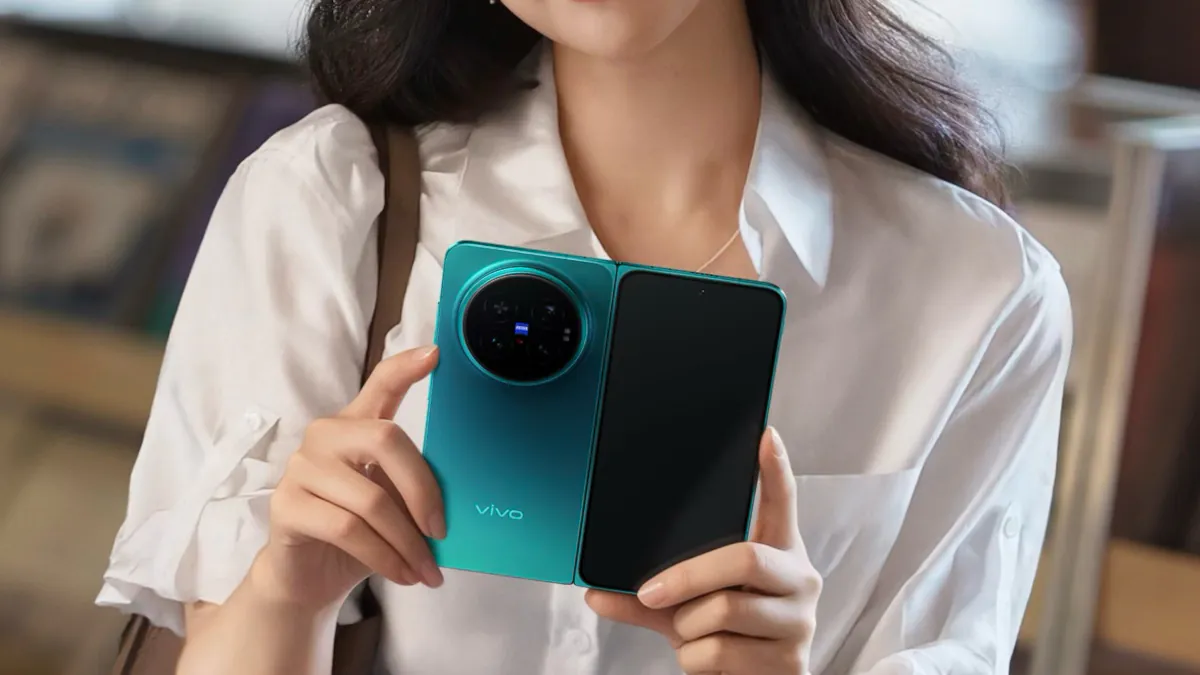
But perhaps the vivo X Fold 6’s more impressive advantage is its camera array. It’s not going to obliterate the very best Ultra flagships on the market, but vivo has managed to strike a balance with a triple-camera array that puts Western foldables under the spotlight.
The array is fronted by a 200MP main camera (1/1.4-inch, Isocell HPB, f/1.68), a sensor that isn’t quite as large as the 1/1.3-inch cameras on the Pixel and Galaxy foldables, but it’s not far off. More importantly, though, are the versatility options. The phone offers a 50MP ultrawide (1/2.76-inch, f/2.1) that puts Samsung’s 12MP equivalent to shame in terms of pixel count, and it’s competitive with what Google offers in its premium Fold.
The Pixel 10 Pro Fold's cameras aren't great. Rivals are showing how it's done.
Backing this up is a 70mm 50MP telephoto (1/1.95-inch, f/2.6) offering 3x optical zoom. That’s a night-and-day improvement over Samsung’s meager 10MP 1/3.94-inch 3x camera in the more expensive Z Fold 7. It’s also larger and offers a wider aperture than Google’s 48MP 5x periscope camera. Those extra specs will likely close the quality gap at longer ranges, but perhaps more important is that a large sensor, wide aperture, and 70mm focal length will make the vivo far more adept at capturing sumptuous portrait shots.
If that’s not enough, the vivo X Fold 6 supports long-range shooting through an optional telephoto extender accessory. At 200mm, this offers some deceptively far shooting potential — up to about 8.3x, which is more than many phones manage, if not super long-range capability. Telephoto extenders have proven surprisingly popular accessories in recent Chinese flagships, and it’s a nice solution for adding flexibility to foldable phones with limited space for periscope hardware.
This isn’t a one-off

I’m not saying this just to stroke vivo’s ego. As promising as the X Fold 6 looks, it’s not alone in offering fewer compromises in specs in the foldable form factor. The HONOR Magic V6, for example, offers a colossal 7,150mAh battery that puts many regular flagship phones to shame. Then there’s the OPPO Find N6, which sports a large 200MP main camera and two decent-sized ultrawide and 3x telephoto cameras, along with a 6,000mAh battery, 80W wired, and 50W wireless charging. Again, that’s better hardware than regular flagships offered just a few years ago, let alone the most recent foldables in the Pixel and Galaxy lineups.
My point is that high-end foldables with really competitive flagship-grade hardware are increasingly common — just not if you shop with Google or Samsung. This isn’t to say that the Z Fold 7 or Pixel 10 Pro Fold are bad phones; they really aren’t, but it’s all the more frustrating to know they could be even better.
It’s an increasingly common complaint, but these two major names seem confident they can rest on their laurels, convinced that impressive Chinese hardware can’t eat their increasingly stale US lunch. But I wouldn’t count on that remaining the case, first because these rival foldables are increasingly launching globally. But equally, because expensive booklet foldables are, by definition, enthusiast-grade products, the audience does its research.
In any case, the vivo X Fold 6 and comparable phones reveal a glaring lack of innovation from the big brands in what is supposed to be the form factor boasting the most cutting-edge mobile technology. I want my expensive foldables to justify their price tags with innovative solutions to the problems the form factor presents. Remember when Samsung unveiled the under-display camera with the 2021 Z Fold 3? It might not have been brilliant in the end, but at least it was trying back then.
Instead, Google and Samsung have simply shrugged and declared, “Well, it’s good enough.” Maybe they are, but that’s not what you want to hear at $1,700 a pop. I hope brands like vivo make the big two start paying more attention to what’s possible in their own Fold lineups — Google and Samsung are guilty of leaving a lot on the table.
Thank you for being part of our community. Read our Comment Policy before posting.