Affiliate links on Android Authority may earn us a commission. Learn more.

After using the Galaxy S26 FE for 2 weeks, I'm not convinced this is for the fans anymore
Nov 3, 2026 — 9:00 AM ET
Samsung Galaxy S26 FE
MSRP: $699.99
What we like
What we don't like
Samsung Galaxy S26 FE


The Galaxy S25 FE wasn’t the most exciting FE release, but it stood out from previous models thanks to a slimmer, lighter design, faster charging, and a bigger battery. However, I also lamented the lack of performance upgrades, the meager base configuration, and the dated cameras.
I’ve been using the Galaxy S26 FE for a couple of weeks now, and I’m glad to see that the company has fixed one major complaint I had with last year’s phone (which we’ll get to). Unfortunately, long-standing issues continue to plague this series, so much so that I’m not convinced the initial “Fan Edition” branding holds up for the FE line anymore.
If it ain’t broke, make it cheaper

I thought the Galaxy S25 FE’s design was a welcome improvement over the S24 FE. That was largely thanks to its slimmer, lighter design. Those expecting a similar improvement with the Galaxy S26 FE will be disappointed.
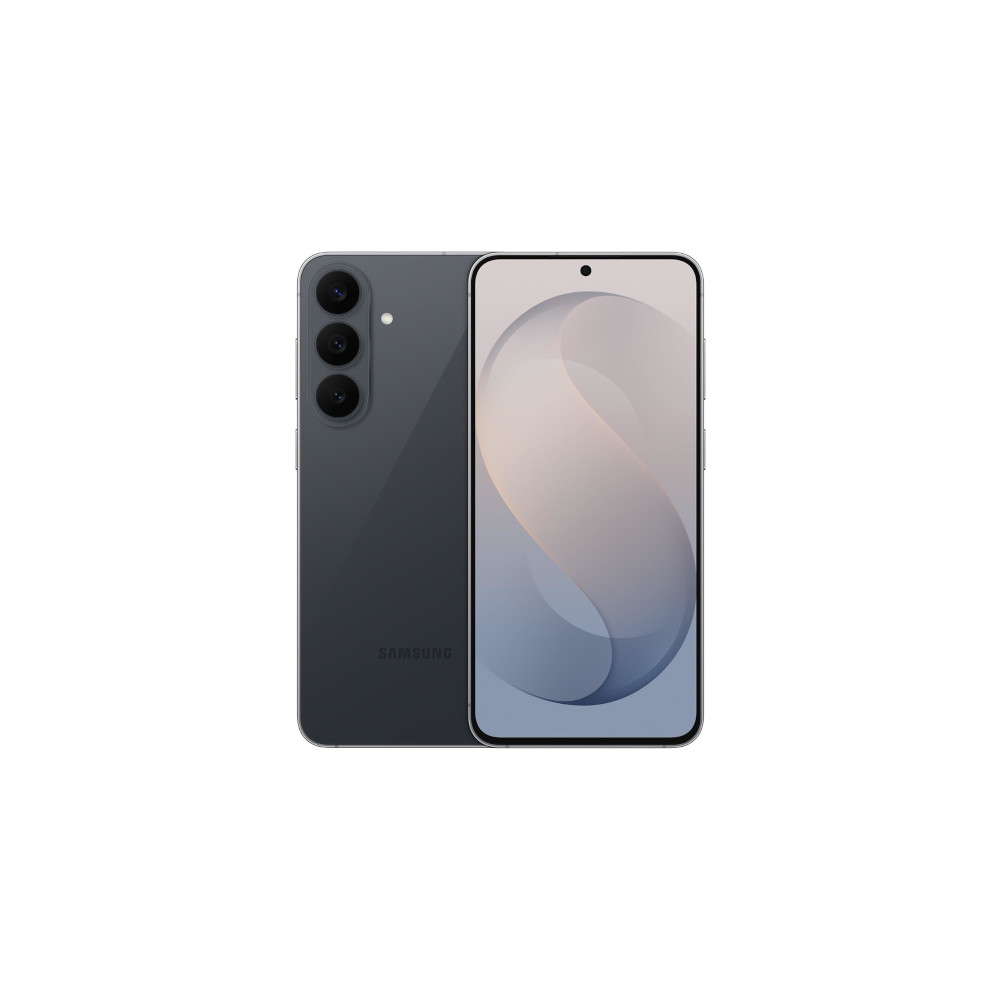
It’s negligibly heavier (193g versus 190g) and virtually the same thickness. We also have a familiar aluminum frame paired with a glass back, with Blueberry, Graphite, and Pistachio colorways. However, one noticeable change is the move from individual rear camera cutouts to a camera island. I’m not a fan of this change because the camera island is clearly made of cheap plastic. I guess Samsung has to cut corners somewhere with the RAM crisis, but even the previous design would’ve been better. I’m betting that this island might be covered in scratches in a year’s time.

Samsung’s 2026 FE phone also brings respectable durability thanks to an IP68 rating and Gorilla Glass Victus Plus. I would’ve liked to see improved protective glass after three generations of Victus Plus, but this phone should still survive some drops and tumbles.
The Galaxy S26 FE also sticks with the same 6.7-inch FHD+ OLED screen we saw on the Galaxy S25 FE. I had no problems at all in direct outdoor sunlight, as the screen was more than bright enough in these situations. However, I would’ve liked a more power-efficient LTPO panel like its stablemates as opposed to the current LTPS screen. This decision means the display can only drop down to 30Hz instead of 1Hz like mainline Galaxy flagships, theoretically impacting battery life.
A long-overdue performance upgrade

Samsung stuck with the Exynos 2400 series for two generations of FE phones, but the company has thankfully switched things up with the Galaxy S26 FE. This time, you’ve got 2025’s Exynos 2500 chipset globally. This is paired with 8GB of RAM, which is on the low side for a pseudo-flagship phone in 2026.
Geekbench 6 results show that the phone is a big step behind the Galaxy S26 and its Snapdragon 8 Elite Gen 5 for Galaxy chip in terms of CPU performance. More specifically, the Galaxy S26 is ~48% faster in single-core performance and 37% faster when it comes to multi-core scores. That’s not a surprise, as the Exynos 2500 is a last-generation chipset. The Galaxy S26 FE is still a clear step above its predecessor, though, offering ~15% faster CPU performance.
The Galaxy S26 FE uses last year's flagship Exynos silicon, and it's a welcome, overdue upgrade over the S24 FE and S25 FE.
What about performance under sustained workloads? We ran a couple of 3DMark stress tests, and the good news is that the phone has better stability than the Galaxy S26. The device also delivers an average temperature of 42 degrees Celsius (107 degrees Fahrenheit) and a peak temperature of 45 degrees Celsius (113 degrees Fahrenheit), matching its stablemates. However, the 55-60% stability is still pretty disappointing in general and a little short of the S25 FE’s stability.
There’s a big difference between benchmarks and real-world performance, and the Galaxy S26 FE ran smoothly while swiping through screens, launching apps, and multitasking. I was also able to play War Thunder Mobile at 60fps on the high graphical preset without performance issues. Meanwhile, GRID Legends also delivered very smooth performance out of the box with the “graphics” preset. I noticed that the phone got very warm (but not hot) while playing the latter title.

The Galaxy S26 FE offers a 4,900mAh battery, much like its predecessor. This means Samsung is relying on the Exynos 2500 chip to bring any efficiency improvements. Unfortunately, our battery life benchmark (seen above) shows that the FE has significantly shorter endurance than the Galaxy S26 Ultra despite their similar battery capacities. We’re guessing this disparity is due to the Ultra phone’s Snapdragon 8 Elite Gen 5 for Galaxy processor, which is a generation newer than the Exynos 2500. What’s more surprising is that the Google Pixel 10a, with its Tensor G4 chip, beat the S26 FE in all legs of our battery test. Ouch.
As for real-world battery life, the Galaxy S26 FE can deliver two days of juice with light usage. You can expect to charge the phone every other day with typical use, such as WhatsApp, Instagram, web browsing, and some YouTube. This isn’t amazing in the era of 7,000mAh, 8,000mAh, and even 10,000mAh batteries, but it’s about on par with the S25 FE.

Once you’ve run down the battery, you can take advantage of 45W wired charging or 15W wireless top-ups. Our own charging test data reveals that the phone goes from 2% to 100% in a respectable 63 minutes. The phone also hits a peak of ~42W and stays near that mark for roughly eight minutes, with an average speed of 22W. That’s a refreshing change from our recently tested Redmi Note 17 Pro Max, which spent just a minute at ~80W despite touting 100W charging. This is more proof that the headline wattage figure doesn’t matter as much as some manufacturers want you to think.
Same cameras, different year (again)
Samsung hasn’t changed the Galaxy FE’s rear cameras since the S23 FE, and it’s offered the same secondary camera specs (albeit with some sensors changes) since the S20 FE back in 2020. So I’m not surprised to see that the S26 FE uses the same rear camera setup. That means a 50MP 1/1.56-inch main camera, a budget-tier 8MP 3x telephoto lens, and a 12MP ultrawide camera.
That 50MP main camera isn’t anything special on paper, being in line with the base S26 and S26 Plus. Sure enough, you’re not going to get a shallow depth of field here. But the camera retains a pleasant level of detail during the day, and Samsung doesn’t go overboard with the sharpening. Low-light snaps show visible noise, but there’s still enough detail when you zoom in after the fact. And I’m glad Samsung isn’t overly aggressive with the noise reduction. Meanwhile, that ultrawide camera does a fine job during the day, but low-light shots have plenty of noise and are noticeably darker than the primary lens.
The Galaxy S26 FE has the same zoom and ultrawide cameras as 2020's S20 FE, and you can tell from the sample pictures.
Easily my biggest complaint about the Galaxy S26 FE cameras is that the 8MP 3x telephoto camera is very disappointing. This camera sometimes punches above its weight at 3x, with respectable detail and natural-looking processing. However, color fringing and blown highlights occur more often than I like. You can also forget about 10x shots in most situations, although I thought the cat picture above was better than the phone’s average 10x snap. The 8MP sensor clearly doesn’t deliver enough megapixels for long-range cropped zoom, but Samsung doesn’t help matters by over-sharpening a scene that already resembles a watercolor painting. It’s like making a charcoal rubbing of a balloon. Samsung, like most brands, switches to a 3x crop from the primary camera in very low light, but this usually results in a smeared mess.
I don’t see Samsung upgrading this zoom camera any time soon, unless the Galaxy S27 and S27 Plus get upgrades first. But the firm’s insistence on using an ancient telephoto camera is particularly disappointing when brands like Nothing, OPPO, Xiaomi, and others are slapping 50MP telephoto cameras on their mid-range phones. Even a 12MP 3x camera would be an upgrade over this miserly 8MP camera.
On the upside, the Galaxy S26 FE also offers One UI 9 features like Horizon Lock video stabilization and My FanCam. The latter generates a cropped, automatically tracked video of a subject after the fact. The former delivers impressive stabilization, locking the horizon up to 90 degrees at 1440p/30fps.
Software: The main reason to buy a Samsung phone

Samsung’s strength continues to be its One UI Android software. One UI 9 on the Galaxy S26 FE brings the usual AI features like website/recorder/document summaries, Audio Eraser, generative photo editing, and a suite of call-related options. Now Brief also returns, but it now offers those mostly lackluster custom cards. I’d really like to see custom cards from the Routines Plus app in Now Brief.
I’m also glad that Samsung continues to offer a local AI toggle, which restricts you to on-device AI features. Google and other OEMs really need to copy this feature. Throw in the Good Lock suite of downloadable apps, and you can see why One UI is still arguably the best Android skin today.
Expect seven years of OS and security updates for the Galaxy S26 FE, in line with its more premium stablemates and flagship devices from the likes of Google and HONOR.
Galaxy S26 FE review verdict: Should you buy it?

I’m really happy that Samsung has brought a chipset upgrade to the Galaxy S26 FE after a couple of years of using the Exynos 2400 series. This should give you some peace of mind if you want your phone running smoothly and playing advanced games years from now. Unfortunately, we’ve still got familiar FE problems like the same obsolete camera system and the same 8GB/128GB starting configuration. We’ve even got a somewhat cheaper design. It really feels like Samsung has diluted the meaning of “Fan Edition,” ultimately leaving us with what is basically an unofficial Galaxy A70 series phone.
Throw in the $699 starting price, which is $50 more than last year, and it’s clear that the RAM crisis (along with Samsung’s traditionally conservative approach to upgrades) really hurt the Galaxy S26 FE. It’s still a substantial upgrade if you’re coming from a Galaxy S24 FE or earlier, as you’re getting those S25 FE perks as well. But other upper mid-range phones and affordable flagships are leaving Samsung behind.
It's a substantial upgrade over the Galaxy S24 FE or earlier, but other upper mid-range phones and affordable flagships leave the Galaxy S26 FE behind.
Perhaps the most notable Galaxy S26 FE alternative is the Galaxy S25 FE ($549.99 at Amazon). You only miss out on the more powerful chipset, but the Exynos 2400 still delivers great everyday performance and will keep up with demanding Android games. Otherwise, it has the same battery, charging speeds, durability features, and camera hardware.
I’d also recommend looking at the Google Pixel 11 ($899.99 at Amazon) if you don’t mind spending a little more. Samsung’s phone delivers better gaming performance, while seemingly avoiding the heat issues we noticed in our Pixel 11 review. However, Google’s handset brings superior image processing, a better telephoto camera, the PixelSnap magnetic system, and some Pixel-exclusive software features. If you don’t want to spend that much, honestly, save yourself some money and get the superb Google Pixel 10a ($499 at Amazon), which typically sells for just over $500 and is quickly becoming the value pick of 2026.
- More powerful
- Lengthy update pledge
- Solid charging speed
- Feature-filled software
- Ancient cameras
- Cheaper build
- 8GB/128GB base model
Conversation
Read what readers said or add your take.