Affiliate links on Android Authority may earn us a commission. Learn more.
I've used Razr phones for 20 years, and Motorola's secret weapon hasn't changed
Sep 23, 2026 — 6:00 AM ET



I’ve used Motorola phones longer than I’d like to admit. The Nokia 5160 I carried around in high school will always hold a special place in my heart, but Motorola soon became my preferred brand. I remember how jealous I was when my parents bought StarTACs. It’s hard to describe what a shift that device was for cell phones. Moto proved that the phones in our pockets could be smaller and more stylish, and the company wasn’t done there.
The original Razr was a revelation when it was released in 2004. You didn’t want to buy anything else at the time, and it was hard to go anywhere without seeing someone use one. It’s why Motorola’s recent success isn’t a surprise. The company has maintained a consistent theme over the last two decades, and it doesn’t take much to see where that all began and how it translates perfectly to this current crop of Razrs.
When was the last time you considered buying a Motorola?
Motorola had it right from the start

2004 feels like ancient history, especially in consumer electronics. Smartphones were in their infancy, and you couldn’t carry just one device if you wanted to stay connected. Yes, BlackBerrys were a thing, but I preferred to carry around a phone and a PDA, like a Palm Pilot, to keep up with emails (downloaded before I left home) and news stories on the go. It also gave me the flexibility to carry different apps in my pocket.
The first Motorola Razr was the perfect complement. It was sleek and well-made, with a satisfying snap as you flipped it open. Cell phones at the time were bulky, even clamshell devices. Motorola cut through all that and made styling a buying point. Owning a Razr became cool in a way you couldn’t claim with any other phone.
However, the original Razr wasn’t just a pretty face. Motorola matched the sleek exterior with an enjoyable user experience. It’s easy to look back now at the small cover screen and early 2000s user interface and not think much of it, but it was simple and easy to use — precisely what Razr buyers needed.
A different type of folding phone emerges

Not long after Samsung announced the original Galaxy Z Fold, Motorola brought the Razr back to market. The design leaned heavily into nostalgia, and the price tag was steep for what amounted to midrange specs. Still, I could absolutely see the potential, because it had many of the same charms that propelled the first Razrs. It was more stylish than the original Galaxy Z Flip, and its cover screen was more usable.
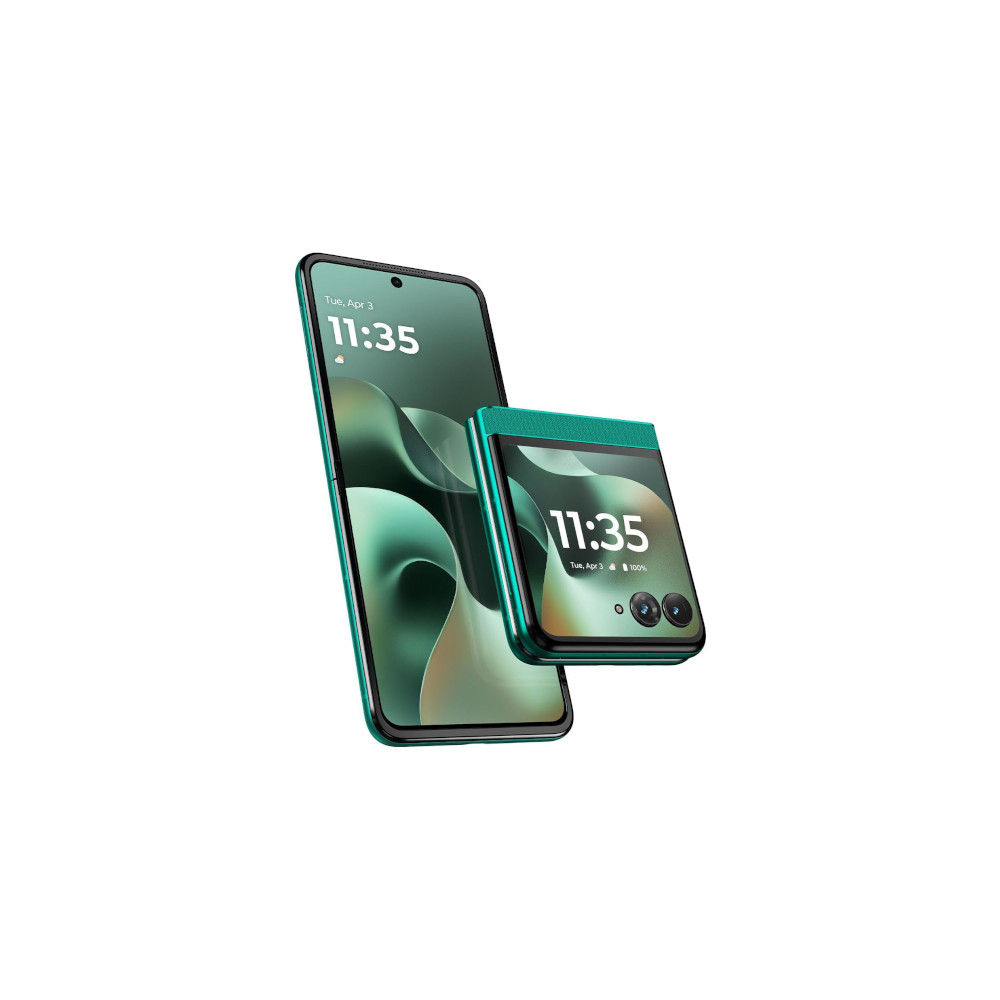
Thankfully, Motorola has kept improving the Razrs over the last few years, and the current crop is outstanding. Motorola does so well with foldable sales, especially in the US, and the original Razr’s philosophy is a big part of that.

Yes, the newer Razrs look fantastic and are fun to hold, but the software and cover screen match the experience. It’s a phone that doesn’t try to do too much, and it feels designed around what clamshell folding phone buyers need. That’s my main issue with the Galaxy Z Flip lineup. Samsung just designed a solid Galaxy phone that folds in half, while Motorola focused on the entire experience.
The base Razr 2026 is my favorite example. For $800, you get everything you need. Clamshell phones aren’t all about specs and performance. The phone runs well and does everything I’d expect. Motorola upgraded the cameras this year, giving the base Razr an improved 50MP ultrawide sensor. It’s a conversation starter everywhere I pull it out. It offers a great cover-screen experience, solid cameras, and excellent battery life — exactly what I’m looking for in a phone like that.
Motorola still knows how to stand out

Motorola continued that same philosophy with its first book-style foldable. It’s a more complicated phone than the regular Razr lineup, but the company focused on the front-end user experience, making it the foldable I recommend if you like taller devices. Motorola hit on many of the sore spots buyers had with Samsung and Google.
The Razr Fold features a fantastic 6,000mAh silicon-carbon battery that gets me multiple days of use on a single charge, even with heavy use of the internal display. It always irked me that foldable batteries didn’t stack up. If you give me a huge, expansive 8-inch canvas, I’m going to use it, so I love that Motorola provided the battery life to do so.
Cameras are another area where book-style foldables usually come up short, but not with the Razr Fold. It includes an outstanding triple camera setup, and some of the snaps are the best I’ve gotten on a foldable. It may not be the best camera system you can buy in a phone, but it’s hard to argue you aren’t getting a flagship camera system when you’re paying all that money for the Razr Fold. I also appreciate that Motorola included stylus support — a small detail, but I’ve heard from enough people who think it matters. It all shows what makes the Razr brand successful.
It’s safe to say I’m a fan of Moto’s devices. The company hasn’t always been perfect, and I’m sure it would rather forget the awkward decade it had before the Razr returned. Still, it’s an important player in the smartphone marketplace. It’s the last bastion of variety, and it’s one of the few companies that matches form factor with functionality.

Thank you for being part of our community. Read our Comment Policy before posting.