Affiliate links on Android Authority may earn us a commission. Learn more.
Here's what Magic Pointer processes on your Googlebook — and what goes online
Sep 25, 2026 — 5:18 AM ET
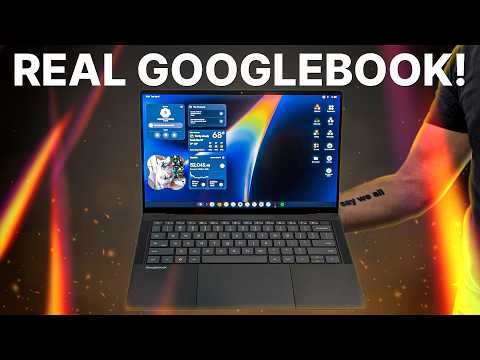


- Magic Pointer identifies things you can interact with on your Googlebook screen locally after you activate it.
- Once you select something and ask Gemini to act on it, it sends the content to a cloud model.
- Google says the AI cursor stays inactive until you deliberately trigger it.
Google looked at one of the oldest parts of the desktop experience — the mouse cursor — and decided Gemini could make it useful for more than clicking things. The result is Magic Pointer, which can understand whatever you highlight on a Googlebook and help you act on it. That sounds incredibly handy, but it also raises a pretty important privacy question: when exactly does what’s on your screen leave your laptop and head to Google’s cloud? Google has now explained where that line sits.
Speaking on Android Faithful, Alexander Kuscher, Google’s Senior Director of Product for Laptops and Tablets, broke down what happens behind the scenes when you use Magic Pointer.
According to Kuscher (at the 1:06:37 mark), the Googlebook handles the first step locally. Once you activate Magic Pointer, the laptop figures out what on the screen you can interact with, such as an email, image, or block of text, and highlights those elements for you.
The cloud comes into the picture after you select something and actually ask Gemini to act on it. Kuscher gave checking whether an email is spam as an example. Recognizing that the item is an email happens locally, while the selected content gets handed to the cloud model when you ask Gemini to analyze it.
That makes the boundary a little easier to understand: Magic Pointer isn’t constantly sending whatever is on your screen to Gemini just because the cursor is active.
Google also apparently spent an amusing amount of time studying the humble cursor. Kuscher said an internal test found that some employees moved theirs about a mile over a workday. That helped convince the team that the pointer was a useful signal for where someone’s attention is.
We previously dug into Magic Pointer before launch and uncovered several of the Gemini-powered actions Google was testing. Our Googlebook hands-on later showed how central the feature is to the platform.
Now we also know where its local processing stops and Google’s cloud takes over.
Thank you for being part of our community. Read our Comment Policy before posting.