Affiliate links on Android Authority may earn us a commission. Learn more.
I've used Android for 15 years — but I'm ready to switch to the iPhone Duo
Sep 14, 2026 — 5:30 AM ET



I’ve been using some sort of Android phone for practically 15 years. As a technology journalist and enthusiast, I’ve seen the entire gamut of Symbian, Tizen, Android phones, and, yes, iPhones too. Along the way, I’ve also spent a fair amount of time with the best foldable phones on the market. I’ve even liked a few. But until now, I’ve never really bought into the hype.
It’s a good idea in theory. Being able to turn a phone into a tablet when you need more screen real estate, be it for media consumption or multitasking, sounds incredible. But, so far, the hardware and software integration hasn’t quite hit the spot for me. Something always felt amiss.
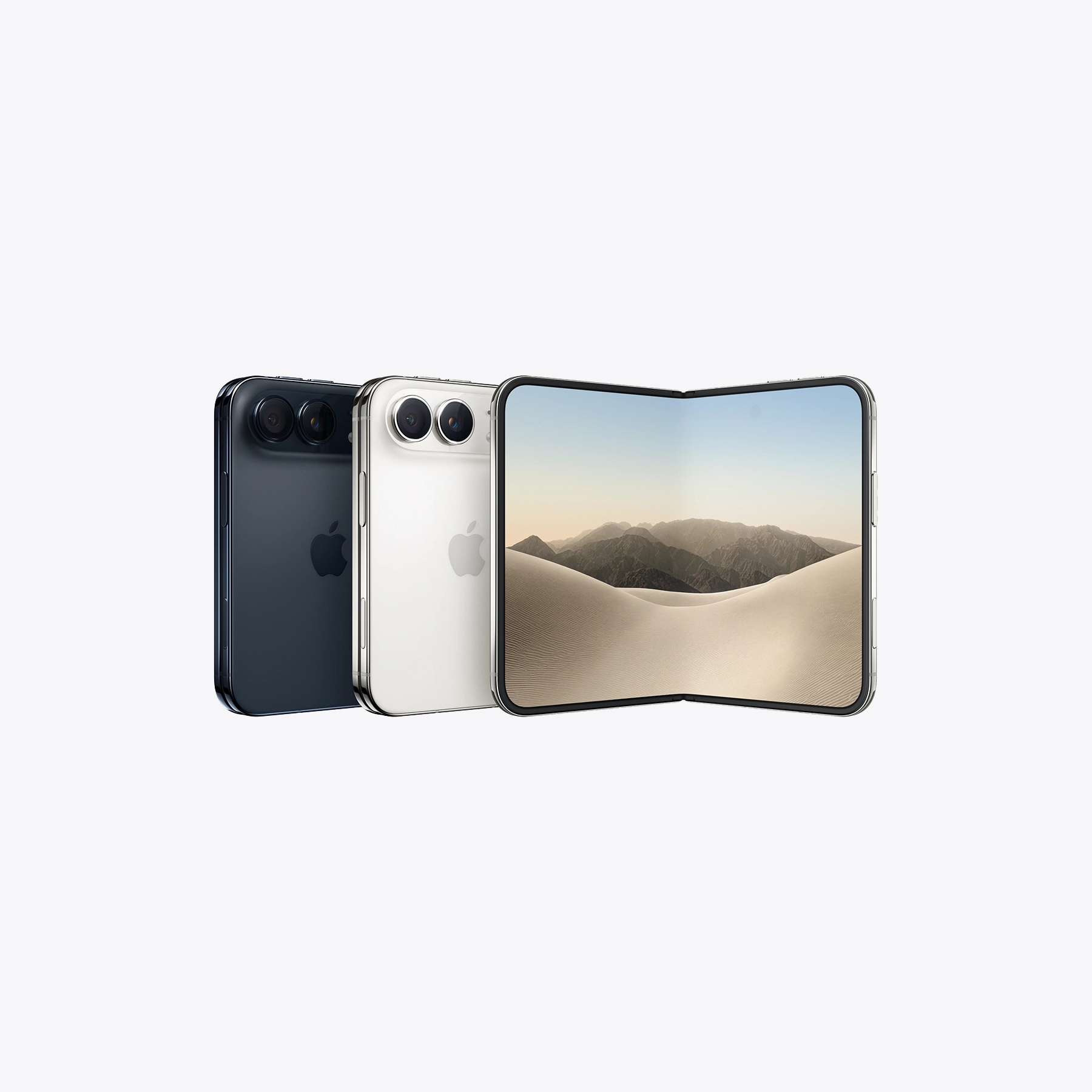
So, the last thing I expected was for an Apple product to be what convinced me to consider switching. And by extension, leave Android. Earlier this week, Apple finally showed off its long-rumored foldable, the iPhone Duo, and it hits practically every check mark I wanted in the product. More specifically, though, it feels like a fully realized vision. And that, in my opinion, is the true differentiator.
Would you ditch Android for the iPhone Duo?
The hardware finally feels right

Look, foldables aren’t a new category. They’ve been around a little over six years, and Apple took its own frustratingly sweet time entering the foldable market. But, without any hyperbole, it’s clear to me that Apple has been waiting for the technology to mature before releasing a product that matches up. I’ve spent the day scouring through every hands-on I could find, and by all measures, this is a well-and-truly polished product.
To start with, there’s the passport-style wide aspect ratio. I loved the direction when Microsoft attempted it with the Surface Duo, Google with the first-gen Pixel Fold, and I love it here on the iPhone Duo. It’s an aspect ratio that’s always made a lot of sense to me from the perspective of ease of use and productivity. Skinny foldables might fit better in your jeans, but they are far from comfortable for typing. And if I’m buying a foldable, I’m buying it for the productivity gains. So, that’s specifically what it needs to excel at.
Apple's innovation is in releasing a finished product, not taking the early mover position.
Unfolding the iPhone Duo reveals a 7.6-inch inner display that is equally impressive. The screen sits remarkably flat, with virtually no visible crease. That’s not to say that there’s no crease, of course. That just comes with the territory, but clearly a lot of work has been done to reduce its visibility. I’m confident that the year-on-year upgrades to flexible OLEDs and UTG technology do a lot of heavy lifting to achieve the near-creaseless design. But if following Apple’s tech trajectory for almost two decades has taught me anything. This is precisely what Apple was waiting for. The innovation lies in releasing a finished product, not in taking the early-mover position. I’ll take it.
Coming back to the hardware, though, early impressions have been extremely positive so far. The fact that you can run your finger across the center of the display without an obvious dip is enough to convince me. It sounds like a small thing, but it makes a huge difference when you’re using the device every day. I’d go as far as saying that it’s been a big detriment to my enjoyment of foldables.

The other big one, at least for me, is the nano-texture on the inner display. I recently talked about my iPhone Duo wishlist, and a display that minimizes reflections ranked highly on it. Reflections on foldables tend to exaggerate the visibility of the crease. Moreover, a high-gloss finish is a fingerprint magnet. A few years back, the OnePlus Open took the same approach by applying a matte screen protector to mask the display’s imperfections. The nano-texture coating should go a long way towards alleviating those same concerns. Plus, I’m the kind of guy who uses a matte screen protector even on the iPad, so this is directly in my wheelhouse.
I do have some concerns about the added weight. The iPhone 18 Pro was already fairly chonky, and Samsung has shown that foldables don’t have to be particularly heavy. The Duo is considerably heavier than Samsung’s latest Fold, but if that added heft means a stronger hinge, it’s an acceptable compromise to me. Moreover, this is a first-gen product, and I expect it to improve over time.
iOS is what finally convinced me

As promising as the hardware is, it only tells half the story with a foldable. The software is what makes or breaks the experience. So far, with Android foldables, there’s really been nothing to convince me that I absolutely need this product. Yes, the basics work just fine, but the experience isn’t markedly different from a candy bar outside of the additional screen real estate. It just doesn’t feel special.
Conversely, software is exactly where the iPhone Duo really won me over. Call me superficial, but I was sold at that opening transition between the outer and inner displays — it’s just absolutely stunning. But, I digress. If the phone doesn’t meaningfully add to my daily workflow, there’s no way I can justify spending as much as a used car on it.
Of the many, and I do mean many, demos I’ve seen so far, one thing that stood out to me was the fluidity of transitions across all the orientations and configurations possible with the hardware. From tent mode to horizontal, vertical, and standard candy bar formats, apps appear to flow seamlessly between these viewports.
Apple didn’t invent most of its new software ideas. It brought them together into a complete product.
Anyone who has used early Android foldables will know why this is such a big deal. There were plenty of situations where opening the phone meant waiting for an app to restart or watching the layout jump around as it tried to adapt to the larger display. Even today, seamless switching of games between the outer and inner displays remains a toss-up on Android foldables. Time will tell how well this holds up on the iPhone Duo, but the first impressions look very promising.

Then there’s the multitasking and windowing system. Apple’s taken clear inspiration from the Microsoft Surface Duo here, but you know what they say: good artists copy and all that. There’s an assortment of ideas here, including easy flipping of active apps, pinning multiple apps together, and a dock that’s placed in a much easier-to-reach position. In fact, even the standard battery, cellular, and Wi-Fi iconography has been overhauled for the new aspect ratio.
We’ve seen some of these ideas in the OnePlus Open too, which remains my favorite Android foldable to date. So, while we might not see another OnePlus foldable, it’s great to see those ideas come back to life on Apple’s foldable.
There are some clever camera features too. Duo Preview uses the outer display as a live viewfinder, allowing the person you’re photographing to see themselves as you frame the shot. Don’t let Apple fool you. None of these are revolutionary, and we’ve seen fragments of these individual innovations across foldables. But, having them all in one place is a definite upside. Which circles back to the point I made earlier about the iPhone Duo feeling like a complete product.
While we’re on the topic of software, there’s little doubt that Apple’s move into the space will spur developers to finally introduce foldable-specific optimizations to their software. The launch demo showcased a Zoom call and a Slack workspace app that effectively used the larger screen to their advantage. Be it showing a full-screen presentation card alongside active videos or the ability to see channels without dipping into a menu in Slack, these are exactly the kinds of productivity gains I and most prosumers expect to see in foldables.
While these two specific demos were the standouts, I expect to see improvements across the board with most popular apps. Moreover, I imagine the downstream effects of these optimizations will ripple through to Android foldables as well, making it a net positive for the category.
These are the kinds of features that add value to the foldable form factor and make it feel purposeful. It speaks volumes about Apple’s industry cachet that it took the company’s first foldable for two of the most popular apps to make these interface tweaks, despite Samsung having been in the game for the last seven years.

Finally, there’s also Apple Pencil support. I’ve never really considered a stylus essential on a phone, but the combination of a 7.6-inch display and Apple Pencil support makes a lot more sense to me than it does on a traditional phone. For the kind of productivity I want from a foldable, being able to annotate documents, take notes, or sketch directly on that larger display feels like a meaningful addition rather than a gimmick.
I can live with the compromises
Of course, no first-generation product is perfect, and there are plenty of compromises to be had with the iPhone Duo. The biggest compromise, of course, is the camera system. If you’re expecting the kind of dedicated telephoto camera found on the latest flagship phones, you’ll be disappointed. There isn’t a dedicated telephoto sensor at all, though the main camera does offer 2x cropping.
For me, the missing telephoto camera isn’t enough to ruin the experience.
Apple clearly had to make some sacrifices to keep the Duo thin, and the camera module is one of them. Wide and ultra-wide is what you get. You still get sensor-shift optical image stabilization on the main camera, but you miss out on the more advanced camera hardware found on the iPhone 18 Pro.
Personally, though, I don’t care.
If I’m going somewhere specifically to take serious photographs, I’m carrying my mirrorless camera anyway. For everything else, the Duo’s cameras are more than good enough for quick photos, documents, and casual video.
The other big change is biometric security. Apple has dropped Face ID on the Duo and replaced it with a side-mounted Touch ID sensor built into the power button. For someone who has spent years using Face ID, that might sound like a step backward. For me, it’s a non-issue. As an Android user, I’m already used to unlocking phones with a fingerprint sensor on the screen. Resting my thumb on the power button as I pick up the phone isn’t a big leap from that.
I might be ready to leave Android

Switching ecosystems isn’t a small decision. I’d have to leave behind years of Android muscle memory, move away from some of the apps and services I’ve relied on, and rethink how I use cloud storage and other parts of my digital life.
The iPhone Duo feels like the first foldable where I'm not paying to be an early adopter.
But for the first time, I’m willing to take a gamble on a whole new product. I’ve spent years watching Android manufacturers experiment with foldables. I’ve admired the possibilities, but I’ve always felt that something was missing. Either the hardware wasn’t quite there, the software wasn’t polished enough, or the compromises were too obvious. I’ve wanted an Android foldable for years, but none of them packaged together all the different permutations and combinations of software and hardware as the iPhone Duo does.
The iPhone Duo promises to give me the foldable future I’ve been waiting for without making me feel like I’m paying to be an early adopter. There’s value in that. While I’m still going to want to get my hands on the hardware in-store before plonking down $2,000, the iPhone Duo might be the one that convinces me to leave Android behind.
Thank you for being part of our community. Read our Comment Policy before posting.