Affiliate links on Android Authority may earn us a commission. Learn more.
Another Android flagship gets its own take on Privacy Display, and it's promising no side effects
Sep 21, 2026 — 5:03 AM ET



- Xiaomi has announced that the Xiaomi 18 Pro series features a Smart Privacy Display that uses 1:1 alternating standard and baffled privacy pixels, cutting side brightness to roughly 1% beyond 60 degrees.
- Unlike competitor panels that use Diamond or Pentile setups, Xiaomi uses a full RGB subpixel arrangement with ~9.5 million subpixels to maintain clarity without display quality degradation.
- Privacy mode can be triggered via Quick Settings, the AI key, voice commands, app/page rules, location triggers, or front-camera shoulder-surfer detection.
Xiaomi is gearing up to launch the Xiaomi 18 Pro series this week, and ahead of the September 23 launch, the company has confirmed a few key details about the phones. We know that the Xiaomi 18 Pro series will come with a secondary rear display with plenty of unique features. Today, Xiaomi is lifting the curtain on the primary display features of the Xiaomi 18 Pro series, focusing on the previously leaked Smart Privacy Display aspects.
In a comprehensive Q&A and several announcement posts shared on Weibo, Xiaomi outlined the mechanics behind the new display panel on the Xiaomi 18 Pro series. Rather than applying a software overlay or relying on third-party privacy screen protectors that degrade display clarity and viewing angles almost permanently, Xiaomi’s solution operates at the pixel level (much like the Galaxy S26 Ultra’s Privacy Display).
The panel is divided into two alternating sets of pixels: standard wide-angle pixels arranged 1:1 with dedicated narrow-angle privacy pixels. The privacy pixels incorporate microscopic physical baffles on their left and right sides, restricting their beam angle.

When standard mode is active, both sets of pixels illuminate, behaving like a conventional flagship OLED. Once privacy mode is triggered, the standard pixels shut off, leaving only the baffled privacy pixels lit. From straight on, the user sees an unobstructed view, but at angles beyond 60 degrees, side brightness drops to roughly 1% of the front-facing output, rendering the display practically pitch-black to onlookers.
Crucially, the Xiaomi 18 Pro series’ display hardware features a “SuperPixel 2.0” full RGB subpixel stripe rather than a standard Diamond or Pentile arrangement. Because subpixels aren’t borrowed, Xiaomi claims the Xiaomi 18 Pro Max reaches roughly 9.5 million subpixels, comparable to a traditional 2K panel while drawing power typical of a 1.5K display. As such, the display’s output is claimed not to be compromised at normal viewing distances when the privacy feature is off.
For reference, the Galaxy S26 Ultra uses a Diamond Pentile subpixel arrangement rather than a full standard RGB stripe, with smaller, duplicated green subpixels coupled with alternating, larger red and blue subpixels.
The Xiaomi 18 Pro’s screen is built on a new M11 luminescent material, offering up to 4,000nits of peak brightness and BT.2020 color gamut coverage.
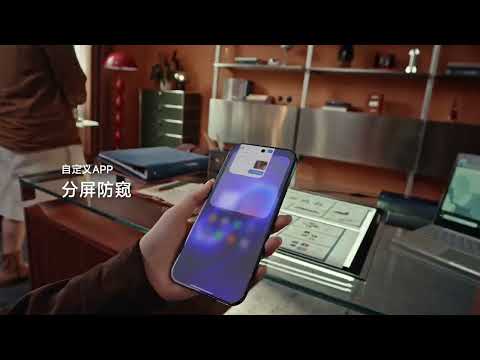
On the software front, Xiaomi is giving users plenty of ways to activate the feature. Beyond toggling the mode via the Quick Settings shade, physical AI key remap, or Xiao AI voice controls, users can set application- or page-specific triggers, such as automatically enabling protection in banking apps or chat windows. Front camera sensors can also detect if someone is peeking over your shoulder and warn you or automatically darken the sides. You can also set the feature to be active at certain locations, like your office, or let it be on everywhere except at your home.
Xiaomi is expected to bring some phones from the Xiaomi 18 series to the global market. It remains to be seen whether the Smart Privacy Display features make it out of China, depending on which phone it launches on and whether that phone is released outside China. Nevertheless, it’s great to see more Android brands adopting the Privacy Display feature.
We’ll be on the lookout to see whether the Privacy Display on the Xiaomi 18 series causes any quality loss, as that was one of the complaints on the Galaxy S26 Ultra for some users.
Thank you for being part of our community. Read our Comment Policy before posting.