Affiliate links on Android Authority may earn us a commission. Learn more.
This one chart exposes how far Pixel has fallen behind in mobile gaming
Apr 16, 2026 — 7:00 AM ET
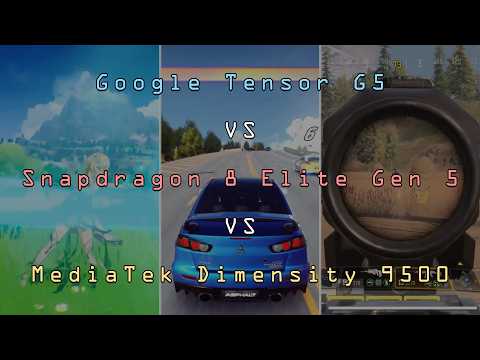


Having thoroughly benchmarked the latest flagship smartphones 2026 has to offer, it’s become increasingly clear there’s a growing divide between Google’s Pixel series and just about everyone else. I hate to rehash the same old tales, but Google’s Tensor chipset is significantly slower than its competitors, especially in gaming. Not that the Tensor G5 isn’t serviceable for most tasks, but when you’re spending over $1,000 and competing products can offer double the performance or more, it begs the question: what exactly are Google’s priorities?
If you comb through years of Pixel press releases and marketing material, Android gaming receives only a cursory mention compared to this decade’s big tech buzzword — AI. In fact, you won’t find gaming mentioned on the official Pixel 10 product page at all. Compared with handset and silicon rivals who have been happy to tout double-digit improvements virtually year on year, Google has gone AWOL in one of mobile’s most popular hobbies.
Years come and go, and a few percentage points here and there quickly add up: the compound interest of performance gains, or lack thereof. After five Tensor generations, the needle hasn’t moved much.

The chart above (which plots chipset performance in 3DMark’s Wild Life Extreme test) shows just how different those silicon vendor trajectories have become over the past five years. The major vendors — including Samsung’s on-again, off-again Exynos project — have made significant strides in graphics performance. Qualcomm’s Snapdragon and MediaTek’s Dimensity have made absolutely colossal gains during this same period. Each subsequent generation has made noticeable improvements, almost like clockwork, except for Google. Tensor’s capabilities are virtually flat by comparison.
At best, we’re looking at roughly a 50% improvement between the Pixel 6 Pro and the Pixel 10 Pro. Meanwhile, competitors are clocking approximately 300% gains over a very similar timeframe, which is huge across any platform. And yes, benchmarks aren’t real-world games, but in my testing, the latest Pixel barely sustains 40 fps with Genshin Impact at max settings, while Snapdragon rivals power ahead at 120 fps with better graphics in COD Mobile. It’s worth remembering that MediaTek and Samsung license their GPUs from third parties, just like Google does. Given how much faster mid-tier and flagship-class mobile GPU architectures have become over the past five years, Pixel’s lackluster performance suggests a conscious trade-off on Google’s part.
Google’s 50% gains in five years versus rivals’ 300% are stark.
I’ve long bemoaned Google’s bare-minimum focus on Tensor’s graphics performance, the lack of tangible benefits from switching GPU vendors (perhaps aside from cost efficiency), and Pixel’s lack of cutting-edge capabilities such as ray tracing. Google has clearly prioritized AI and photography, allocating a significant share of Tensor’s silicon budget to them — but its rivals have achieved similar results without sacrificing gaming performance.
For gamers, Tensor hasn’t offered much of interest since the project’s inception. While the Tensor G5-powered Pixel 10 series can still handle modern titles at playable frame rates, my testing reveals increasingly heavy compromises in frame rates and graphical settings compared to similarly priced handsets.
If there’s a positive takeaway here, it’s that Google still has the option to license and seed its future silicon with a far more powerful GPU. Because Google doesn’t design GPUs in-house, it could close the gap with many of its rivals in just a generation or two. However, that doesn’t look to be on the cards with next year’s Tensor G6, and it would require a significant change in priorities (both conceptually and in terms of silicon area). It’s technically possible, but I wouldn’t bank on Pixel’s becoming the gamer’s choice anytime soon.
Don’t want to miss the best from Android Authority?
- Set us as a favorite source in Google Discover to never miss our latest exclusive reports, expert analysis, and much more.
- You can also set us as a preferred source in Google Search by clicking the button below.


Thank you for being part of our community. Read our Comment Policy before posting.