Affiliate links on Android Authority may earn us a commission. Learn more.
Google Meet just got smarter about what happens after your calls
Oct 13, 2026 — 3:44 AM ET



- Google Meet can now automate post-meeting tasks, including things like drafting follow-up emails and adding action items to Google Tasks.
- Google is also adding post-quantum cryptography to Meet calls to protect them against potential future threats from quantum computers.
Google Meet is getting two new features that could make work calls more productive and secure. The platform is introducing automated post-meeting tasks powered by Gemini and Workspace Studio, alongside stronger encryption designed to protect calls against potential future threats from quantum computers.
The two updates are rolling out separately, with the new automation tools available to select Google Workspace plans and the encryption upgrade coming to all Google Meet users.
Google Meet’s new “next steps” feature is designed to automate repetitive tasks after a meeting, starting with drafting follow-up emails in Gmail and exporting action items to Google Tasks.
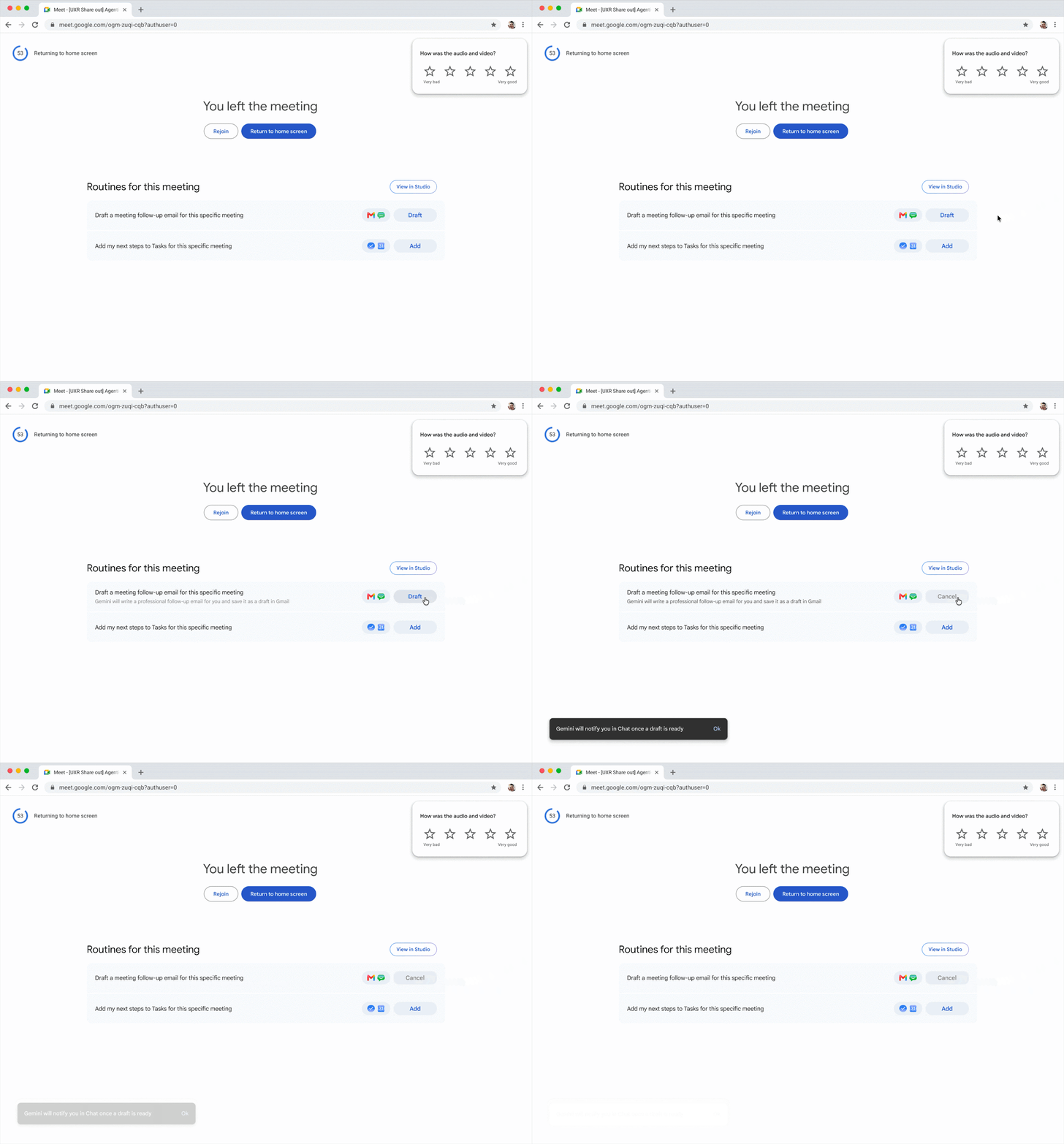
Users can access the feature from the post-meeting screen under the section “Routines for this meeting.” However, they must have Google’s “Take notes for me” feature enabled during the meeting for these options to appear. Users can enable individual routines for one-off or recurring meetings. They can also be set to run across meetings where note-taking is enabled.
Google says it plans to introduce more automated routines in the future.
The feature started rolling out to Google Workspace Business Standard and Plus, Enterprise Standard and Plus, and users with the Google AI Pro for Education add-on on October 5. However, Google says it could take a few weeks to reach everyone.
Elsewhere, Google is also upgrading Meet’s encryption with “post-quantum cryptography (PQC),” starting with web clients and meeting room hardware. Support for mobile devices is also coming soon.
PQC is designed to protect calls against a potential future threat in which attackers collect encrypted data today and attempt to decrypt it once powerful quantum computers become available. This is often called a “store now, decrypt later” attack.
Google notes that no quantum computer capable of breaking today’s cryptography exists yet, but the upgrade is intended to futureproof Meet for that possibility.
Unlike the new automation tools, this security upgrade requires no action from users or administrators. It is enabled automatically, and calls will continue to work as usual.
Thank you for being part of our community. Read our Comment Policy before posting.