Affiliate links on Android Authority may earn us a commission. Learn more.
The big Googlebook moment is almost here, and I couldn't care less
Sep 16, 2026 — 5:00 AM ET
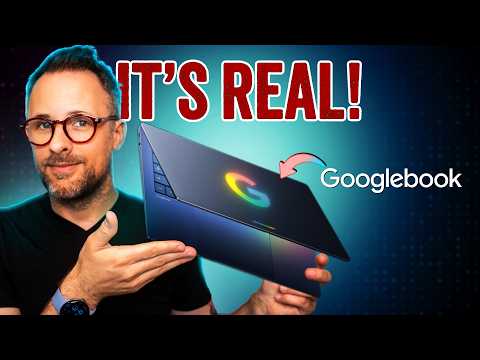


Google’s laptop endeavors are finally getting their long-overdue love. The company is sprucing up the iconic Chromebook ideology into something called Googlebook, which brings together the best of Android and Chrome OS. It carries forward both the good and the bad of its past self, but this time, everything is built around Gemini to give you an AI-first experience.
All those big words sound like Google is finally doing something substantial with its laptop efforts. However, the reality is that I couldn’t care less about the Googlebook. Considering the direction Google is putting all its efforts in and how the laptop market is shaping up, I sure wouldn’t bet big on Google’s renewed enthusiasm towards its laptop OS.
What's your biggest concern about Googlebook?
Is Googlebook designed for Gemini or users?
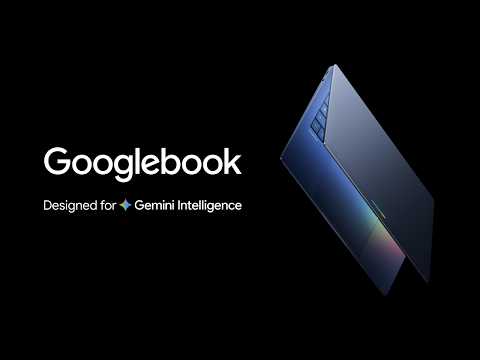
Google’s marketing for its laptop resurrection heavily leans on Gemini at the center. It stresses the fact that the artificial intelligence layer is going to be more critical than raw specs. I’m not a bit excited about this part because we have already seen Microsoft bet big on Copilot PCs only to find AI not even on customers’ priority lists. Evidence says that Google is going to meet a similar fate, but neither of us has seen the future yet.
We do need an intelligence layer on our laptops, but one that runs on top of a functional OS and not as the entire software personality.
What we know, though, is the fact that Google has once again ignored almost every single piece of feedback users have given Chromebooks. While Googlebooks are now designed to be more deeply integrated with Android and offer cross-platform features like running your phone apps right on the laptop screen without installing them there, they still can’t run real desktop apps. Google would need a lot of convincing to get me to buy a Googlebook over something that runs on Windows, Mac, or Linux.
Having said that, we do need an intelligence layer on our laptops, but one that runs on top of a functional OS and not as the entire software personality.
The MacBook Neo effect

Before Google announced its plan to revamp its laptop operating system, Apple had already turned the game in its favor. Against Google’s strategy of making its desktop OS entirely centered on AI, MacBook Neo instead democratized macOS, so we don’t have to learn the rules from scratch. People were lapping up the budget MacBook so much that it caused supply issues. Its impact could be seen on the Windows side as well, where many manufacturers introduced their cheap, home-oriented, fun-looking laptops at the recent IFA Berlin event.
I’m not going to lie, even I have recommended the MacBook Neo to my family and friends who have everyday needs and occasional power use. It (and all the recent Windows alternatives) is a laptop that doesn’t make you wonder whether a tool/app you use can run natively. That alone makes Googlebook feel limited against the heavyweights in the category, giving me few reasons to pick it up.
How much would it cost again?

Another (major) deterrent is price. We can’t take their word for it, but a recent leak points to an eye-watering starting price of $1,300 for a Googlebook model made by ASUS. Sure, it might come with ample RAM and storage (which themselves cost a lot these days), along with a decently spec’d Intel processor, but this starting price doesn’t remotely justify what the software is capable of (based on what we know). The fact that you can pick up a MacBook Neo for half the price and do twice the work isn’t doing Google any favors.
The market plays by its own rules

If Microsoft’s Copilot push wasn’t a clue enough, the market trends tell a story that doesn’t paint a nice picture for Googlebook. Google has been trying to reinvent the wheel, while we already have cars running on modern alloys. And that’s evident from the minuscule share that Chrome OS has had so far in the U.S. market. Some recent analysis pegs Google’s current desktop OS at under 3%, down from 6–7% until a couple of years ago. With Googlebook, the company is only trying to build on this downward trend, hoping that people would still want to learn a new operating system from scratch instead of investing in an experience they’re already used to.
Ecosystem would sway the decision, even if the Googlebook were priced similarly to the MacBook Neo — it's that big of a deal.
Believe it or not, smartphones also affect your laptop decisions. In a market where iOS commands 60% market share, leaving the rest to Android, people are more likely to choose familiarity and stay within the ecosystem over anything else. This would sway the decision, even if the Googlebook were priced similarly to the MacBook Neo — the ecosystem is that big of a deal.
Google did indeed try to have a little cross-device interaction of its own with easy file and app access, but it’s basic to a fault when we’ve seen how deeply integrated Apple’s implementation is. Furthermore, I find Android buyers to be quite prudent for decisively going against iOS just to avoid its limitations. It’s foolish to expect them to settle for something underpowered yet charging a premium.
In a market where iOS commands 60% market share, people are more likely to choose familiarity and stay within the ecosystem over anything else.
Whether Googlebook would be dead on arrival or not, I’m not the right person to predict that. But from my vantage point, I can say with confidence that Google had a fantastic opportunity to reinvent its desktop OS from scratch and make it competitive enough that Android users would actually want to pick it up to fill the ecosystem-sized hole in their tech lives. Unfortunately, the company only seems to be dropping the ball — and hard.
Thank you for being part of our community. Read our Comment Policy before posting.