Affiliate links on Android Authority may earn us a commission. Learn more.
The Nimbus Project ports 5 popular Dragon Ball Z games to Android
Nov 5, 2026 — 9:59 AM ET


- The Nimbus Project Alpha 1.5 brings five reverse-engineered GameCube and GBA Dragon Ball Z titles natively to Android, Windows, and Linux, with crossplay across the three platforms.
- The games include Dragon Ball Z: Budokai, Dragon Ball Z: Budokai 2, Dragon Ball Z: Sagas, Dragon Ball Z: Supersonic Warriors, and Dragon Ball Z: Taiketsu.
- You’ll need to supply your own GameCube discs and GBA ROMs, since the project ships only the engine runtime.
Reverse-engineered game ports have been having a massive moment recently, letting enthusiasts play everything from Gran Turismo 3 to Halo 1 to Super Mario Galaxy natively on phones without the typical overhead that comes with emulation. Now, classic anime brawlers are getting the same treatment. A new initiative called The Nimbus Project is delivering native ports of classic Dragon Ball Z titles directly to Android, Windows, and Linux, complete with full crossplay support.
Announced on Reddit by developer TheBabyHippo303, the release recently hit Alpha 1.5 on GitHub. The project includes five playable games: GameCube favorites Dragon Ball Z: Budokai, Dragon Ball Z: Budokai 2, and Dragon Ball Z: Sagas, alongside Game Boy Advance fighters Dragon Ball Z: Supersonic Warriors and Dragon Ball Z: Taiketsu.
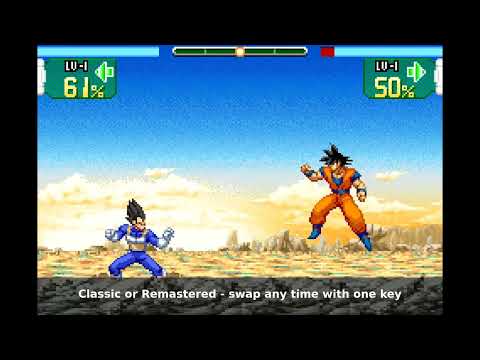
Instead of running inside a traditional emulator like Dolphin, the games run on a shared, unified host program powered by custom native cores. This architectural distinction translates into better efficiency, native Vulkan rendering on desktop, and dedicated support for optional HD texture packs. For Dragon Ball Z: Supersonic Warriors and Taiketsu, the suite even recreates local GBA link cable matches as two native instances running inside a single process, supporting save states and local two-player battles out of the box.
This setup makes a ton of sense for the booming Android gaming handheld scene. Dedicated devices like the Retroid Pocket 5 or AYN Odin line frequently face battery and thermal overheads when running demanding emulators. Running natively gives phone SoCs room to stretch their legs at high resolutions while maintaining 60fps and going easier on the battery.
Where The Nimbus Project really stands out is for multiplayer gaming. The developer built a dedicated netplay system that syncs inputs between players with end-to-end encryption via relay servers in the US and Europe. The runtime and netplay code are shared across platforms, which allows an Android player to hop into a lobby or join a code match against someone playing on Windows or Linux seamlessly.

Beyond adding its fifth game, The Nimbus Project Alpha 1.5 release significantly upgrades the overall user experience. The release introduces a dedicated “NimbusProjectDBZ” storage system and a handy “Find My Files” tool that scans your device to automatically detect and organize your dumped media. It also adds native decompression support for Dolphin image formats (GCZ, CISO, RVZ, and WIA) as well as zip and 7z archives, though WBFS and RAR remain unsupported. Header checks prevent mismatched files or other game dumps from cluttering your library.
For handheld enthusiasts, the update is a notable leap forward. Android gamers get a completely redesigned on-screen touch overlay across all five games, featuring DBZ-themed styling, a true eight-way D-pad, adjustable layouts, and fixed-position analog options. Of course, the usual rules for decomp-style ports still apply: Nimbus ships purely as an engine runtime, meaning you must supply your own legally acquired NTSC-U GameCube discs and USA GBA ROMs to play.
Conversation
Read what readers said or add your take.